
Reviewed · COMMUNIST & YUGOSLAV HISTORY TOURS
Tito and History Vintage Car Tour
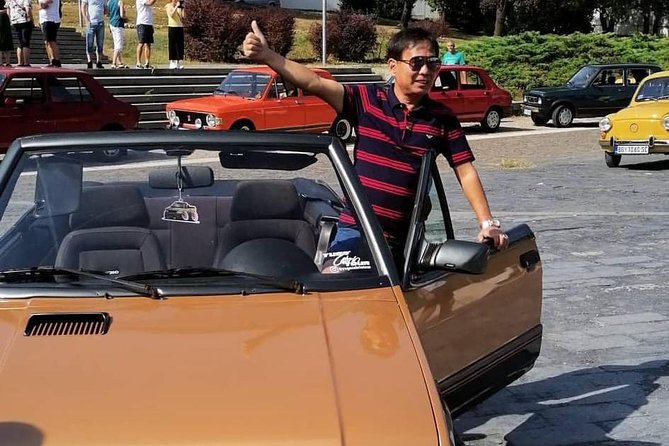
Belgrade’s past has four wheels. The Tito and History Vintage Car Tour turns Yugoslav cars into the key to understanding the city, pairing the much-mocked Yugo with grand state buildings, Tito-era monuments, and the Museum of Yugoslavia. You ride between major sights in a private group, so the experience feels more like a moving conversation than a standard sightseeing circuit.
I like the mix of car culture and political history, especially the chance to hear about the Yugo convertible rather than only seeing famous buildings. I also like the practical touches: pickup can be requested, snacks and soda are provided, and admission costs are handled for you. The main drawback is the price, $144 for about two to three hours, which makes the tour a better fit for visitors who truly care about Yugoslav history, design, or unusual vehicles than for anyone seeking a low-cost city overview.
In This Review
- Key points to know before booking
- Why this vintage-car tour works in Belgrade
- Starting at the Republic of Serbia Assembly
- Walking the Peace Alley at Park of Friendship
- Seeing Palata Srbije from the outside
- The Genex Tower and Belgrade’s brutalist edge
- The Museum of Yugoslavia and Tito’s personal world
- What the Yugo adds to the story
- Snacks, pickup, and the $144 price
- Who will get the most from this experience
- Should you book the Tito and History Vintage Car Tour?
- FAQ
- Where does the Tito and History Vintage Car Tour begin?
- Where does the tour end?
- How long does the tour last?
- How much does the experience cost?
- Is the tour private?
- Is admission to the Museum of Yugoslavia included?
- What refreshments are provided?
- What happens if the tour is canceled because of bad weather?
Key points to know before booking
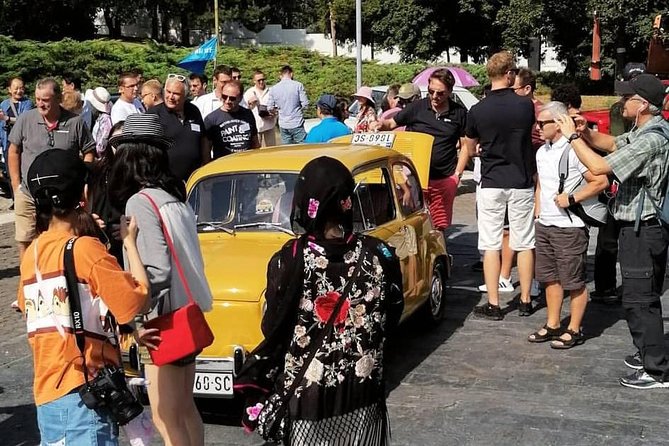
- The Yugo is the central character: You learn why this small Yugoslav car became famous far beyond the Balkans, including its convertible version.
- A private tour keeps the pace flexible: Only your group participates, with pickup available on request.
- The route favors Tito-era Belgrade: Expect the Museum of Yugoslavia, Palata Srbije, the Park of Friendship, and the Genex Tower.
- Brutalist architecture gets proper attention: The Western City Gate, also called the Genex Tower, is a major stop for fans of concrete modernism.
- Small comforts are included: Snacks, soda, and entrance fees are covered, so you do not need to keep reaching for your wallet.
- Guide Jovana earns special praise: One published review highlights her passion and strong command of the subject.
Why this vintage-car tour works in Belgrade
Belgrade is a useful place to study Yugoslavia because the city still carries the marks of that vanished country. Monumental government buildings, wide open parks, modernist towers, and Tito’s former memorial complex all sit within the same urban story.
This tour gives those places a unifying theme. Instead of treating the Yugo as a joke and Tito as a distant political figure, it connects everyday life, state power, industrial ambition, and international diplomacy. The car is not just transport. It is a prompt for questions about how Yugoslavia presented itself and how ordinary people experienced it.
You can expect a private outing lasting roughly two to three hours. That is long enough to cover several major sights without turning the day into a full historical lecture. It is also short enough to fit around a museum visit, a meal, or another Belgrade activity.
I would pay close attention to the private format. You are not joining a large group with a fixed audience and a one-size-fits-all script. If your group is more interested in architecture, Tito, automobiles, or the Non-Aligned Movement, you can place more weight on that subject during the drive and stops.
Other tours covering the Yugoslav decades:
- Red Belgrade Communist Tour
★ 4.8 · 301 reviews - Red Belgrade Communist Tour
★ 5.0 · 78 reviews - Belgrade: Yugoslavia Communist tour
★ 4.8 · 66 reviews
Starting at the Republic of Serbia Assembly
The tour begins at Dragoslava Jovanovića 14 in central Belgrade, with pickup available if arranged. The first listed stop is the House of the National Assembly of the Republic of Serbia, visited for about 15 minutes.
The building carries an older royal connection. It was once the residence of the Obrenović dynasty and now houses the City Assembly of Belgrade, according to the tour information. That blend of royal, civic, and political use is a neat introduction to the city’s changing institutions.
This is a short exterior-oriented stop, with free admission. Do not expect a long interior visit or a formal museum experience here. Its value comes from the explanation around the building and from placing the site within Belgrade’s shift from monarchy to socialist Yugoslavia and then to modern Serbia.
The car theme also begins to make more sense here. A vehicle connected with Yugoslav life feels different when you are looking at the institutions that shaped the country’s public identity. The contrast between a modest mass-produced car and a formal state building gives the tour some useful perspective.
Walking the Peace Alley at Park of Friendship
The Park of Friendship, or Park Prijateljstva, receives about 20 minutes. It was planned around the Belgrade Conference of September 1961, the first summit of the Non-Aligned Movement.
The park’s Peace Alley is a 180-meter path lined by two rows of trees. Leaders who attended the summit planted trees there as symbols of dedication to world peace. The list connected with the park includes Queen Elizabeth II, Margaret Thatcher, Robert Mugabe, Jimmy Carter, Indira Gandhi, and Nicolae Ceausescu. Members of the Rolling Stones also planted trees.
That guest list tells you why this is more than a patch of greenery beside the river. It reflects a time when Yugoslavia tried to act independently of both the Western and Soviet blocs. Tito’s foreign policy gave Belgrade an unusual international role, and the park preserves that ambition in a simple, almost ceremonial form.
The supplied description calls the park noble in concept but incomplete in execution, a living reminder of the hopes and failures of earlier decades. That tension is part of its appeal. You are not being shown a perfectly polished monument. You are seeing an unfinished public idea, with grand intentions and the marks of time.
The stop is free and relatively brief. Wear comfortable shoes if you want to walk the path, though the tour does not present it as a long hike. The open setting also means the weather matters, which is why poor conditions can lead to a different date or a refund.
Seeing Palata Srbije from the outside
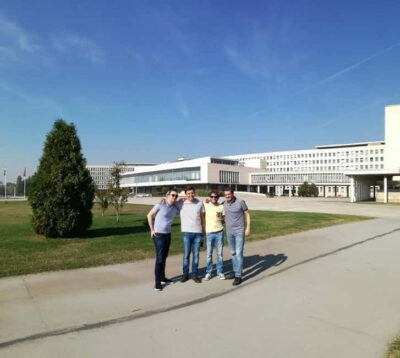
Palata Srbije is scheduled for about 20 minutes. The building is described as Belgrade’s largest and most spectacular modernist architectural work.
Its importance goes beyond size. Palata Srbije was built for the federal government of Yugoslavia, so it gives you a physical sense of the country’s political structure and public confidence. The building was designed to represent a modern state with its own style, not simply a copy of Moscow, Washington, or Western Europe.
The interior is closed to the public, but the guide can show you pictures of the inside and explain its history. That limitation is worth knowing before you book. This is an architectural and historical viewing stop, not a chance to tour grand halls in person.
Still, photographs can add useful context. Government buildings often make little sense from the street alone. Seeing interior images helps you understand how the building was meant to function and what kind of public image Yugoslavia wanted to project.
I would treat this as one of the tour’s more serious stops. The vintage cars provide color and humor, but Palata Srbije gives the outing its political weight. It helps explain why Tito’s Yugoslavia invested so heavily in architecture, ceremony, and international display.
A couple more Belgrade trips to weigh up
- Belgrade: 3-Hour Serbian History Walking Tour
★ 4.9 · 108 reviews - History and Culture in my Belgrade
★ 5.0 · 41 reviews - NATO Bombing of Belgrade Historical Tour
★ 5.0 · 17 reviews - Belgrade: Women’s Side of History Walking Tour with Coffee
★ 5.0 · 16 reviews
The Genex Tower and Belgrade’s brutalist edge
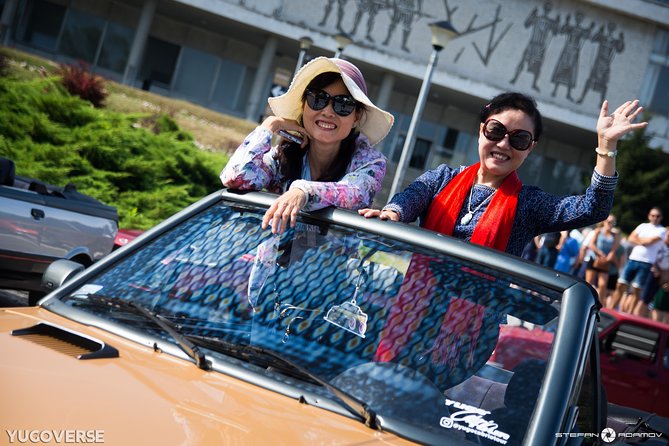
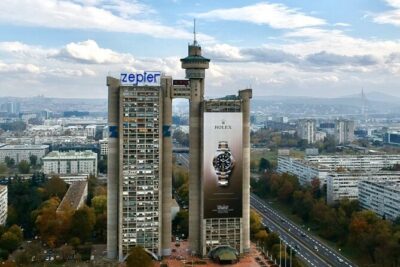
The Western City Gate, better known as the Genex Tower, is one of the tour’s strongest visual stops. The 36-story complex was designed in 1977 in the brutalist style.
It consists of two towers linked by a two-story bridge, with a revolving restaurant at the top. The bold shape was designed to mark the western entrance to Belgrade, and it remains an important example of late Yugoslav modernism.
If you like brutalist buildings, this stop may be the highlight. The tower is not delicate or conventionally pretty. Its appeal lies in the force of its concrete forms and in the way it expresses the confidence of a country building a new urban identity.
The Genex Tower also makes a useful counterpoint to the earlier civic buildings. The National Assembly represents older state traditions. Palata Srbije shows federal power in a formal modernist mode. Genex looks more experimental and urban, with a strong connection to housing, commerce, and the growing city.
You should know that the supplied schedule does not assign a separate time to the Western City Gate. That likely means it is viewed as part of the driving route or a shorter photo stop, but the exact arrangement is not specified. If the tower matters greatly to you, ask the provider how much time is planned there before booking.
The Museum of Yugoslavia and Tito’s personal world
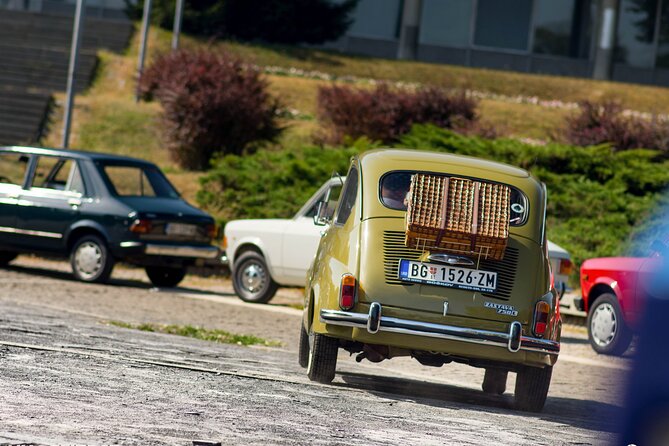
The Museum of Yugoslavia receives about 40 minutes, with admission included. This is the longest listed stop and the one most closely tied to the tour’s title.
The museum began in 1962 to collect gifts given to Josip Broz Tito by Yugoslav citizens and world leaders. After Tito’s death, it was combined with several connected sites and collections, including the House of Flowers, his residence, the Pool House, the Hunting Lodge, and the Old Museum. More than 200,000 objects are organized into 20 collections.
That scale tells you why 40 minutes is useful but limited. You can get an introduction to the museum and its major themes, but you will not see everything. The collection is not simply a standard national history display. It reflects the way Tito was represented, the diplomatic relationships he built, and the public rituals that surrounded his rule.
The museum also helps make sense of the cars. A vehicle from the Yugoslav period can seem like a novelty until you place it beside gifts from foreign leaders, state ceremonies, and the country’s effort to present itself as independent and internationally important. The tour uses the automobile as an accessible entry point into that larger story.
The House of Flowers is part of the former complex, but the provided schedule does not state exactly which areas you will enter during the 40-minute visit. Admission is included, yet you should not assume every building or collection will receive equal attention. The guide’s explanation matters here, especially if you want political context rather than a quick look at objects.
One published review gives special praise to Jovana, describing her as passionate and well informed about the subject. That is important on a tour like this. The quality depends less on the number of stops than on how clearly the guide connects the car, Tito, Yugoslavia, and modern Belgrade.
What the Yugo adds to the story
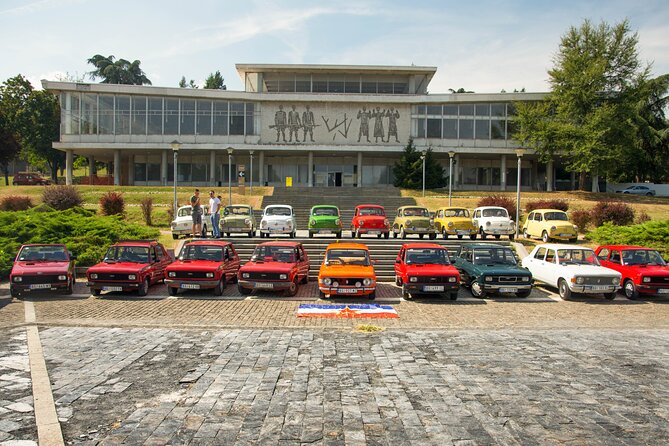
The Yugo is often called the worst car in the world, and the tour does not avoid that reputation. Instead, it uses the joke as a starting point.
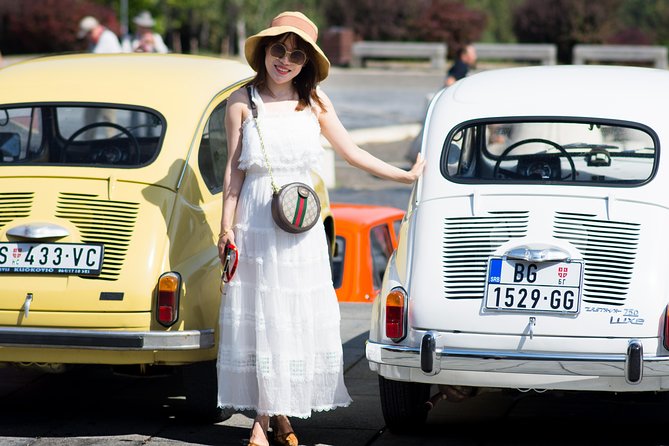
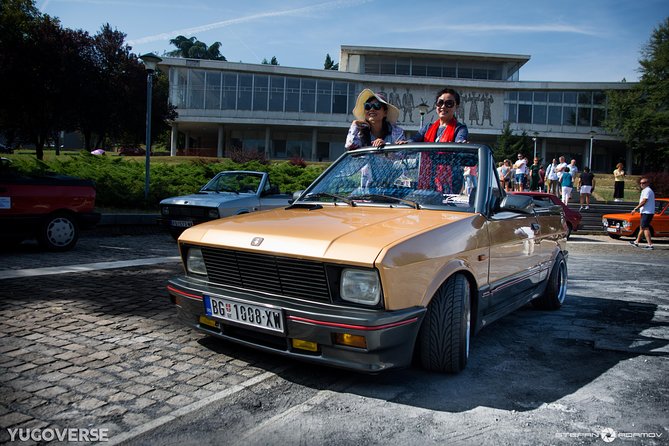
You learn about the car’s place in Yugoslav industry and daily life, including the Yugo convertible. That detail matters because the convertible is a less familiar part of the model’s story. It adds variety to a subject many people know only from jokes about poor reliability and basic construction.
The best way to approach this part is with curiosity rather than a simple verdict. The Yugo may not have matched better-known European cars for refinement, but it represented an attempt to make car ownership accessible within a socialist country. Its meaning lies in what it tried to do, not only in the punchlines attached to it later.
Because the tour is private, you can ask questions that would be difficult to fit into a large group outing. You might want to know how Yugoslav cars were marketed, what made the convertible different, or how the Yugo became known outside the region. The supplied details do not promise a specific driving route or a chance to operate the car yourself, so confirm those points if they matter to you.
Snacks, pickup, and the $144 price
At $144, this is not a bargain city ride. The price makes more sense if you are splitting it among several people in a private group and value a specialized guide, vehicle theme, pickup, included admission, and refreshments.
Snacks and soda are provided along the way. That is a small benefit, but it keeps the short tour moving and means you do not need to stop for basic refreshments. All listed fees are covered, so there should be no admission payment waiting for you at a stop.
Pickup is offered, or you can go to the Belgrade meeting point at Dragoslava Jovanovića 14. The experience ends at a different location, but the supplied information does not identify that final address. Ask for the exact drop-off point if you need to plan a tight connection afterward.
The tour is listed as operating daily from 9 a.m. to 9 p.m. Confirmation is sent within 48 hours of booking, subject to availability. Since it requires good weather and a minimum number of participants, keep some flexibility in your schedule.
Cancellation is free up to 24 hours before the start time. Inside that window, the payment is not refunded, except that a weather or minimum-participant cancellation offers a different date or a full refund.
Who will get the most from this experience
I would recommend this tour most strongly to people with a clear interest in one or more of these subjects:
- Yugoslav history and Tito
- Communist-era politics and diplomacy
- Brutalist and modernist architecture
- Cars, industrial design, and the Yugo
- Private tours with a focused theme
It can also suit first-time visitors who want to see parts of Belgrade beyond the usual central sights. The route brings together major buildings and the Museum of Yugoslavia, so you receive a useful introduction to the city’s 20th-century identity.
I would be more cautious if you want a long museum visit, a detailed walking tour, or a broad survey of all Belgrade’s attractions. The schedule is compact. Several stops last only 15 or 20 minutes, and the Genex Tower’s exact stop length is not stated.
The experience should work for most people, and service animals are allowed. It is near public transportation, though pickup can make things easier. Since only your group participates, the format may feel comfortable for families, couples, or friends who prefer asking questions without an audience.
Should you book the Tito and History Vintage Car Tour?
Book it if the idea of learning about Belgrade through a Yugo, Tito’s gifts, the Non-Aligned Movement, and brutalist architecture sounds more appealing than a standard city tour. The combination is unusual, and the private format gives it a personal feel.
The strongest reasons to choose it are the focused subject, the included museum admission, the Genex Tower, and the chance to learn about the Yugo convertible. Jovana’s praised passion is another encouraging sign, though guide availability may vary.
Skip it if $144 feels too high for a short outing or if you mainly want free time inside museums and monuments. This is a specialized experience, not a low-cost highlights tour. For the right audience, though, it offers a memorable way to understand how Yugoslavia tried to build a modern country, one concrete tower and compact car at a time.
FAQ
Where does the Tito and History Vintage Car Tour begin?
The tour begins at Dragoslava Jovanovića 14, Beograd 11000, Serbia. Pickup is also offered.
Where does the tour end?
The activity ends at a different location from the starting point. The exact final address is not provided in the available information.
How long does the tour last?
The tour lasts approximately two to three hours.
How much does the experience cost?
The listed price is $144.
Is the tour private?
Yes. Only your group participates in the activity.
Is admission to the Museum of Yugoslavia included?
Yes. Admission to the Museum of Yugoslavia is included.
What refreshments are provided?
Snacks and soda are provided during the tour.
What happens if the tour is canceled because of bad weather?
You will be offered a different date or a full refund. The same options apply if the minimum number of participants is not met.
Just added in Belgrade
- Your Own Belgrade: Street Art and Hidden Gems Walking Tour★ 5.0 · 2 reviews
- Private Half Day Serbia Tour Novi Sad and Petrovaradin Fortress★ 5.0 · 3 reviews
- 3-Hour Belgrade Zemun Neighborhood Tour★ 5.0 · 8 reviews
- Private Belgrade Street Art and Adventures Walking Tour★ 5.0 · 4 reviews
- Private Wine Tasting by Party in Belgrade★ 5.0 · 3 reviews
- From Belgrade:Uvac Nature Reserve Tour★ 5.0 · 4 reviews
- Belgrade Bike Tour: Be a local in the hood of Belgrade!★ 5.0 · 5 reviews
- Urban & Alternative Belgrade tour★ 5.0 · 4 reviews
Communist & Yugoslav History Tours, compared.
Space architecture tour – brutalist architecture
Read our review →
Private 4 Hours Space Architecture Tour in Belgrade
Read our review →
Browse the lists this tour appears in