
Reviewed · COMMUNIST & YUGOSLAV HISTORY TOURS
Belgrade: Space architecture tour – brutalist architecture
Concrete tells a powerful story here. This four-hour tour connects Belgrade’s bold brutalist architecture with the political ideas of former Yugoslavia, taking you from Avala Mountain to the monumental blocks of New Belgrade. I especially like the mix of city sights and countryside, plus the chance to ride up Avala Tower for broad views over Belgrade.
I also like the small-group format, limited to 10 people, and the way private transport links places that are too spread out for a simple walking tour. The main drawback is clear: you mostly view the major buildings from outside, since several are residential or government properties and cannot be entered.
In This Review
- Key points to know before booking
- Why this tour works for architecture fans
- Starting in Belgrade and heading for Avala Mountain
- Avala Tower, rebuilt after 1999
- Eastern Gate and the Rudo buildings
- Crossing Ada Bridge above the Sava
- Sava Center and the architecture of international diplomacy
- New Belgrade from the van window
- The Western Gate and Geneks twin towers
- Palace of Serbia and the state on display
- What the guide adds to the experience
- Is $88 a fair price?
- Who should book this experience?
- Should you book the Belgrade brutalist architecture tour?
- FAQ
- How long does the tour last?
- Is hotel pickup and drop-off included?
- Is entry to Avala Tower included?
- Is the tour available in English?
- Does the tour run in bad weather?
- Are food and drinks included?
Key points to know before booking
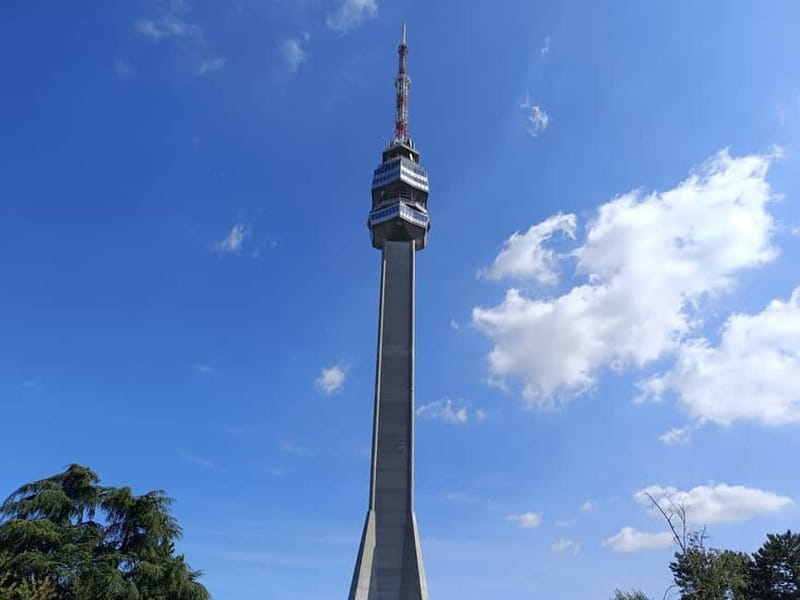
- Avala Tower combines architecture and views: The telecommunications tower was destroyed during the 1999 NATO bombing and rebuilt in 2010, giving this stop both political and architectural weight.
- The tour reaches beyond central Belgrade: You visit Avala Mountain, then return to the city for New Belgrade’s grand public buildings, apartment blocks, bridges, and office towers.
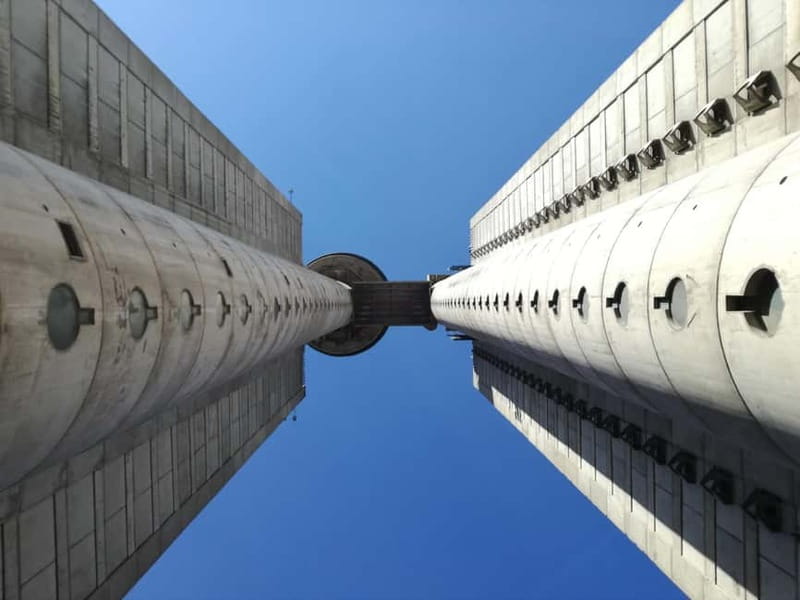
- The Western Gate is a true brutalist landmark: The Geneks twin towers are connected by a bridge on the 26th floor, creating one of Belgrade’s most memorable entrances.
- You see ideology expressed in concrete: The Palace of Serbia and Sava Center were designed for major state and international events, not merely for practical use.
- The experience is best for architecture and history fans: A guide adds essential context to buildings that can look stark or confusing if you only see them through a car window.
- Weather affects the main viewpoint: The tour runs rain or shine, but the view from Avala Tower depends on visibility.
Why this tour works for architecture fans
Belgrade is a rewarding city for anyone who likes buildings with a story behind them. Its architecture reflects several different eras, but this experience concentrates on the period of socialist Yugoslavia, when design was used to project unity, authority, progress, and independence.
That makes the tour more than a drive past concrete structures. You get a visual lesson in how Yugoslavia presented itself after World War II. The buildings are often huge, geometric, and serious, yet many have playful shapes or striking engineering solutions.
I like this focus because brutalism can be difficult to read without explanation. A massive block may look cold at first glance. Once you understand why it was built, who used it, and how it represented the state, it becomes far more interesting.
The tour also gives you a useful contrast. Avala Mountain offers open space and a high viewpoint, while New Belgrade is defined by broad roads, large complexes, towers, and planned urban form. You see both the natural setting around Belgrade and the planned city that Yugoslavia built after the war.
With hotel pickup, private transportation, and a maximum of 10 people, the pace should feel more manageable than a large coach excursion. Four hours is enough time to cover a lot, though it is not long enough for extended interior visits or a slow architectural photography walk.
Other tours covering the Yugoslav decades:
- Red Belgrade Communist Tour
★ 4.8 · 301 reviews - Red Belgrade Communist Tour
★ 5.0 · 78 reviews - Belgrade: Yugoslavia Communist tour
★ 4.8 · 66 reviews
Starting in Belgrade and heading for Avala Mountain
The day begins with pickup in Belgrade. You are asked to wait in your hotel lobby five minutes before the scheduled time, a small detail that matters because the route covers several distant sites and delays can quickly affect the schedule.
The first drive to Avala takes about 30 minutes. That transfer gives you time to leave the city behind before reaching Belgrade’s tallest mountain. The change in setting is part of the appeal. You are not looking only at urban concrete. You are also seeing how a major monument and communications tower were placed above the capital.
Your first stop is the Monument to the Unknown Hero, where you have about 30 minutes for a visit, a guided explanation, photographs, and a walk. The stop adds a national and commemorative layer to the tour before the focus returns to modern communications and socialist-era design.
I would use this time to ask your guide about the monument’s place in Yugoslav public life. The supplied information does not specify the monument’s full design history, so your guide is the right person to connect the site to the wider political story without turning the stop into a quick photo break.
Avala Tower, rebuilt after 1999
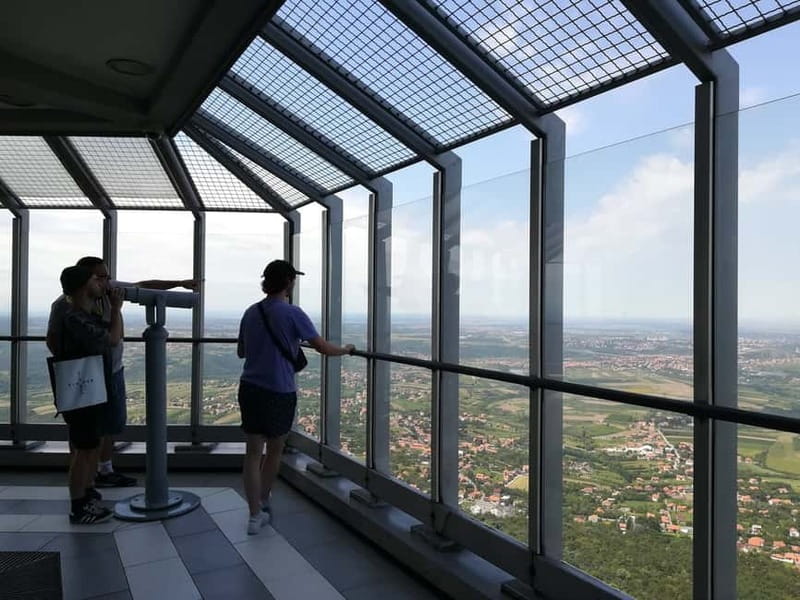
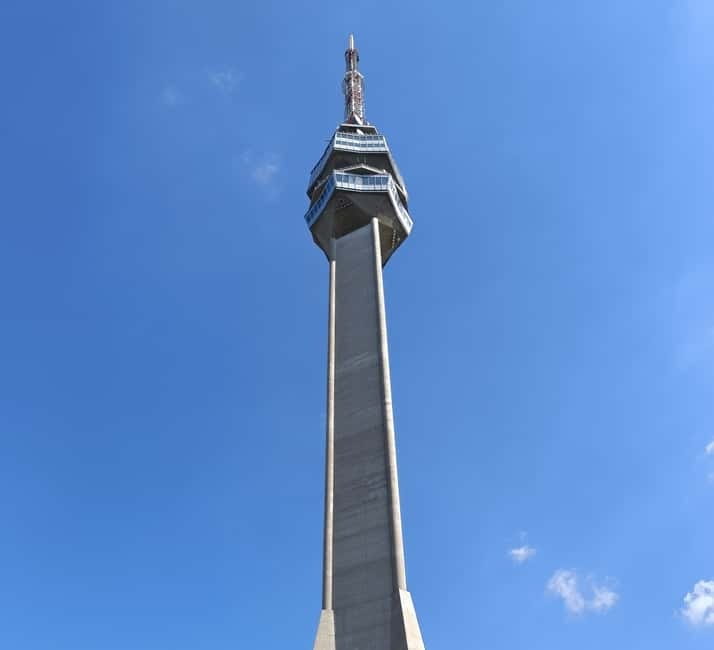
Avala Tower is the tour’s most distinctive stop. It is a telecommunications structure on Avala Mountain, and the visit includes entry to its observation deck.
The tower was destroyed during the 1999 NATO bombing and rebuilt in 2010. That fact gives the structure unusual meaning. It is not simply a viewpoint or an example of engineering. Its destruction and return are tied to the recent history of Serbia and to the physical scars left by conflict.
You have about 30 minutes here for a guided visit, sightseeing, and photographs. The observation deck gives you a chance to look over Belgrade from above, but keep the weather in mind. The view depends on conditions, so a gray or hazy day can reduce what you see.
Still, the tower is valuable even when visibility is not perfect. The structure links architecture, technology, national identity, and memory in one stop. I also like that it breaks up the concrete-heavy city portion of the tour with a mountain setting.
The first drive is about 30 minutes, followed by roughly 30 minutes to the tower and then a 20-minute transfer back toward the city. If you are mainly interested in building interiors, this is time that could feel less essential. If you enjoy city views and the history of Yugoslavia, it is one of the strongest parts of the experience.
Eastern Gate and the Rudo buildings
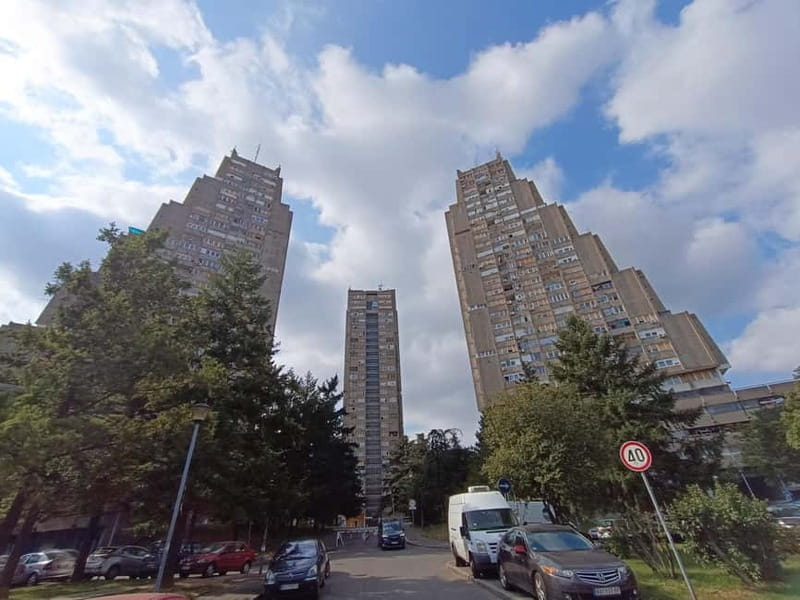
Back in Belgrade, the tour stops at the Eastern Gate, also known as the Rudo buildings. You have about 20 minutes for a guided photo stop.
These residential towers are important because they show how brutalist ideas appeared in everyday housing, not only in government offices and conference centers. Their repeated forms and imposing scale make a strong first impression, though the short stop means you should listen carefully while the guide explains what you are seeing.
This is one place where an informed guide matters. Without context, large apartment towers can seem like anonymous blocks. With an explanation of their role in New Belgrade and their place within Yugoslav architecture, you can better understand how housing projects also formed part of the state’s vision for modern life.
You will not be entering the buildings. That is a recurring limitation on this tour, but it is also understandable since these are residential structures. Plan to appreciate the exterior lines, scale, and setting rather than expect museum-style access.
A couple more Belgrade trips to weigh up
- From Belgrade: Novi Sad & Sremski Karlovci Full-Day Tour
★ 4.7 · 1,068 reviews - From Belgrade: Gems of Eastern Serbia Tour
★ 5.0 · 427 reviews - Northern Serbia: Sremski Karlovci and Novi Sad Full-Day Tour from Belgrade
★ 5.0 · 425 reviews - Day Trip from Belgrade: Gems of Eastern Serbia
★ 5.0 · 424 reviews
Crossing Ada Bridge above the Sava
The route then continues by van for about 20 minutes before reaching Ada Bridge. The stop itself lasts about 10 minutes and is mainly for photographs.
Ada Bridge crosses the Sava River and is described as Europe’s largest single-pylon bridge. Its construction was featured on the Discovery Channel, which gives you a useful sense of its engineering profile and public interest.
This is a quick stop, but it adds variety to the architecture program. You are not looking at a building now. You are looking at a major piece of infrastructure, where cables, roadway, river, and city views come together.
Do not expect a long riverside walk. The stop is designed to show you the bridge and give you time for photographs before moving on. I would have your camera ready, especially if bridges and structural design are a major reason you booked the tour.
Sava Center and the architecture of international diplomacy
The next stop is Sava Center, with about 10 minutes for photographs. That is brief, so the guide’s explanation will likely matter more than the amount of time you spend walking around.
Sava Center was built for the 1977 Conference on European Security and Cooperation held in Belgrade. It was the first and largest conference center in former Yugoslavia, giving the complex a role far beyond ordinary event space.
The architecture reflects that purpose. The complex uses a polyhedral structural design, creating a group of angular forms rather than one simple rectangular building. That design is worth examining from different angles. You can look for how the shapes fit together and how the structure presents itself as a major public project.
The short stop is a tradeoff. You get the essential exterior and political context, but not an extended architectural study. If you want detailed photographs, use the time efficiently and ask your guide where the best view of the complex is.
New Belgrade from the van window
The tour includes scenic drives through Novi Beograd, or New Belgrade, for about 10 minutes at a time. These sections may appear less dramatic than the named stops, but they are important for understanding the city’s design.
New Belgrade was developed as a planned postwar district. Its broad spaces, major public buildings, apartment blocks, and monumental forms express the ambitions of a newly created Yugoslavia. The city was not simply allowed to grow in a random pattern. Its layout and buildings were intended to communicate order, scale, and modern state power.
This is where I would pay attention to the overall arrangement rather than wait for one famous facade. Look at the distance between structures, the size of the roads, and the way major buildings are placed within the district.
Because these portions are scenic drives, you may not have time to stop whenever something catches your eye. That is another reason the small group helps. You can ask the guide questions while moving, and a smaller vehicle should make the experience feel less impersonal than a large bus.
The Western Gate and Geneks twin towers
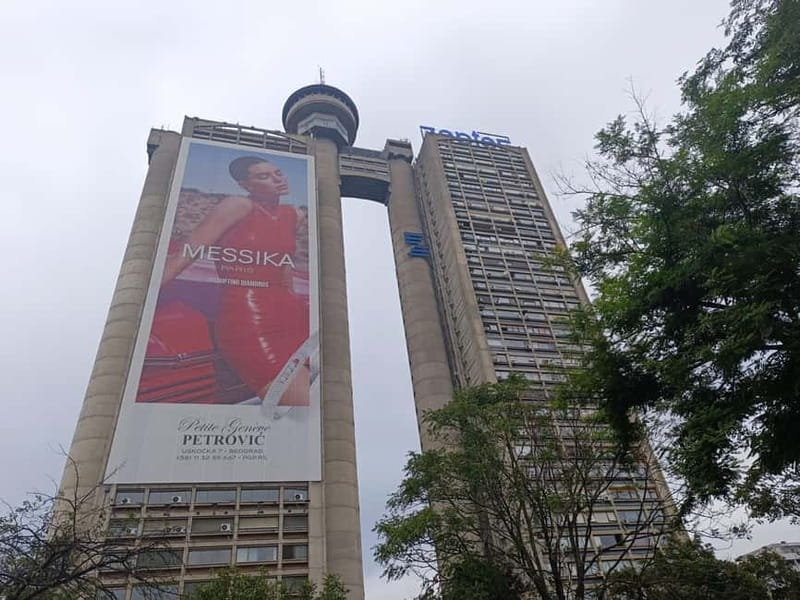
The Western Gate of Belgrade is one of the tour’s most striking architectural stops. You have about 30 minutes here for photographs, a guided visit, and sightseeing.
The landmark is made up of the Geneks twin towers, linked by a bridge on the 26th floor. That connection gives the pair an unusual profile and creates a dramatic gateway effect for people arriving from the west.
The design is a good example of how brutalism could be imposing without being plain. The height, repetition, and elevated connection turn a practical office and residential complex into a symbol of arrival. You can see why the site is often treated as one of the key examples of Belgrade’s late socialist architecture.
This is one of the better stops for photographs because the form is easy to recognize and the guide has time to explain it. You should not expect to go inside. The value comes from studying the exterior, understanding its purpose, and seeing how it functions as one of Belgrade’s urban entrances.
The tour then continues through New Belgrade for another scenic drive. By this stage, the different examples begin to make more sense together: housing, communications, bridges, conference facilities, and state administration all use architecture to project a particular idea of the country.
Palace of Serbia and the state on display
The final major stop is the Palace of Serbia, formerly the Federal Executive Council. You have about 20 minutes for a guided visit and photographs.
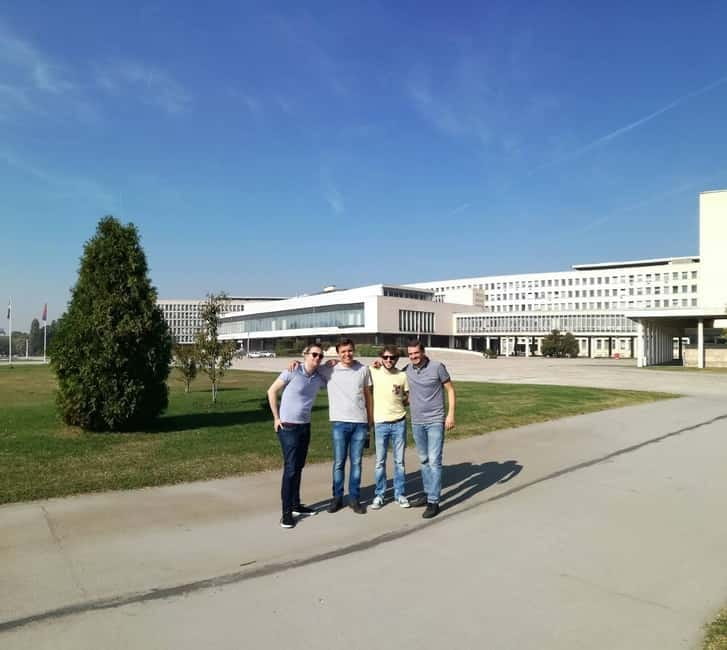
This is a spectacular example of late modernism and one of the clearest expressions of the tour’s central theme. The building was the first New Belgrade project after World War II, and its enormous but elegant form was intended to represent the authority of the federal government.
Here, architecture was not treated as a neutral container for offices. The size, symmetry, materials, and formal presentation all helped express the ruling ideology. The building needed to look serious, capable, and modern. It was part of the public face of Yugoslavia.
I find this stop especially useful after seeing the residential towers and Sava Center. You can compare how the state used different forms for different purposes. The Rudo buildings addressed housing, Sava Center addressed international conferences, and the Palace of Serbia presented federal power.
Again, this is an exterior-focused visit. Government buildings are not casual sightseeing spaces, so you should book the tour expecting explanation and observation rather than an interior tour.
What the guide adds to the experience
The strongest praise for this experience centers on the guides. Nemanja is singled out for making the architecture and Yugoslav history more engaging, while other feedback describes guides as friendly, warm, and highly prepared, with strong explanations and background knowledge.
That matters here. Brutalism is not always self-explanatory. A guide can point out structural choices, explain the political purpose of a building, and show how individual sites fit into Belgrade’s development.
The small-group limit of 10 also supports a better conversation. You can ask about the 1999 destruction of Avala Tower, the meaning of New Belgrade, or why certain buildings were given such enormous scale.
The experience is offered in English, with a professional guide and private transportation. The vehicle is useful because Avala Mountain and the New Belgrade sites are separated by substantial driving time. This is not a route I would try to recreate on foot in four hours.
Is $88 a fair price?
At $88 per person, the tour is not the cheapest way to see Belgrade’s architecture. The price includes hotel pickup and drop-off, private transportation, a professional English-speaking guide, a small group of no more than 10 participants, and the entry ticket to Avala Tower.
That package makes the cost reasonable for someone who values convenience and interpretation. You are paying not only for transport, but also for a route that links distant sites and for access to the tower’s observation deck.
The value is weaker if you only want quick exterior photographs. Much of the tour takes place outside, and food and drinks are not included. You will also spend part of the four hours in the van, which is necessary for the route but limits time at individual buildings.
For an architecture enthusiast, history fan, or first-time visitor who wants a focused introduction to socialist Yugoslav design, I think the price is defensible. For a casual sightseer, a general city tour may offer more variety.
Free cancellation is available up to 24 hours before the tour for a full refund, and you can reserve now and pay later. Those terms help if your Belgrade schedule is still taking shape, but the key practical matter is the weather at Avala.
Who should book this experience?
I would choose this tour if you enjoy brutalism, structural design, modern political history, or unusual city viewpoints. It is also a good choice if you want to see beyond central Belgrade and understand why New Belgrade looks so different from older parts of the city.
The experience suits people who are comfortable with a partly walking tour and several short photo stops. You will not be wandering through every building. Instead, you will move between carefully selected exteriors, listen to explanations, and use the van to cover a wide area.
You should think twice if you want long visits inside museums or buildings. The main sights are viewed from outside, and the tour runs rain or shine. The tower’s view may also be limited by clouds or haze.
The feedback gives particular weight to the guides. If you are able to request or confirm Nemanja, his strong reputation for clear explanations and enthusiasm could make a real difference, though guide assignments should be confirmed with the provider.
Should you book the Belgrade brutalist architecture tour?
Book it if you want a focused, well-organized look at the architecture and political ideas of socialist Yugoslavia. The combination of Avala Tower, Ada Bridge, Sava Center, the Eastern and Western Gates, New Belgrade, and the Palace of Serbia gives you a broad range of structures in only four hours.
I especially recommend it for anyone who might otherwise see these buildings as distant concrete blocks. With a strong guide, the shapes begin to reveal their purpose and period. Just set your expectations correctly: this is an exterior architecture tour with one observation-deck visit, not a series of interior access opportunities.
FAQ
How long does the tour last?
The tour lasts four hours, including transportation between Belgrade, Avala Mountain, and the New Belgrade sights.
Is hotel pickup and drop-off included?
Yes. Hotel pickup and drop-off in Belgrade are included. You should wait in your hotel lobby five minutes before the scheduled pickup time.
Is entry to Avala Tower included?
Yes. The entry ticket to Avala Tower is included in the tour price.
Is the tour available in English?
Yes. The tour has a live English-speaking guide.
Does the tour run in bad weather?
Yes. The tour takes place rain or shine. However, the view from Avala Tower depends on weather and visibility.
Are food and drinks included?
No. Food and drinks are not included in the tour price.
Just added in Belgrade
- Your Own Belgrade: Street Art and Hidden Gems Walking Tour★ 5.0 · 2 reviews
- Private Half Day Serbia Tour Novi Sad and Petrovaradin Fortress★ 5.0 · 3 reviews
- 3-Hour Belgrade Zemun Neighborhood Tour★ 5.0 · 8 reviews
- Private Belgrade Street Art and Adventures Walking Tour★ 5.0 · 4 reviews
- Private Wine Tasting by Party in Belgrade★ 5.0 · 3 reviews
- From Belgrade:Uvac Nature Reserve Tour★ 5.0 · 4 reviews
- Urban & Alternative Belgrade tour★ 5.0 · 4 reviews
- VIP Reservation Service in Belgrade★ 5.0 · 2 reviews
Communist & Yugoslav History Tours, compared.
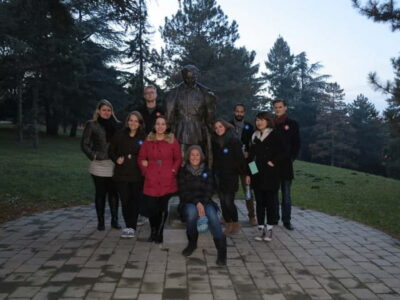
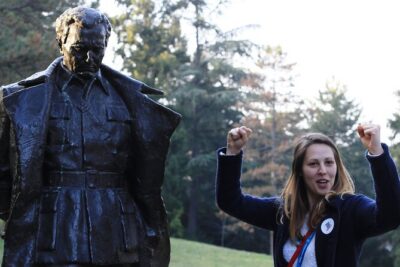


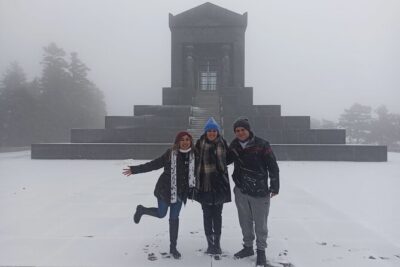
Private 4 Hours Space Architecture Tour in Belgrade
Read our review →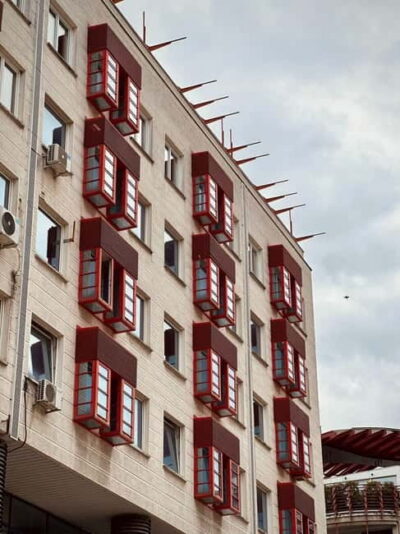
Browse the lists this tour appears in