
Reviewed · COMMUNIST & YUGOSLAV HISTORY TOURS
Red Belgrade Communist Tour
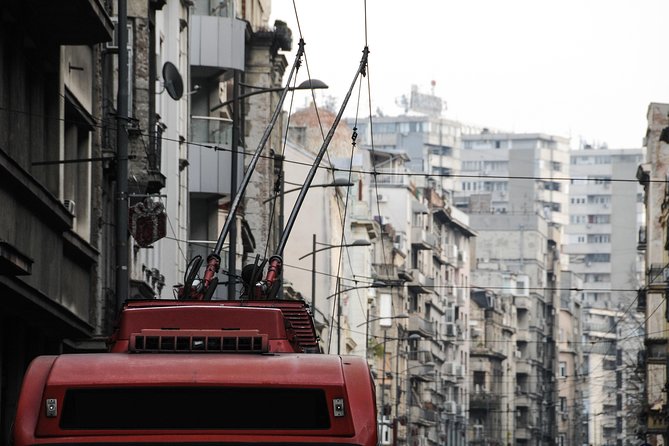
Belgrade’s communist past is hiding in plain sight. This four-hour tour links Tito’s Yugoslavia with the city’s squares, monuments, trolley lines, and grand old buildings. I like the clear route through central Belgrade, and I especially like that the tour ends at the Museum of Yugoslavia and Tito’s House of Flowers. The main drawback is that it covers a lot of political history in one afternoon, so you’ll need to stay focused.
I also like the mix of walking, public transport, and museum time. Guides such as Isidora, Nebojša, Dragana, and Igor have been praised for explaining difficult subjects plainly and adjusting their talks to the group. Just remember that this is not a fully accessible outing: it includes walking, steps or uneven surfaces may occur, and it is not suitable for people with mobility impairments.
In This Review
- The tour’s most useful highlights
- Starting at Prince Mihailo Monument and Republic Square
- Terazije and Hotel Moskva: glamour beside ideology
- Nikola Pašić Square and the culture of work
- Pioneer’s Park and Tito’s unusual version of communism
- Generalštab and the city’s harder modern memories
- The trolley ride is short but worthwhile
- Dedinje, Tito’s world, and the Museum of Yugoslavia
- House of Flowers gives the day a quiet ending
- What the $51 price really includes
- Who will enjoy this tour most?
- Should you book the Red Belgrade Communist Tour?
- FAQ
- Where does the Red Belgrade Communist Tour start?
- Where does the tour finish?
- How long does the tour last?
- What languages are available?
- Is a private tour possible?
- Is the trolley ride included?
- Is museum entry included?
- What should I bring?
The tour’s most useful highlights
- Tito’s Belgrade begins at Republic Square, where the guide introduces the political birth of socialist Yugoslavia.
- The route connects ordinary city spaces with political history, from Terazije and Nikola Pašić Square to Pioneer’s Park.
- A one-way trolley ride adds real local context, showing that communist-era infrastructure is still part of daily Belgrade life.
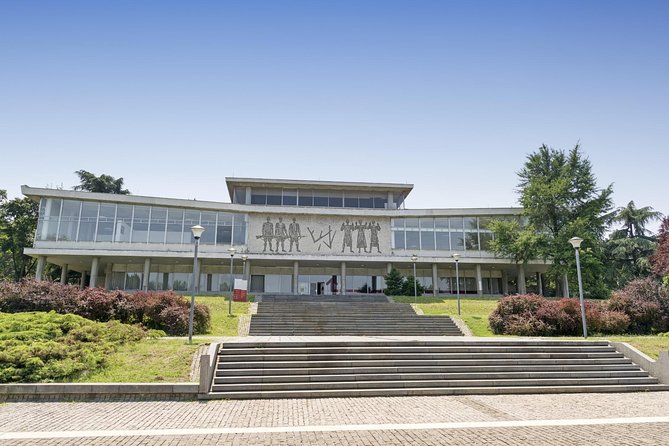
- The Museum of Yugoslavia gives the tour its strongest visual finish, with ceremonial gifts, Tito’s personal legacy, and the House of Flowers.
- Guides bring different strengths, including history teaching, personal stories, humor, and links between Serbia and other countries.
- The $51 price is fair for four hours, since it includes the guide, trolley ride, and museum admission.
Starting at Prince Mihailo Monument and Republic Square
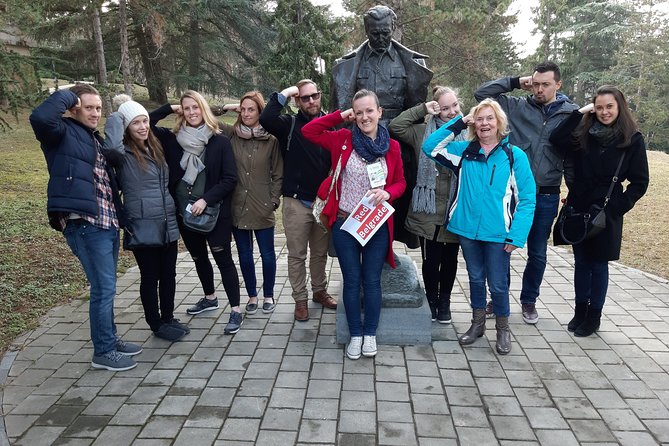
Meet beside the Prince Mihailo Monument, the horseman statue on Republic Square. This is a sensible starting point because the square is easy to find and gives you a quick introduction to central Belgrade before the tour moves into more specific political territory.
The guide uses Republic Square to explain the moment when Josip Broz Tito proclaimed the birth of the Socialist Federal Republic of Yugoslavia. That opening sets the tone. You are not simply looking at old buildings. You are learning how public spaces were used to announce a new political order.
Allow about 30 minutes here for walking, photographs, and explanation. The first section also helps you place communist Belgrade beside reminders of the earlier Yugoslav Kingdom. That contrast matters. The city was not rebuilt from scratch after World War II. Older royal-era monuments and newer socialist buildings sit close together, sometimes awkwardly, sometimes with real visual interest.
The tour also introduces conspiracy theories and urban legends from the second half of the 20th century. These stories can make a political subject easier to approach, but you should treat them as part of the folklore rather than confirmed fact. A good guide will help separate rumor, propaganda, and documented events.
Other tours covering the Yugoslav decades:
- Red Belgrade Communist Tour
★ 5.0 · 78 reviews - Belgrade: Yugoslavia Communist tour
★ 4.8 · 66 reviews - Communist Tour in Belgrade
★ 4.5 · 19 reviews
Terazije and Hotel Moskva: glamour beside ideology
The next stop is Terazije, one of Belgrade’s best-known central squares. The official timing allows around 20 minutes for the stop, so expect a focused explanation rather than a long break.
Terazije helps show that communist Yugoslavia was not only about gray apartment blocks, factory slogans, and official ceremonies. The square was also used for glamorous holidays and public festivities. That contrast is one of the tour’s strengths: it presents the period as a lived society, not just a government system.
Hotel Moskva adds a more theatrical note. You hear about famous public figures and unusual guests who stayed there, while the guide places the hotel within Belgrade’s changing political and social life. I would pay close attention here if you enjoy stories about the people who moved through a city, not just its leaders.
The stop is also useful for understanding how Belgrade blended different eras. Socialist-era construction appears beside buildings connected with the monarchy and older city life. The result is less tidy than a purpose-built capital, but that is exactly what makes the route revealing.
Nikola Pašić Square and the culture of work
At Nikola Pašić Square, the guide points out that the area was once called the Square of Marx and Engels. The name tells you how strongly communist ideology shaped public language and public space.
The Trade Union Hall is the key sight here. The discussion centers on the cult of work promoted during the communist period. Work was not treated only as a way to earn money. It was tied to citizenship, dignity, social duty, and the image of the ideal Yugoslav worker.
This is a useful stop if you want to understand how political ideas reached beyond government offices. They appeared in street names, ceremonies, monuments, labor organizations, and school lessons. The tour connects those official messages with the wider story of daily life.
Some visitors may find this section less visually dramatic than the museum later in the day. Its value is mainly in the explanation. Ask questions if you want to compare Yugoslav labor culture with the system in your own country. Guides have generally welcomed that kind of conversation, and some have tailored the discussion to national connections, including the long relationship between Greece and Serbia.
Pioneer’s Park and Tito’s unusual version of communism
Pioneer’s Park brings the group into a greener central setting and opens one of the most important political subjects on the tour: why Tito’s Yugoslavia differed from many other communist states.
The guide explains the idea that Tito’s regime was the most liberal within the communist system. That does not mean the country was a Western-style democracy. It means Yugoslavia followed its own path, with a different relationship to Moscow, a distinct foreign policy, and more room in some areas of public life than people might expect from the word communist.
This is where the tour’s balance matters. Tito is often remembered with admiration, especially by people who recall Yugoslavia’s stability and international standing. Others focus on restrictions, political control, and the problems that later emerged. The strongest guides, including Isidora and Nebojša, have been praised for presenting both sides without turning the tour into a political speech.
You also see the monument to Ivo Andrić, the Serbian Nobel Prize-winning writer who served as an ambassador to Berlin at the start of World War II. His presence gives the stop a cultural angle. The tour is not limited to presidents and party officials. It also considers writers, diplomats, and the role of public memory.
A couple more Belgrade trips to weigh up
- From Belgrade: Novi Sad & Sremski Karlovci Full-Day Tour
★ 4.7 · 1,068 reviews - From Belgrade: Gems of Eastern Serbia Tour
★ 5.0 · 427 reviews - Northern Serbia: Sremski Karlovci and Novi Sad Full-Day Tour from Belgrade
★ 5.0 · 425 reviews - Day Trip from Belgrade: Gems of Eastern Serbia
★ 5.0 · 424 reviews
Generalštab and the city’s harder modern memories
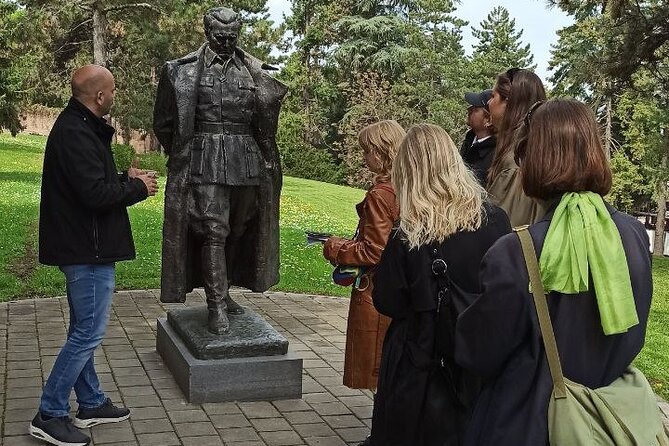
The route includes Generalštab Nikole Dobrovića, a stop listed for about 20 minutes. The available details do not specify every part of the guide’s talk here, so you should expect the guide to use the building as part of the wider story of Belgrade’s 20th-century political architecture and conflict.
This section helps break up the grander squares. Communist-era Belgrade is not represented only by ceremonial spaces. Its architecture includes socialistic gray structures and constructivist forms, many of which can look severe at first glance.
Look closely rather than waiting for a postcard view. These buildings show how architecture was used to express a new society. They also sit within a city that had already been shaped by royal, imperial, and wartime chapters. That mixture is a recurring theme throughout the tour.
The trolley ride is short but worthwhile
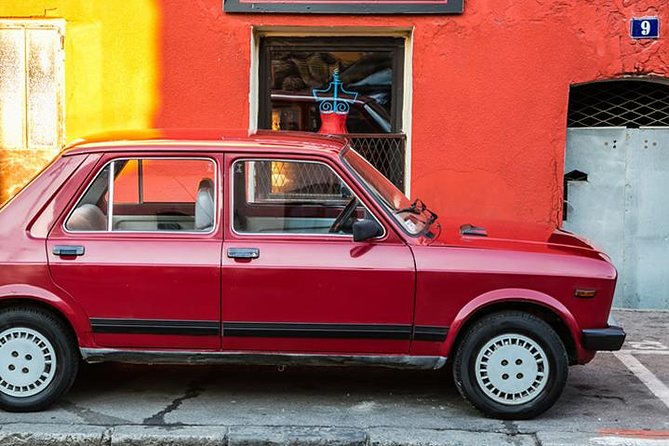
One-way trolley travel is included, with about 20 minutes set aside for the ride. It is a small part of the itinerary, but I like its practical value. You are not only hearing about communist-era public transport. You are using one of the forms of transport associated with that period, and it remains active in Belgrade today.
The trolley also gives your feet a break after the central walking sections. Bring a seat of patience rather than expecting a special sightseeing vehicle. This is ordinary public transport, which is precisely why it adds a bit of real city life to the experience.
For some people, the ride will be a highlight because it connects past and present without a staged display. For others, it may feel like a simple transfer. Either way, it is a useful change of pace before the museum visit.
Dedinje, Tito’s world, and the Museum of Yugoslavia
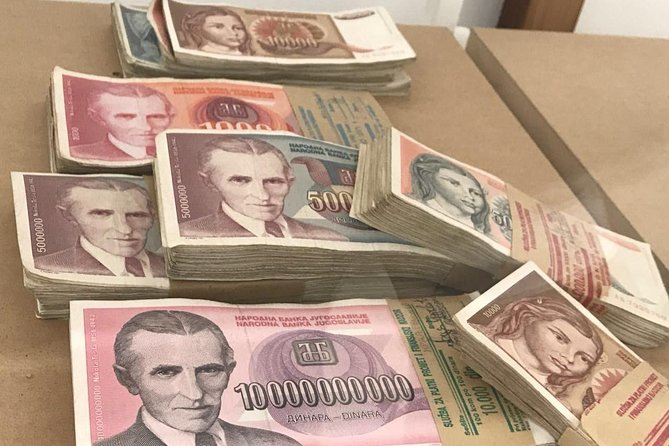
The trolley leads toward Dedinje, a Belgrade district associated with embassies and residential villas. This shift away from the city center changes the mood. You see a more private and official side of the capital, one connected with diplomats, senior figures, and protected residences.
The main stop is the Museum of Yugoslavia, where the tour spends about 105 minutes. This is the longest section by far, and rightly so. The museum gives physical form to the ideas discussed earlier in the streets.
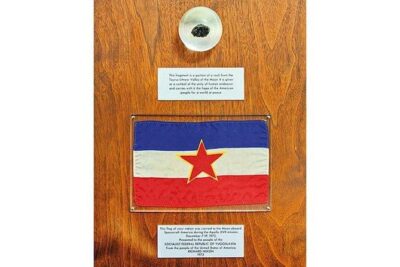
The collection focuses on Tito’s life and political legacy. Ceremonial gifts are a major attraction, including a highly valued gift from the crew of Apollo 11. That object points to Yugoslavia’s international position and Tito’s role in the Non-Aligned Movement, a subject that one guide, Nebojša, explained with particular care.
The museum works best with a guide. Displays can provide objects and dates, but the guide helps explain why a particular gift mattered, how Tito was presented to the public, and how Yugoslavia tried to maintain an independent place between larger power blocs.
Several guides have been praised for making this section accessible. Isidora, who has worked as a history teacher, was singled out for answering detailed questions about individual artifacts. Igor was also valued for helping visitors get more from the museum than they might have on their own.
The tour can cover the later period too, including the breakup of Yugoslavia, NATO bombings, and present-day political questions. The exact balance depends on the guide and the group. If you want more attention on the 1990s or current geopolitics, say so early.
House of Flowers gives the day a quiet ending
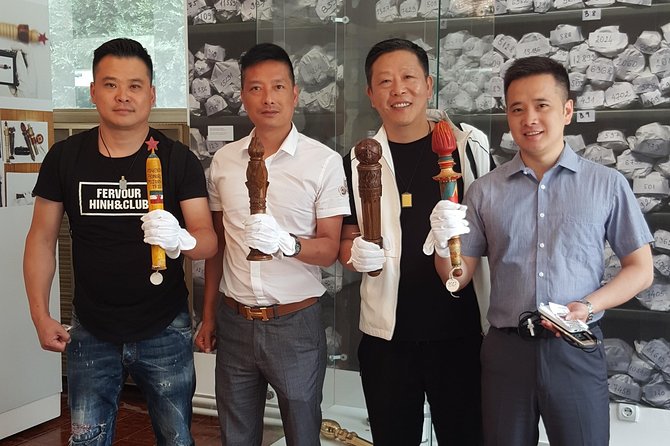
The final stop is the House of Flowers, Tito’s mausoleum. It is part of the museum complex and is where Tito is buried.
This is a fitting finish because it leaves you with a physical place of remembrance rather than one more street lecture. Tito’s legacy remains complicated. He was revered by many as the leader who guided Yugoslavia toward a better future, while his rule also involved political control and a carefully managed public image.
The mausoleum is not a simple answer to that debate. It is a place that shows how powerful the image of a leader can remain after his death. The tour is at its best when it lets you sit with that tension instead of forcing a neat verdict.
What the $51 price really includes
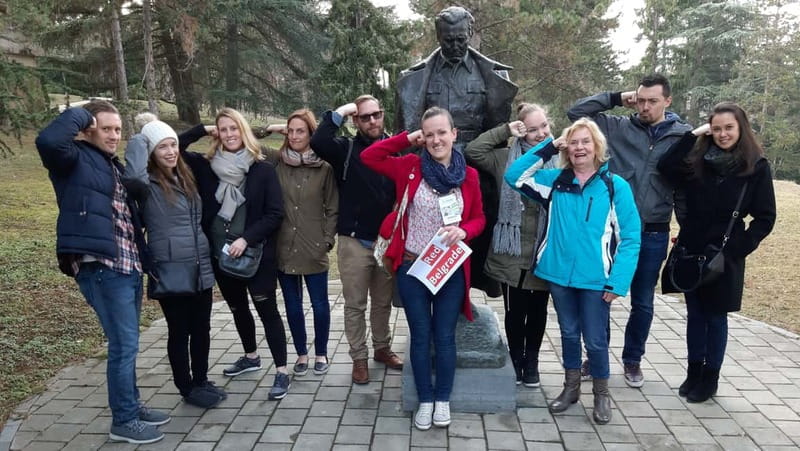
At $51 per person, the cost is reasonable for a four-hour guided experience. You receive the guide, the one-way trolley ride, and entry to the Museum of Yugoslavia. A private group is also available, though the supplied price does not specify a separate private rate.
The museum admission is important to the value. A short central walking tour alone would not justify the same price as easily, but this experience combines several parts of Belgrade with a substantial museum visit and a guided mausoleum stop.
The shared-tour minimum is two people. If you are the only person booked on a shared departure, a 75 percent supplement may apply. You are informed no later than 24 hours before the tour and can either cancel without a fee or pay the supplement. If you are booking alone, check this point before you commit.
The tour offers free cancellation up to 24 hours before departure and reserve-now, pay-later booking. Those terms are useful when your Belgrade plans are still shifting.
Who will enjoy this tour most?
I would choose this tour if you want more than a general introduction to Belgrade. It suits people interested in:
- Tito and Yugoslav political history
- Communist-era architecture and public memory
- The Non-Aligned Movement and Cold War politics
- Serbia’s relationship with neighboring countries
- The breakup of Yugoslavia and its continuing effect
- Museums, monuments, and guided historical discussion
You do not need prior knowledge. Several guides have been praised for explaining the subject from the beginning and answering questions patiently. At the same time, history enthusiasts will have enough material to ask about ideology, diplomacy, NATO, and Tito’s legacy.
The tour may be less suitable if you want a relaxed sightseeing walk with little political discussion. It also is not designed for people with mobility impairments. Wear comfortable shoes, since the activity is described as low intensity but still includes walking across several central stops and time on your feet in the museum.
Guide quality appears to be a major part of the experience. Names repeatedly associated with strong talks include Isidora, Nebojša, Dragana, Igor, Bojan, Milan, Gregor, and Radica. Availability changes, so you cannot assume you will receive a particular guide, but the range of praised guides is encouraging. Their strengths include humor, personal stories, clear explanations, local tips, and the ability to adapt when rain, official visits, or group interests affect the route.
Should you book the Red Belgrade Communist Tour?
Book it if you want Belgrade’s recent past explained through places you can actually see. The central squares make the politics tangible, the trolley ride adds an everyday detail, and the Museum of Yugoslavia provides the strongest collection of objects and context.
I would especially recommend it early in your stay. The tour can give you a framework for understanding Belgrade’s streets, public monuments, Serbian politics, and the complicated memory of Yugoslavia. At $51, it is a solid choice for a history-focused half day, provided you are comfortable walking and listening closely.
Skip it only if communist history and Balkan politics do not interest you. For everyone else, the combination of city sightseeing, serious discussion, and Tito’s museum makes this one of the more useful ways to approach modern Serbia.
FAQ
Where does the Red Belgrade Communist Tour start?
The meeting point is Republic Square, next to the Prince Mihailo Monument, also known as the horseman statue.
Where does the tour finish?
The tour finishes at the Museum of Yugoslavia, after the museum visit and the stop at Tito’s House of Flowers.
How long does the tour last?
The tour lasts four hours.
What languages are available?
The live guide is available in English or Spanish.
Is a private tour possible?
Yes. A private group option is available.
Is the trolley ride included?
Yes. The price includes a one-way trolley ride.
Is museum entry included?
Yes. Entry to the Museum of Yugoslavia is included, along with guided time at the museum.
What should I bring?
Bring comfortable shoes. The tour has a low level of intensity but includes walking and museum time. It is not suitable for people with mobility impairments.
Just added in Belgrade
- Your Own Belgrade: Street Art and Hidden Gems Walking Tour★ 5.0 · 2 reviews
- Private Half Day Serbia Tour Novi Sad and Petrovaradin Fortress★ 5.0 · 3 reviews
- 3-Hour Belgrade Zemun Neighborhood Tour★ 5.0 · 8 reviews
- Private Belgrade Street Art and Adventures Walking Tour★ 5.0 · 4 reviews
- Private Wine Tasting by Party in Belgrade★ 5.0 · 3 reviews
- From Belgrade:Uvac Nature Reserve Tour★ 5.0 · 4 reviews
- Urban & Alternative Belgrade tour★ 5.0 · 4 reviews
- VIP Reservation Service in Belgrade★ 5.0 · 2 reviews
Communist & Yugoslav History Tours, compared.
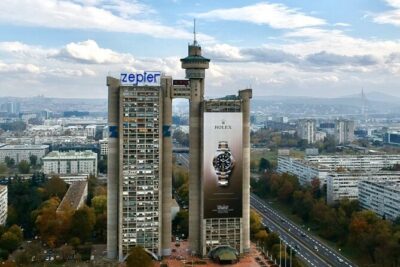
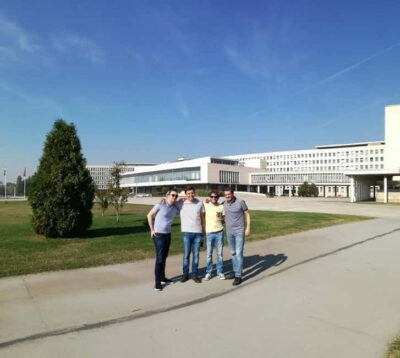
Space architecture tour – brutalist architecture
Read our review →
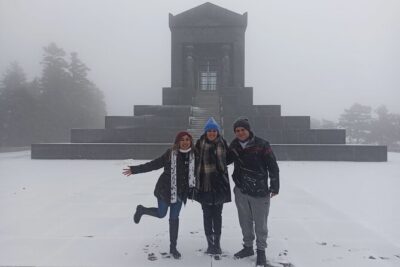
Private 4 Hours Space Architecture Tour in Belgrade
Read our review →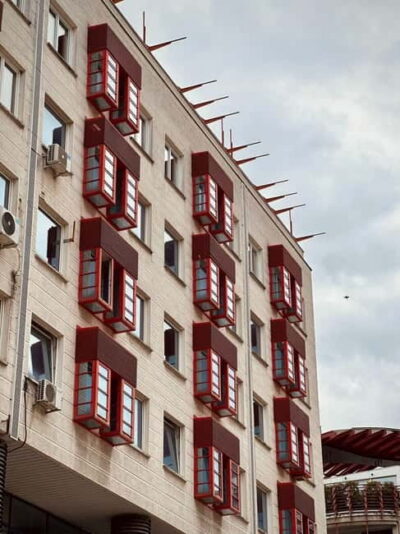
Browse the lists this tour appears in