
Reviewed · COMMUNIST & YUGOSLAV HISTORY TOURS
Red Belgrade Communist Tour
History feels close to the pavement here. The Red Belgrade Communist Tour connects Belgrade’s central squares with the Museum of Yugoslavia, and I like its mix of city walking and public transport. I also like that guides such as Nebo, Radica, Dragor, and Hristina bring personal insight and humor to a difficult subject.
The main consideration is the title. You will learn about communism, but this is also a broad tour of Serbian and Yugoslav history, from World War II through the breakup of Yugoslavia and the conflicts of the 1990s. It involves a fair amount of walking, some hills, and about four hours on your feet.
In This Review
- Key points to know before booking
- Why this tour helps explain modern Belgrade
- Republic Square: beginning where Yugoslavia was proclaimed
- Terazije: glamour, work, and socialist ideals
- Pionirski Park: pioneers, Western music, and the darker side
- The trolley ride to Dedinje
- Museum of Yugoslavia: the tour’s main attraction
- The House of Flowers and Tito’s final chapter
- The guides make or break a history tour
- Price, walking, and practical value
- Who should book the Red Belgrade tour?
- Should you book it?
- FAQ
- How long does the Red Belgrade Communist Tour last?
- What time does the tour start?
- Where does the tour begin?
- Where does the tour finish?
- Is the tour offered in English?
- Is admission to the Museum of Yugoslavia included?
- Are trolley tickets included?
- How much does the tour cost?
- What happens if I am the only person booked?
- Can I cancel for a full refund?
Key points to know before booking
- Tito’s story ends at the House of Flowers: The tour finishes at Josip Broz Tito’s mausoleum inside the Museum of Yugoslavia complex.
- A trolley ride links two parts of Belgrade: You travel from the central districts to Dedinje on public transport, an especially useful part of the experience if you are not yet comfortable navigating Belgrade.
- The tour covers more than communism: Expect discussion of World War II, Tito’s rise, Yugoslav socialism, cultural life, political repression, the breakup of the country, and the 1990s.
- Guide quality is a major strength: Specific guides praised for clear explanations and warm personalities include Nebo, Nebojsa, Radica, Dragor, Hristina, Nina, Isadora, Borjan, and Dragana.
- The group can reach 25 people: Shared tours need at least two participants. If you are alone, the operator may offer cancellation, another tour, or a 75 percent supplement to run the experience privately.
- The $53.10 price includes the important extras: Your English-speaking guide, trolley tickets, and admission to the Museum of Yugoslavia are included.
Why this tour helps explain modern Belgrade
Belgrade is not a city you can understand through grand buildings alone. Its recent past is written in political monuments, square names, public transport, concrete office blocks, royal-era landmarks, and the memories people still carry from Yugoslavia.
This tour gives those pieces a clear order. It begins in central Belgrade, where the guide introduces the creation of socialist Yugoslavia, then moves through public squares and government districts before heading to Dedinje and Tito’s final resting place.
I find the structure useful because the subject can quickly become confusing. Serbia was part of the Kingdom of Yugoslavia, then occupied during World War II, then reorganized under Tito as socialist Yugoslavia, and later caught up in the country’s breakup. A good guide helps you see how those stages connect.
The experience also avoids treating Yugoslav communism as a simple story of heroes and villains. You hear about nostalgia for Tito, the promise of social equality, the influence of Western music and fashion, the darker side of political control, and the conflicts that followed the country’s collapse.
That balance matters. Many people still remember Yugoslavia with affection, while others remember fear, shortages, censorship, war, or family loss. The strongest guides, including Nebojsa, Borjan, Nina, and Hristina, are praised for presenting more than one viewpoint and answering questions without turning the tour into a political speech.
Other tours covering the Yugoslav decades:
- Red Belgrade Communist Tour
★ 4.8 · 301 reviews - Belgrade: Yugoslavia Communist tour
★ 4.8 · 66 reviews - Communist Tour in Belgrade
★ 4.5 · 19 reviews
Republic Square: beginning where Yugoslavia was proclaimed
The meeting point is Trg Republike, or Republic Square, at Trg republike 9. This is a practical starting point because it places you in central Belgrade and lets the story begin in a public space rather than inside a museum.
The square is presented as the place where Tito gave an important speech connected with the proclamation of the Socialist Federal Republic of Yugoslavia. From there, the guide sets up the period that the tour will cover, roughly from World War II to the beginning of the 2000s.
The walking route also introduces Belgrade’s architectural mix. You will see gray socialist buildings associated with constructivist design alongside monuments and structures from the former Yugoslav Kingdom and more recent decades.
That mixture is one of the pleasures of the tour. Belgrade does not offer a tidy historical district where each era has its own neat boundary. Instead, the periods overlap in plain view. A royal-era monument may sit near a socialist building, while a modern street carries a name linked to an older political chapter.
The guide uses stories, urban legends, and conspiracy theories from the second half of the twentieth century to make the era more approachable. I would treat these as cultural clues rather than established facts. Their value is in showing how people made sense of politics, power, and daily life.
The first stop lasts about 20 minutes, but the walking between locations adds to the time. Wear shoes with good support, especially if you want to keep your attention on the guide instead of your feet.
Terazije: glamour, work, and socialist ideals
From Republic Square, the tour continues to Terazije. This area offers a different view of Yugoslav life, one that includes celebration, public status, labor, and celebrity.
At Hotel Moskva, the guide talks about glamorous holidays and festivities, along with famous and unusual visitors connected with the hotel. It is a useful reminder that socialist Yugoslavia was not cut off from the outside world in the same way as some other communist states.
The tour then turns to the former Marx and Engels Square and the Trade Union Hall. Here, the subject becomes the socialist ideal of work. The guide explains how labor was given a near-sacred place in public life, including the story of a miner who became a national superstar.
That contrast is revealing. The regime promoted workers as the moral center of society, yet it also created public figures, ceremonies, hotels, and carefully staged displays of success. The tour uses this tension to show how official ideals and ordinary ambitions could exist side by side.
Terazije is also a good place to notice the pace of the experience. This is not a museum lecture delivered from one room. You stop, look around, connect the guide’s story to the buildings, and then keep moving through the city.
The official stop takes about 20 minutes. There is no separate admission charge here. If you prefer a slow architectural walk with lots of time for photographs, the group schedule may feel brisk, since the tour has several subjects to cover before reaching the museum.
Pionirski Park: pioneers, Western music, and the darker side
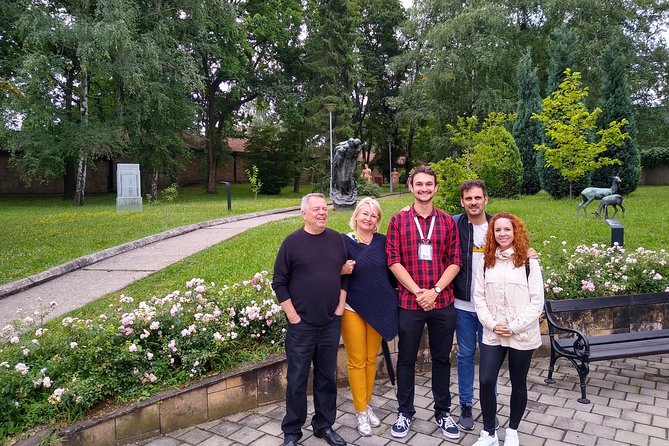
Pionirski Park brings the tour to childhood and public ritual. The focus is the pioneer oath, a ceremony that introduced young people to the values of socialist Yugoslavia.
This section helps explain how a political system became part of ordinary life. Communism was not only something discussed by officials. It appeared in school ceremonies, symbols, music, work culture, youth organizations, and ideas about the proper citizen.
The guide also explains why Yugoslavia was often seen as more open than other socialist countries. Western music and aspects of Western culture were allowed to influence daily life, helping create new tastes and habits.
That openness had limits. The tour makes room for the darker parts of the story rather than presenting Yugoslav socialism as carefree nostalgia. You may hear about political pressure, restrictions, and the gap between the country’s public image and the experiences of people living under the system.
A monument to Ivo Andrić appears along the route. Andrić was a Nobel Prize winning Serbian writer and served as a Yugoslav ambassador in Berlin at the start of World War II. His presence adds another layer to the tour, since literature, diplomacy, war, and national identity often overlap in Balkan history.
This part takes about 40 minutes, including the move toward public transportation. It is one of the best sections for visitors who want to connect political history with everyday life.
A couple more Belgrade trips to weigh up
- From Belgrade: Novi Sad & Sremski Karlovci Full-Day Tour
★ 4.7 · 1,068 reviews - From Belgrade: Gems of Eastern Serbia Tour
★ 5.0 · 427 reviews - Northern Serbia: Sremski Karlovci and Novi Sad Full-Day Tour from Belgrade
★ 5.0 · 425 reviews - Day Trip from Belgrade: Gems of Eastern Serbia
★ 5.0 · 424 reviews
The trolley ride to Dedinje
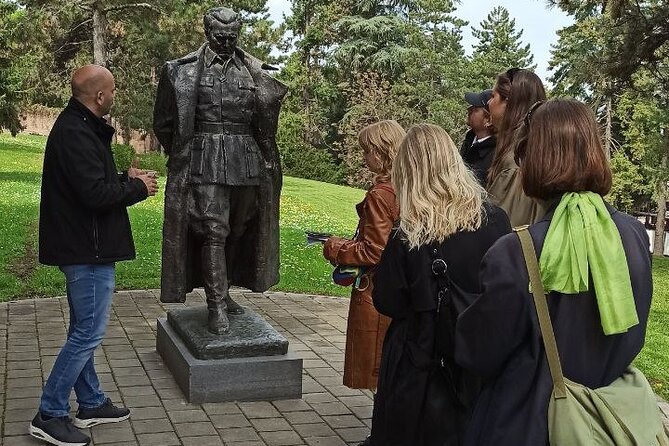
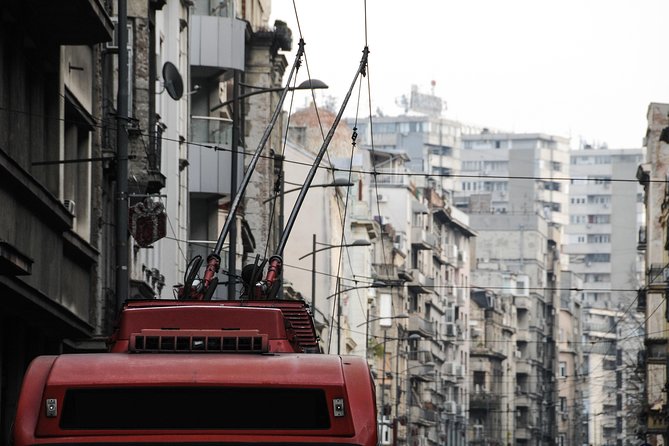
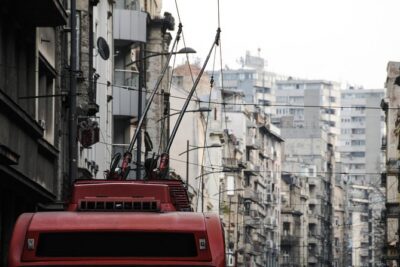
The one-way trolley ride is more than a way to get from the center to the museum. It gives you a short taste of Belgrade’s public transport and connects the tour to the period it describes.
The trolley is presented as a symbol of the public transportation system that served Yugoslavia and remains active today. You will use it to reach Dedinje, an elite part of Belgrade known for embassies, residential villas, and the Museum of Yugoslavia complex.
I like this part because it solves a practical problem. The museum is outside the central walking route, and finding the correct public transport connection on your own may be difficult if you have just arrived in the city. One guide specifically received praise for making the trip easier for someone who would otherwise have struggled to find the museum.
The ride also creates a natural break between the city-center discussion and the museum visit. You move from public squares and working life to a district associated with power, diplomacy, and the Yugoslav leadership.
The trolley ticket is included in the price. Public transport can be crowded or less comfortable than a private vehicle, but that is part of the point. This is not a luxury transfer. It is a small, useful piece of local life.
Museum of Yugoslavia: the tour’s main attraction
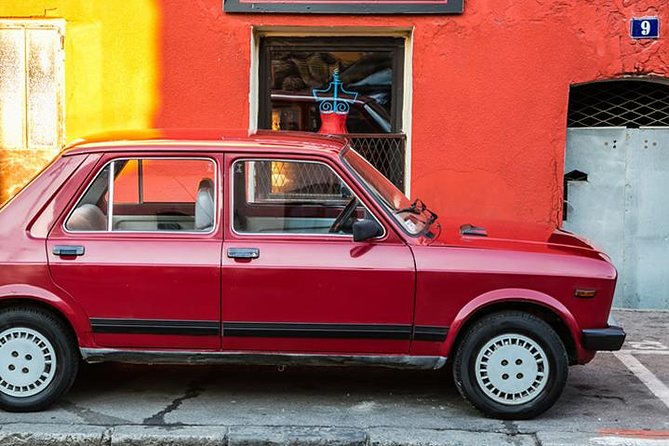
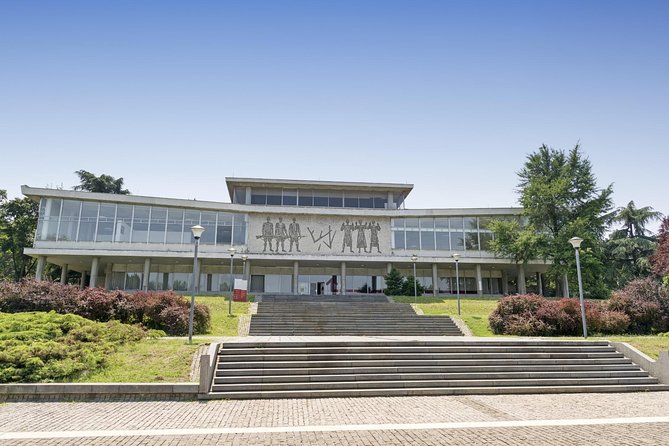
The Museum of Yugoslavia receives about 90 minutes, making it the longest stop and the central payoff of the tour.
The museum focuses on Tito’s life and political career. You will see ceremonial gifts presented to the Yugoslav president, including a gift connected with the crew of Apollo 11. These objects show how Tito positioned Yugoslavia between East and West and how foreign leaders treated him.
The collection is also a good way to examine the public image of power. Gifts from presidents, political leaders, and royal figures tell one story about diplomacy. The museum setting invites you to ask another question: how did an officially socialist leader come to represent prestige, personal authority, and international importance?
A guide adds useful context that objects alone cannot provide. The best part of the visit is likely to be the explanation around the displays, particularly if you ask questions about Tito, the country’s political system, or the breakup of Yugoslavia.
The museum also helps bring the timeline toward its final chapter. You are not only looking backward at Tito’s rule. You are considering the last years of the former republic and the political tensions that shaped Serbia’s present.
Some people book this experience mainly for the city walk and discover that the museum takes up a large share of the morning. That is worth knowing in advance. If you want a short introduction to communist architecture, this may feel museum-heavy. If you want to understand Tito and Yugoslavia, the time spent here is a major benefit.
The House of Flowers and Tito’s final chapter
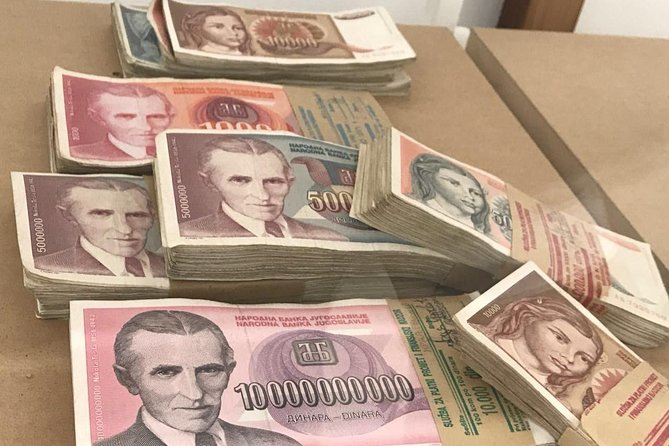
The tour ends at the House of Flowers, the mausoleum where Tito is buried. It is a quiet and symbolic finish after several hours of public spaces, political stories, and competing memories.
The guide introduces the site as part of the museum visit and uses it to discuss Tito’s final years and the end of the former republic. This closing stop gives the tour an emotional center without requiring you to accept one fixed opinion of Tito.
For some people, Tito remains the leader who held Yugoslavia together and gave the country a respected place between political blocs. For others, his government represents one-party rule and restrictions that should not be softened by nostalgia. The House of Flowers allows you to consider both ideas in the same place.
You should expect the museum and mausoleum to be the most focused part of the experience. The earlier stops provide setting and background, while Dedinje offers the destination where the story becomes personal and ceremonial.
The official endpoint is the Yugoslav History Museum complex after the visit. You do not return to Republic Square, so plan the rest of your day from the Dedinje area rather than assuming you will finish in central Belgrade.
The guides make or break a history tour
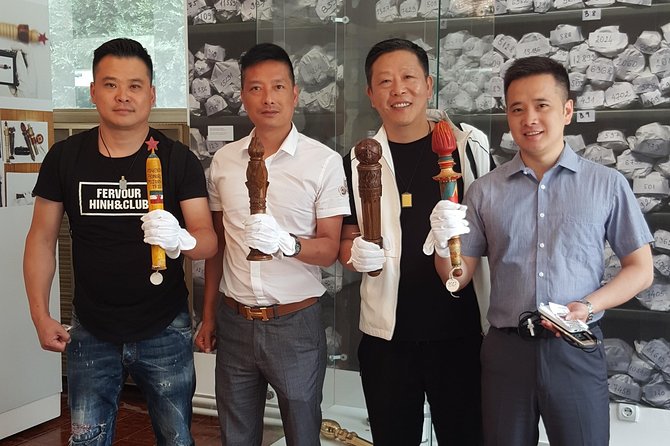
Guide quality is the strongest feature of this experience. Names connected with especially positive feedback include Nebo, also referred to as Nebojsa, Radica, Dragor, Hristina, Nina, Isadora, Borjan, and Dragana.
The praise is specific. Guides are described as personable, clear, enthusiastic, polite, and willing to answer questions. Several are noted for explaining the subject through personal experiences, humor, and stories rather than reciting dates.
That matters in Serbia, where historical subjects can be sensitive and political language can carry real weight. A guide who can explain several viewpoints without losing the thread gives you a better chance of understanding how history affects present-day attitudes.
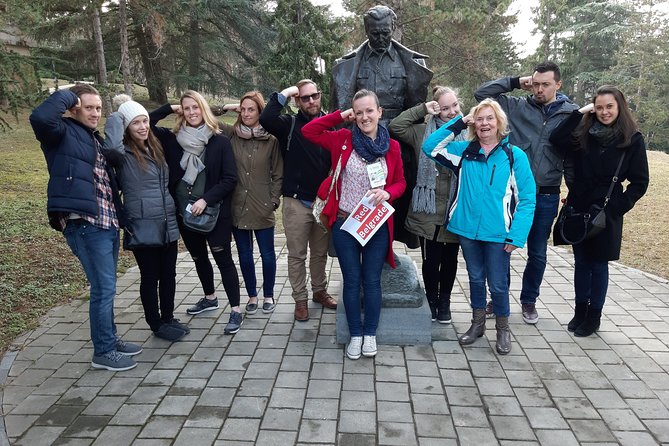
The tour has a maximum of 25 people, though some departures may be much smaller. A group of six was described as personal and intimate, while one person received a private experience after agreeing to the additional charge.
There is one important language detail to check at booking. The listed language is English, but one participant reported that two groups expected English and encountered a different language arrangement. Confirm the language clearly before payment, especially if it is essential to your plans.
Price, walking, and practical value
At $53.10 per person, this is not the cheapest walking tour in Belgrade. It is also not simply a walking tour. The fee includes an English-speaking guide, the trolley tickets, and entry to the Museum of Yugoslavia.
I consider the price reasonable if you want a structured introduction to twentieth-century Serbia and do not want to organize the museum visit and transport yourself. The included admission and trolley ride add real value, while the guide’s ability to explain the political background is the main reason to pay rather than visit the sites alone.
The four-hour duration is substantial. You will walk through central Belgrade, stand at several stops, ride a trolley, and spend about 90 minutes at the museum. Comfortable walking shoes and a bottle of water are sensible choices.
One practical drawback is the lack of a stated refreshment break. A few hours on foot can feel long, particularly on a warm day or if you are not used to hills. You can plan a drink or snack before the 10:00 a.m. start, and you may want to arrange lunch for after the tour.
The shared tour requires at least two participants. If you are the only person booked, the operator says it will contact you no later than 24 hours before departure. You can cancel without a fee, choose another experience, or pay a 75 percent supplement to keep the tour as a private departure.
That policy is worth understanding before booking. It can create a pleasant private tour, but the added cost changes the value calculation. Free cancellation is available up to 24 hours before the start time, while later cancellations and changes are not refunded.
Who should book the Red Belgrade tour?
I would choose this tour if you want more than a list of dates and monuments. It suits anyone interested in Tito, Yugoslavia, Cold War politics, twentieth-century Europe, Serbian identity, or the breakup of a country.
It is also a strong first or second-day activity in Belgrade. The route gives you central landmarks, introduces public transport, and takes you to a museum you might not easily reach on your own.
You may want a different experience if you dislike long walking tours, prefer a narrow focus on communist architecture, or want to spend most of your time exploring at your own pace. The title suggests a tightly focused study of communism, but the actual experience ranges across Serbian and Yugoslav history.
The rating of 4.8 from 78 ratings and the 96 percent recommendation rate fit the main strengths: strong guides, useful historical context, and a well-planned trip to the Museum of Yugoslavia. The main warnings are also clear: bring good shoes, confirm the language, and understand the possible solo supplement.
Should you book it?
Book the Red Belgrade Communist Tour if you want a thoughtful introduction to Belgrade’s recent past and value a guide who can explain difficult subjects in plain language. The trolley ride and museum entry make the $53.10 fee easier to justify, and the House of Flowers gives the morning a memorable finish.
Skip it if you want a quick city walk or a tour devoted only to communist buildings. For most history-minded visitors, though, this is a useful way to connect Belgrade’s streets with the people, politics, and memories that shaped modern Serbia.
FAQ
How long does the Red Belgrade Communist Tour last?
The tour lasts approximately four hours, including the city walk, trolley ride, and visit to the Museum of Yugoslavia.
What time does the tour start?
The scheduled start time is 10:00 a.m.
Where does the tour begin?
The meeting point is Trg Republike 9 in Belgrade, near Republic Square.
Where does the tour finish?
The tour ends at the Yugoslav History Museum after the museum visit, near the House of Flowers in Dedinje.
Is the tour offered in English?
Yes. The listed tour language is English. Because one participant reported confusion about the language offered, confirm the language when booking.
Is admission to the Museum of Yugoslavia included?
Yes. Entry to the Yugoslav History Museum is included in the tour price.
Are trolley tickets included?
Yes. The trolley tickets for the one-way ride to Dedinje are included.
How much does the tour cost?
The listed price is $53.10 per person. Group discounts may be available.
What happens if I am the only person booked?
The shared tour needs at least two passengers. If you are the only participant, the operator will contact you at least 24 hours before the tour and offer cancellation without fees, another experience, or a 75 percent supplement to operate the tour privately.
Can I cancel for a full refund?
Yes. You can cancel at least 24 hours before the local start time for a full refund. Cancellations or changes made less than 24 hours before the start are not refunded or accepted.
Just added in Belgrade
- Your Own Belgrade: Street Art and Hidden Gems Walking Tour★ 5.0 · 2 reviews
- Private Half Day Serbia Tour Novi Sad and Petrovaradin Fortress★ 5.0 · 3 reviews
- 3-Hour Belgrade Zemun Neighborhood Tour★ 5.0 · 8 reviews
- Private Belgrade Street Art and Adventures Walking Tour★ 5.0 · 4 reviews
- Private Wine Tasting by Party in Belgrade★ 5.0 · 3 reviews
- From Belgrade:Uvac Nature Reserve Tour★ 5.0 · 4 reviews
- Urban & Alternative Belgrade tour★ 5.0 · 4 reviews
- VIP Reservation Service in Belgrade★ 5.0 · 2 reviews
Communist & Yugoslav History Tours, compared.
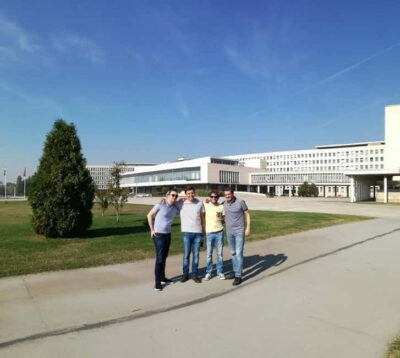
Space architecture tour – brutalist architecture
Read our review →
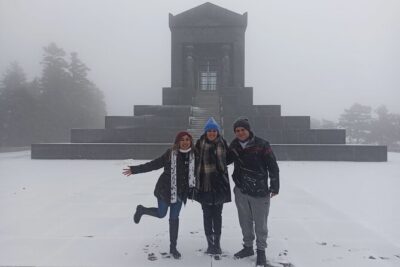
Private 4 Hours Space Architecture Tour in Belgrade
Read our review →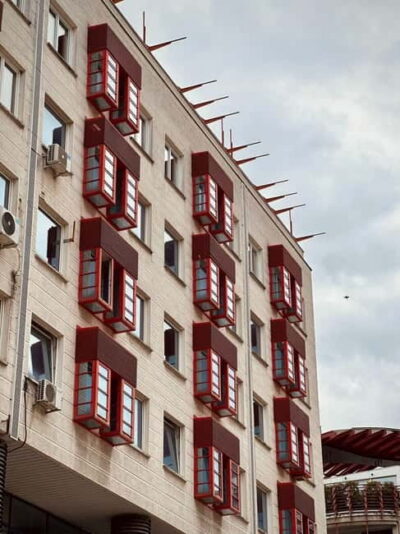
Browse the lists this tour appears in