
Reviewed · HISTORICAL TOURS
History and Culture in my Belgrade
Belgrade reveals itself in layers. This three-hour walk links Orthodox customs, Ottoman traces, 1999 bombing sites, student life, street art, and a tasting of Serbian specialties. I like the small-group format, which can include as few as six people, and I like the way guide Marija connects difficult history with ordinary life today. The one concern is pace: twelve stops, plus several unlisted sights along the route, make this a full walking tour rather than a slow museum-style outing.
I also appreciate the useful first-day structure. You finish near Kosančićev Venac with views toward the Sava and New Belgrade, while picking up ideas for the rest of your Serbian holiday. Three start times help with planning, but the $90.11 price is not cheap for three hours, so the value depends on how much you want personal guidance, cultural context, and a small tasting rather than a basic stroll.
In This Review
- Key things to know before you book
- Why this Belgrade walk works as an introduction
- St. Mark Church begins with faith and medieval Serbia
- RTS and Tašmajdan bring the hard years into view
- Parliament and Nikola Pašić Square explain public life
- Čumićevo sokače is the tour’s most hands-on stop
- Republic Square and the pedestrian zone show Belgrade today
- Students’ Square and Dorćol add youth and neighborhood character
- Bajrakli Mosque marks the Ottoman chapter
- Question Mark kafana and Kosančićev Venac finish with old Belgrade
- What $90.11 gets you in three hours
- Who should book this experience
- Should you book History and Culture in my Belgrade?
- FAQ
- How long is History and Culture in my Belgrade?
- What language is the tour offered in?
- Where does the tour start?
- Where does the tour end?
- How many people can join the tour?
- What food and drinks are included in the tasting?
- Are admission tickets included?
- Can I cancel for a full refund?
Key things to know before you book
- Serbian history arrives in clear chapters: Orthodox faith, Ottoman rule, Yugoslavia, the 1990s, and modern Belgrade all appear during the walk.
- Marija is the main reason this tour feels personal: Her warm, clear style helps make complex regional history easier to follow.
- The tasting at Čumićevo sokače adds real local flavor: You try rakija, wine, juice, jam, slatko, and honey while learning how Serbs toast.
- The route mixes famous sights with less obvious corners: Dorćol graffiti, underground stories at Tašmajdan, and the old Question Mark kafana break up the major monuments.
- The finish is scenic but the route is not a loop: You begin at St. Mark Orthodox Church and end in Kosančićev Venac.
- The price buys context, not admissions: Every listed stop has free admission, so this works best if you value a strong guide and a compact introduction to Belgrade.
Why this Belgrade walk works as an introduction
A first look at Belgrade can feel scattered. One block brings a grand government building, the next a damaged façade, a quiet church, a cafe-lined pedestrian street, or a rough wall covered in graffiti. This tour gives those contrasts a storyline.
The route moves from St. Mark Orthodox Church through central Belgrade and Dorćol, then down toward the old river-facing quarter of Kosančićev Venac. You cover politics, religion, education, food, architecture, and everyday customs without spending half a day inside a single museum.
Marija’s role matters here. The strongest praise for her centers on her ability to explain hard subjects in simple terms and to link past events with current Serbian life. That is useful in Belgrade, where the history includes shifting borders, Ottoman rule, Yugoslavia, economic change, NATO bombing, and the habits of a young urban population.
The tour is offered in English, and the group can be as small as six people, though the stated maximum is 15. That difference matters. If demand is low, you may get a very personal walk. If the larger limit applies, it will feel less intimate, though still smaller than a big coach excursion.
A couple more Belgrade trips to weigh up
- Belgrade: 3-Hour Serbian History Walking Tour
★ 4.9 · 108 reviews - NATO Bombing of Belgrade Historical Tour
★ 5.0 · 17 reviews - Belgrade: Women’s Side of History Walking Tour with Coffee
★ 5.0 · 16 reviews
St. Mark Church begins with faith and medieval Serbia
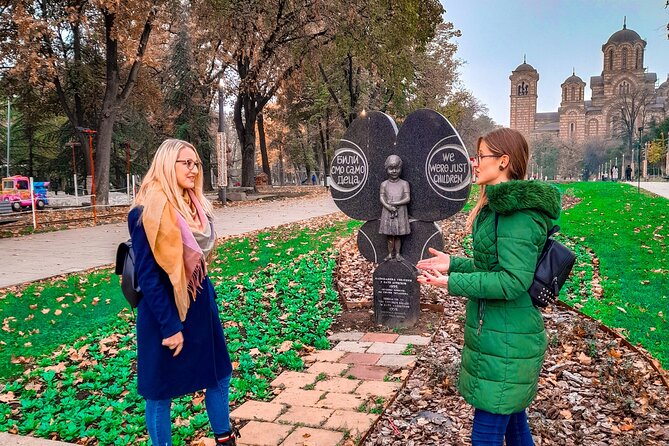
Meet in front of St. Mark Orthodox Church on Bulevar kralja Aleksandra. The church is described as the second largest in Belgrade, and it makes a fitting starting point because the opening discussion covers major events in Serbian history as well as customs and religious practice.
You enter the church with the guide and learn how Orthodox traditions shape Serbian culture. The visit also includes the remains of one of Serbia’s great medieval rulers, giving the religious setting a direct link to the country’s earlier royal past.
Allow about 20 minutes here. That is enough for an introduction and a look inside, but not enough for a detailed study of every architectural feature. I would listen closely to the cultural explanation, since that is the part most likely to help later sights make sense.
RTS and Tašmajdan bring the hard years into view
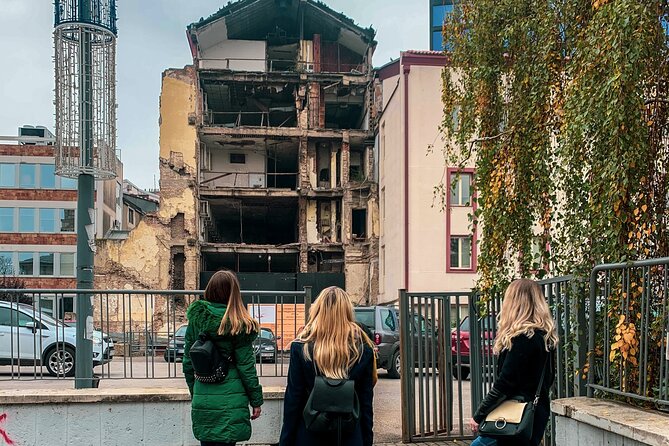
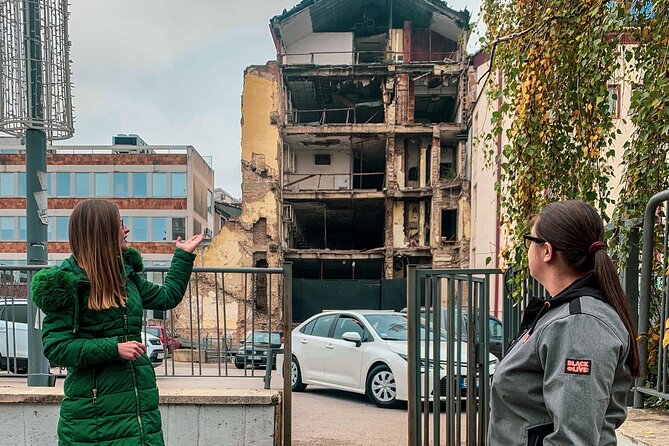
The short walk to the Radio Television of Serbia building changes the mood. Here you see structures damaged during the 1999 bombing and hear about tragic events from the 1990s. The discussion also covers Yugoslavia, Serbia’s economy, and present-day life.
This is one of the tour’s most valuable stops for anyone who knows only the broad outline of the Balkan conflicts. You are not simply looking at an old building. You are being asked to connect a physical scar with the political and social pressures behind it.
The stop lasts about 20 minutes. Because the subject is painful, the quality of the guide matters. Marija’s praised ability to explain difficult material plainly should serve you well, but expect this part to be serious rather than light sightseeing.
Tašmajdan Park follows with a calmer setting. The park is known for a relaxed atmosphere, mysteries, and underground passages. The 15-minute visit gives you a pause after the war-related material and adds one of Belgrade’s stranger layers.
Do not expect an extended park walk. This is a short story-filled stop, useful for seeing how the city’s public spaces can hold both leisure and rumor.
Parliament and Nikola Pašić Square explain public life
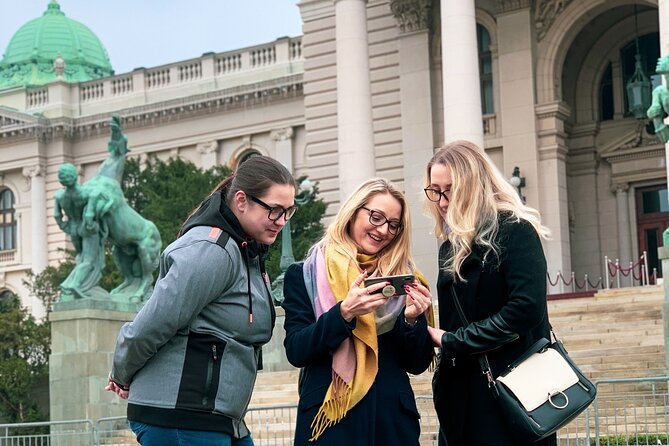
At the House of the National Assembly of the Republic of Serbia, the guide discusses why the monumental building became associated with Game of Thrones and explains the background of some of Serbia’s largest protests.
This is a good example of the tour’s approach. Instead of treating the parliament as a formal façade, you hear how the building has functioned as a stage for political conflict. Ten minutes is brief, but the point is to give you a framework for the square and its role in modern Serbia.
The route continues to Nikola Pašić Square, described as the city’s youngest square. Its fountain provides a lighter story about contemporary customs among young people in Belgrade. The ten-minute stop helps balance the weightier material with a glimpse of local humor and social habits.
You also see the only hotel in Serbia included on the worldwide list of historic hotels. The tour description does not give a separate timing for this sight, so treat it as a passing point rather than a full hotel visit.
Out of the city, and a slower way to spend the day:
- From Belgrade: Novi Sad & Sremski Karlovci Full-Day Tour
★ 4.7 · 1,068 reviews - From Belgrade: Gems of Eastern Serbia Tour
★ 5.0 · 427 reviews - Northern Serbia: Sremski Karlovci and Novi Sad Full-Day Tour from Belgrade
★ 5.0 · 425 reviews - Day Trip from Belgrade: Gems of Eastern Serbia
★ 5.0 · 424 reviews
Čumićevo sokače is the tour’s most hands-on stop
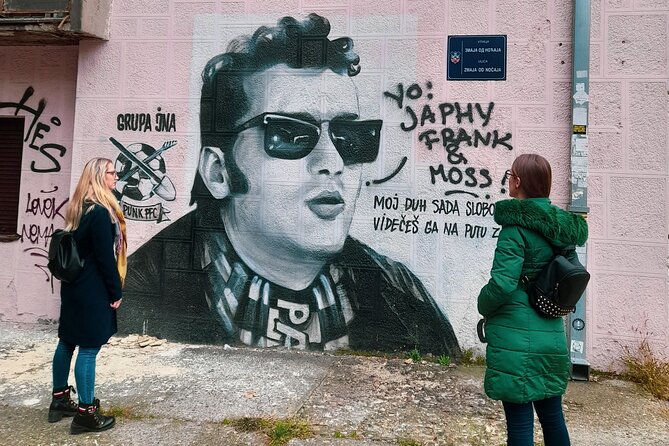
The tasting at Čumićevo sokače lasts about 30 minutes and is the clearest break from standard sightseeing. In a small local shop in Belgrade’s design district, you sample domestic rakija, wine, natural juices, jam, slatko, and honey.
This is not just a snack break. You hear about old customs, Serbian hospitality, handmade food, and the local way of saying cheers. Rakija, in particular, is tied to social occasions across the region, so tasting it alongside an explanation of manners and tradition gives the experience more meaning than simply ordering a shot at a bar.
Slatko is another useful introduction. It is a sweet preserve served in Serbian hospitality, and trying it with other local products lets you notice how food carries family and village traditions.
I see this stop as a major part of the price calculation. Since the sightseeing admissions are free, the tasting and the guide’s interpretation provide much of the added value. If you want a strictly historical walk, the food portion may feel like a detour. If you want to understand how people welcome one another, it is one of the strongest sections.
Republic Square and the pedestrian zone show Belgrade today
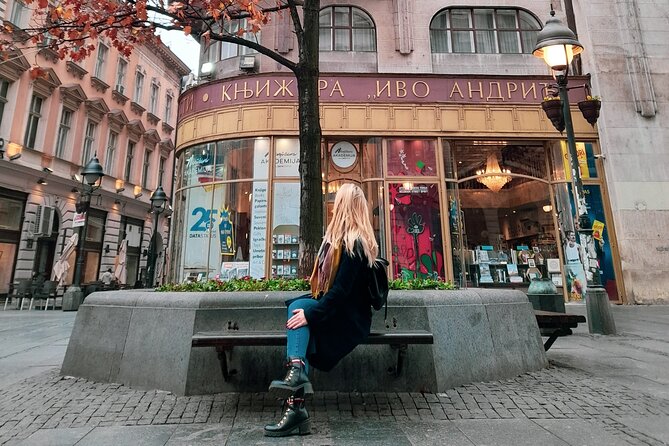
Republic Square brings you into the city’s best-known central meeting place. The 10-minute stop lets you take in the public energy, then the walk crosses Belgrade’s main pedestrian zone.
Here the emphasis shifts to street musicians, cafes, and the everyday rhythm of central Belgrade. It is a useful contrast with the parliament and RTS. You see a city that is not only defined by political memory, but also by people meeting, listening to music, and lingering over coffee.
The timing remains brisk. You will get an introduction rather than a long cafe break, and the tour does not appear to include a sit-down drink. If you want to linger, shop, or take extended photographs, save that for after the tour.
Students’ Square and Dorćol add youth and neighborhood character
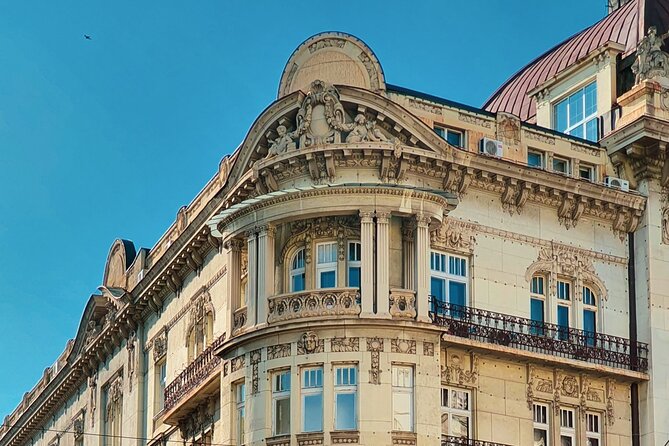
At the University of Belgrade, the walk takes in Students’ Square and its park. The discussion focuses on education in Serbia, offering another way to understand the country beyond wars and monuments.
This part should appeal to you if you want social context. Universities help explain the age and mood of a capital city, and the stop gives the tour a chance to talk about how education fits into Serbian life.
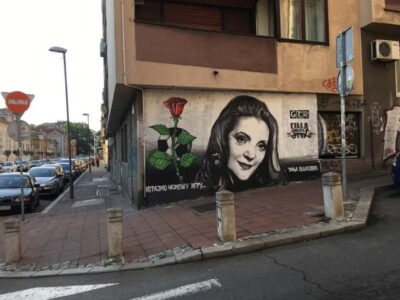
Dorćol then adds a more informal edge. You walk through the neighborhood, see distinctive graffiti, and hear stories from its past. The 15-minute visit is short, but the combination of old stories and modern street art captures Belgrade’s habit of putting new expression on old urban fabric.
The route here also shows why comfortable shoes are sensible. The experience is a walking tour with frequent stops, not a vehicle-based circuit. The provided details do not state a total distance or accessibility conditions, so you should plan for ordinary city walking and ask the operator if you need specific mobility information.
Bajrakli Mosque marks the Ottoman chapter
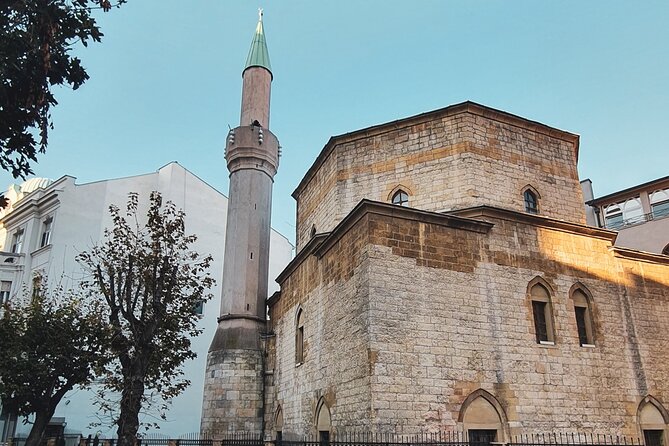
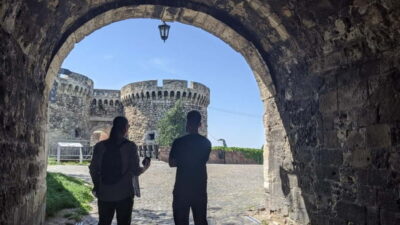
Bajrakli Mosque is the only preserved mosque in Belgrade from the 273 that once existed there. The stop lasts about 15 minutes and introduces nearly five centuries of Ottoman influence in Serbia.
That single statistic helps you see why the mosque matters. It is not an isolated curiosity. It is a surviving reminder of a long period that shaped architecture, religion, food, language, and political memory.
The visit also keeps the tour from presenting Serbian history as a single religious or national story. After the Orthodox opening, you encounter an Ottoman site, then a traditional kafana and an old quarter. The range is one of the walk’s real strengths.
The stop is free, but the description does not promise an interior visit. Plan on seeing the mosque and hearing its story, with access depending on the conditions of the day.
Question Mark kafana and Kosančićev Venac finish with old Belgrade
Znak Pitanja, or the Question Mark, gives you a look at the architecture of Belgrade’s oldest traditional restaurant, known as a kafana. The 10-minute stop is a quick introduction to a place tied to the city’s cafe and tavern culture.
After the earlier tasting, this stop helps place food and drink within the city’s social history. You are not promised a meal here, so think of it as an exterior or architectural visit rather than another dining experience.
The final area is Kosančićev Venac, one of Belgrade’s oldest neighborhoods. You walk along a cobblestoned street, see distinctive cultural heritage, pass an Orthodox church, and reach a viewpoint over New Belgrade, the Sava River, and traditional Serbian splavs.
Those splavs are floating venues and boats associated with Belgrade’s river life. The view gives the tour a strong finish because it lets you look across the water and compare older central Belgrade with the newer city beyond it.
The tour ends at Kosančićev Venac 22, not back at St. Mark Church. That is convenient if you plan to continue toward the river or old town, but you should note the end point when arranging your next activity.
What $90.11 gets you in three hours
At $90.11 per person, this is priced above a simple public walking tour. Every listed attraction has free admission, so you are paying mainly for Marija’s time, English-language explanations, the small-group setting, and the tasting.
The value is strongest for a first visit. In three hours, you get a usable map of central Belgrade and an introduction to subjects that can be difficult to sort out alone. You also receive practical ideas for the rest of your Serbian holiday, according to the tour’s stated aim.
The value is weaker if you want long stops, paid interiors, or a relaxed food tour. Twelve stops in roughly three hours means an average of about 15 minutes per location, and some stops are shorter. You will see a lot, but you will not study each place in detail.
The tour receives a five-star rating from 41 published evaluations, with 100 percent recommending it. The repeated praise focuses on Marija’s warmth, clear explanations, passion for Belgrade, and ability to connect old history with current culture. One especially useful detail is that her style is described as making difficult subjects simple. That is exactly what you want in a city with a complicated past.
Who should book this experience
I would choose this tour if you want a strong orientation on your first day, especially if you prefer stories and context over a list of photo stops. It suits solo visitors, couples, and small groups who want to ask questions and taste local products without committing to a full-day excursion.
It is also a good match if you are curious about modern Serbia. The route does not stop at medieval rulers and churches. It addresses the 1990s, the 1999 bombing, economics, protests, education, youth customs, and contemporary cafe life.
You may want something else if you dislike brisk walking, prefer large museums, or want a tour focused only on architecture. The route covers a lot of ground, and the tasting includes alcohol. Natural juices are available, but the experience is not designed as a dedicated nonalcoholic food tour.
Three start times make it easier to fit around flights, meals, or another activity. Confirmation arrives at booking, public transportation is nearby, and most people can participate. Free cancellation is available until 24 hours before the start time. After that, the payment is not refunded, and changes are not accepted.
Should you book History and Culture in my Belgrade?
Book it if you want a fast, thoughtful introduction to Belgrade led by a guide who cares about explaining her home. Marija’s warmth and plain approach to difficult history are the clearest strengths, while the Serbian tasting adds a personal touch that monuments alone cannot provide.
I would skip it if you want a slow day, substantial museum time, or a cheaper walk based mainly on free sights. For everyone else, the route makes a sensible first step into Belgrade: serious when it needs to be, social when it can be, and practical enough to shape the rest of your stay.
FAQ
How long is History and Culture in my Belgrade?
The experience lasts approximately three hours.
What language is the tour offered in?
The tour is offered in English.
Where does the tour start?
It starts in front of St. Mark Orthodox Church at Bulevar kralja Aleksandra 17, Belgrade, Serbia.
Where does the tour end?
It ends at Kosančićev Venac 22, Belgrade 11000, Serbia.
How many people can join the tour?
The preferred group size is a maximum of six people, while the stated overall maximum is 15 participants.
What food and drinks are included in the tasting?
The tasting includes domestic rakija, wine, natural juices, jam, slatko, and honey.
Are admission tickets included?
All listed itinerary stops have free admission.
Can I cancel for a full refund?
Yes. You can cancel at least 24 hours before the local start time for a full refund. Cancellations or changes made less than 24 hours before the start time are not accepted for a refund.
Just added in Belgrade
- Your Own Belgrade: Street Art and Hidden Gems Walking Tour★ 5.0 · 2 reviews
- Private Half Day Serbia Tour Novi Sad and Petrovaradin Fortress★ 5.0 · 3 reviews
- 3-Hour Belgrade Zemun Neighborhood Tour★ 5.0 · 8 reviews
- Private Belgrade Street Art and Adventures Walking Tour★ 5.0 · 4 reviews
- Private Wine Tasting by Party in Belgrade★ 5.0 · 3 reviews
- From Belgrade:Uvac Nature Reserve Tour★ 5.0 · 4 reviews
- Urban & Alternative Belgrade tour★ 5.0 · 4 reviews
- VIP Reservation Service in Belgrade★ 5.0 · 2 reviews
Historical Tours, compared.
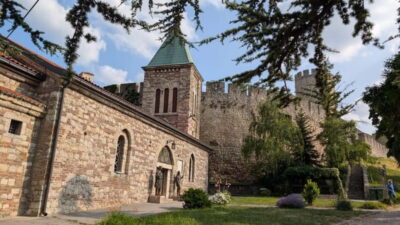
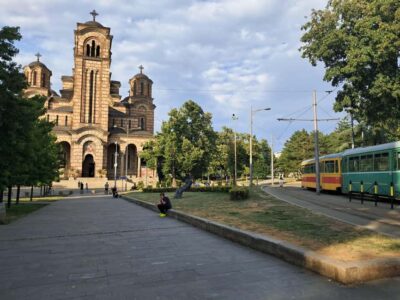
Women’s Side of History Walking Tour with Coffee
Read our review →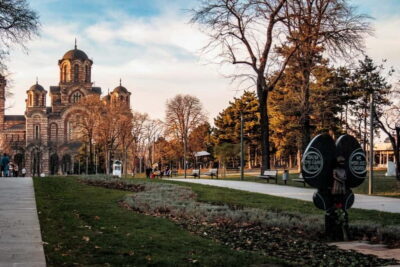
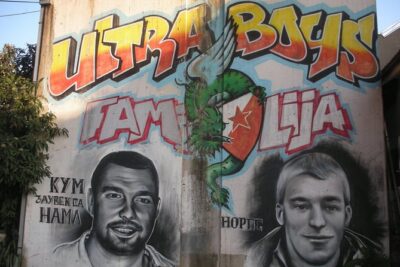
Football tour: Red Star and Partizan Ultras History
Read our review →
Belgrade E-Bike Tour: 3h Journey Through History & Culture
Read our review →
Browse the lists this tour appears in