
Reviewed · HISTORICAL TOURS
Belgrade: Football History Tour
Belgrade’s football story is written on its walls. This 3.5-hour tour connects Dorćol street art, Red Star’s Rajko Mitić Stadium, Partizan’s home, and the political forces behind Serbia’s famous Eternal Derby. I like the way it treats football as part of city life, not just a game, and I especially like that the Red Star museum includes the club’s 1991 Champions League trophy. The main consideration is that the tour covers violence, crime, politics, and hooligan culture, so it may feel heavy if you want only stadium photos and sporting trivia.
The $82 price is reasonable if you care about Serbia, football, or modern Balkan politics, since transport, guided walking, and stadium entry are included. You should also know that the first hour is on foot in Dorćol, with a car journey afterward to the stadiums.
In This Review
- Key points to know before booking
- Why Belgrade football tells a bigger city story
- Starting at Studentski trg and walking through Dorćol
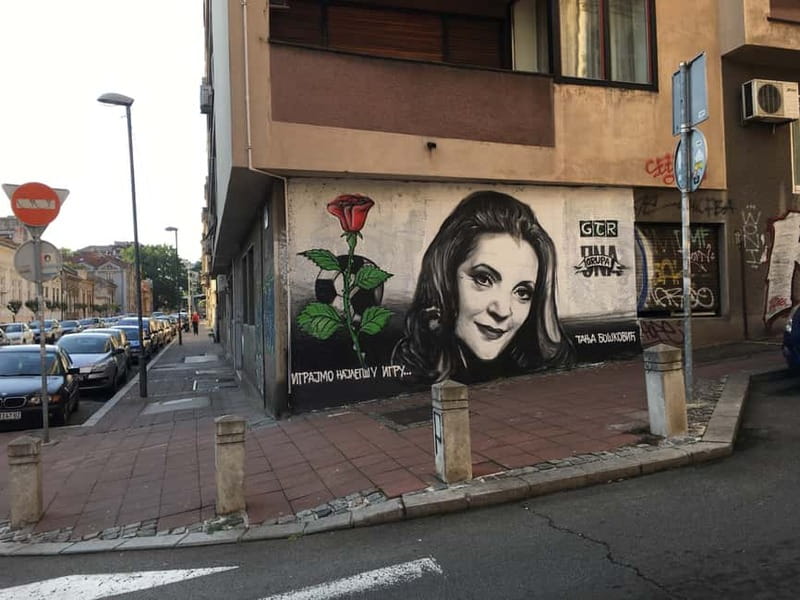
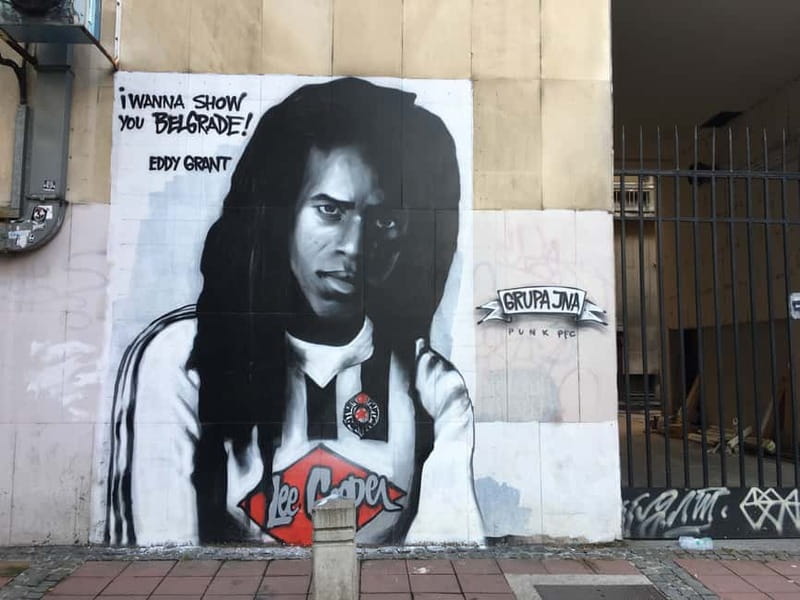
- Reading the murals and local loyalties
- The car journey to Rajko Mitić Stadium
- The 1991 Champions League trophy at the Red Star museum
- A short stop at Partizan Stadium
- Politics, crime, and the ultras
- How much value do you get for $82?
- Who should book this Belgrade football tour?
- Practical details that affect the day
- Final call: should you book it?
- FAQ
- How long does the Belgrade Football History Tour last?
- What is the starting point?
- Is the tour conducted in English?
- Does the tour include Dorćol?
- Does the tour visit Red Star Stadium?
- Can I see the Champions League trophy?
- Does the tour visit Partizan Stadium?
- Is transport included?
- Is the tour wheelchair accessible?
- What is the cancellation policy?
Key points to know before booking
- Dorćol reveals the rivalry before you reach the stadiums: Murals and local symbols show how supporters claim parts of Belgrade.
- Red Star’s 1991 Champions League trophy is the star exhibit: It marks the only Eastern European club victory in this competition.
- The Eternal Derby is about more than sport: Your guide explains links between football, politics, government, crime, and public identity.
- You visit both major football homes: The tour includes Rajko Mitić Stadium and a stop at Partizan Stadium.
- The guides make the difference: Andrija, George, Thiomir, and Vojin have been praised for clear explanations, friendly conversation, and helpful local advice.
- The tour works for non-football fans too: The city story is broad enough to make sense even if you cannot name a single Serbian player.
Why Belgrade football tells a bigger city story
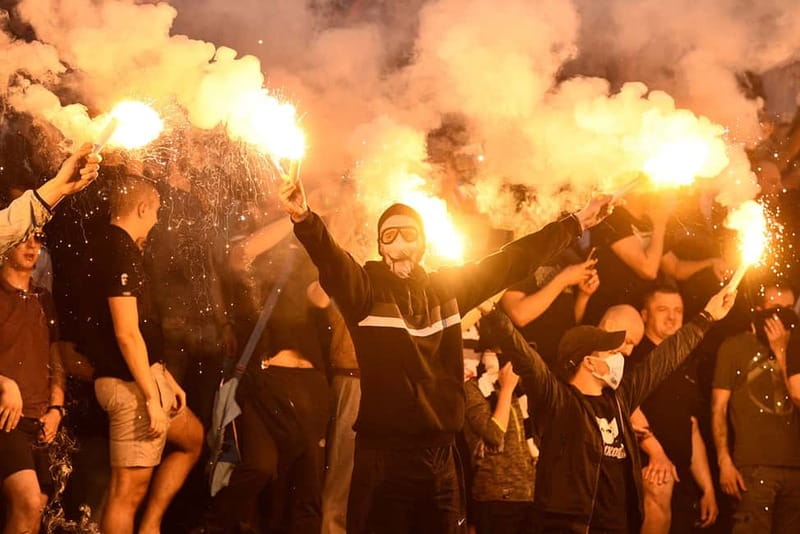
Belgrade’s football culture is intense, public, and closely tied to identity. The two clubs at the center are FK Partizan and Red Star Belgrade, whose rivalry is known as the Eternal Derby. This is not presented as a simple contest between two teams. It reflects neighborhood loyalties, political influence, social divisions, and the power of organized supporter groups.
That wider view is the reason I would not limit this tour to serious football followers. You get a way to understand how public life can gather around clubs, stadiums, murals, and fan groups. The guide discusses the ultras and hooligan firms associated with both sides, including their influence across different parts of society and the violent clashes that can grow out of the rivalry.
This subject needs a clear head. The tour does not turn football violence into a harmless bit of color. It places the fan culture beside politics, government, and crime, giving you a more serious picture of how sport can become a tool for influence and belonging.
A couple more Belgrade trips to weigh up
- Belgrade: 3-Hour Serbian History Walking Tour
★ 4.9 · 108 reviews - History and Culture in my Belgrade
★ 5.0 · 41 reviews - NATO Bombing of Belgrade Historical Tour
★ 5.0 · 17 reviews
Starting at Studentski trg and walking through Dorćol
The meeting point is at the entrance to the park at Studentski trg in central Belgrade. From there, the tour begins on foot in Dorćol, a neighborhood identified with Partizan support.
The walking section lasts about an hour. That length matters because it gives your guide time to explain what you are seeing instead of rushing past a mural, a street corner, or a local symbol. Dorćol is not simply a route to the stadium. It is the first part of the lesson.
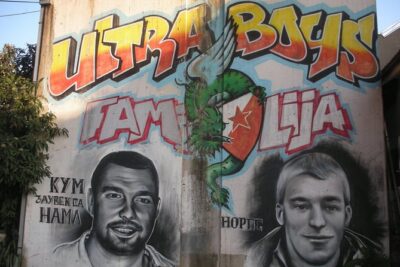
Look for supporter murals and other signs of club allegiance. These images make the rivalry visible in ordinary city spaces. A football scarf inside a stadium is expected. A wall in a neighborhood tells you more about how the rivalry enters daily life.
The walking tour also gives useful context about the origins of football in Belgrade and the formation of the two major clubs. You will hear how supporter groups developed and why the most committed fans matter so much to the identity of each side.
You should wear comfortable shoes. The first part is a guided neighborhood walk, not a seated museum visit, and the later car journey does not remove the need to walk around the stadium complex.
Reading the murals and local loyalties
The murals are one of the most appealing features of the experience because they give you something concrete to look at while the guide explains the rivalry. They also help you see that football allegiance is not confined to match day.
I like this part because it avoids a common problem with sports tours: too much time in empty stadium corridors and not enough sense of the city outside. Here, the city itself becomes part of the subject. The wall art indicates which club has a local presence, while the guide explains the deeper meaning behind those loyalties.
You should not expect every mural or supporter symbol to be treated as decoration. The tour uses them to discuss territory, identity, and the way rival groups mark their presence. That can make the material more political and more unsettling than a standard club museum visit.
The guide’s role is important here. Andrija has been praised for answering questions carefully and keeping communication clear. George has also led the tour, alongside Andrija on one occasion, while Thiomir and Vojin have been praised for their preparation and friendly approach. Names and guides can vary by departure, but the repeated strength of the experience is the quality of the explanation.
The car journey to Rajko Mitić Stadium
After Dorćol, you continue by car to Red Star Belgrade’s home, Rajko Mitić Stadium. The change from walking to transport keeps the tour moving and makes it possible to cover the main sites in three and a half hours.
The stadium is presented as an imposing sports venue with a major European record. During Red Star’s most successful period in the late 1980s and early 1990s, clubs such as Real Madrid, Liverpool, and Bayern Munich lost there. Those names give the visit useful scale. You are not just seeing a local stadium, but a place tied to one of the strongest periods in the club’s history.
The stadium stop should appeal to football fans who want more than a city-center overview. You get a sense of the club’s home ground and the place where its supporters gather around a shared identity. At the same time, the tour does not pretend that the stadium exists apart from the politics and social tensions already discussed in Dorćol.
The supplied schedule allows about 75 minutes for the Red Star museum and stadium visit. That is the longest single stop, so it is the part of the tour where you can spend the most time with club-specific material.
Out of the city, and a slower way to spend the day:
- From Belgrade: Novi Sad & Sremski Karlovci Full-Day Tour
★ 4.7 · 1,068 reviews - From Belgrade: Gems of Eastern Serbia Tour
★ 5.0 · 427 reviews - Northern Serbia: Sremski Karlovci and Novi Sad Full-Day Tour from Belgrade
★ 5.0 · 425 reviews - Day Trip from Belgrade: Gems of Eastern Serbia
★ 5.0 · 424 reviews
The 1991 Champions League trophy at the Red Star museum
The museum’s key object is the Champions League trophy connected with Red Star’s 1991 victory. Red Star is recognized as the only Eastern European club to have won this competition, making the trophy especially important in the club’s story.
Even if you are not a football expert, this gives the museum a clear focus. You can understand why the late 1980s and early 1990s are treated as the club’s high point, and why victories over famous Western European teams carry such weight in Serbia.
The museum is also a useful counterpoint to the street murals. Dorćol shows how supporters express allegiance in public spaces. The museum shows how the club presents its achievements through objects, memory, and European success.
For a football fan, the trophy may be the main reason to book. For a non-fan, the value comes from the way one object opens a discussion about Eastern European sport, national pride, and the status of a Belgrade club on the European stage.
A short stop at Partizan Stadium
The tour also visits Partizan Stadium, with about 20 minutes set aside for the stop. This is much shorter than the Red Star museum visit, so you should not expect equal time inside both grounds.
That imbalance is worth noting before you book. The tour’s main stadium and museum focus is Red Star, while Partizan helps complete the picture of the rivalry. You see the home of the opposing club and connect it with the Dorćol material, where Partizan’s local support is introduced.
The short visit still matters. A rivalry is hard to understand from one side only, and the Partizan stop prevents the experience from becoming simply a Red Star history tour. It gives you a physical reference point for the other half of the Eternal Derby.
The information provided does not promise a Partizan museum visit or a full stadium tour, so keep your expectations modest for this section. Think of it as an essential comparison stop rather than a second major attraction.
Politics, crime, and the ultras
The most distinctive part of this experience is the willingness to address difficult subjects directly. Your guide explains how football, politics, government, and crime have overlapped in Belgrade, and how the most committed supporter groups can carry influence beyond the stands.
The discussion of ultras and hooligan firms is not a side note. These groups form a central part of the football culture covered by the tour. You learn about their organization, political reach, and role in violent confrontations between rival supporters.
That material may be uncomfortable, but it gives the tour its value. Without it, the Eternal Derby would be reduced to colors, chants, and famous matches. With it, you get a clearer idea of why the rivalry can affect neighborhoods, public life, and political behavior.
I would recommend asking questions. The guides have been praised for answering not only football questions but also unrelated questions about Belgrade and Serbia. That makes the tour feel more like a conversation about the city than a memorized club presentation.
Still, this is not the right choice if you want to avoid politics or violence during your holiday. The subject is part of the experience, not an occasional aside.
How much value do you get for $82?
At $82 per person, the tour is not the cheapest way to see a stadium. The value depends on what you want from the visit.
If you only want a quick photograph outside a football ground, the price is too high. You are paying for the local guide, the one-hour Dorćol walk, the car journey, entry to the Red Star Stadium and Museum, the Partizan stop, and the interpretation linking football with Serbian society.
The price makes more sense if you would otherwise struggle to understand the rivalry on your own. Murals and stadiums are easy to see. The harder part is knowing what they mean, how the clubs developed, and why supporter groups have such reach. That explanation is the main product here.
The tour also offers reserve-now, pay-later booking and free cancellation up to 24 hours before the start for a full refund. Those terms are useful if your Belgrade schedule is still changing. Check available starting times when you book, since the experience lasts 3.5 hours.
Who should book this Belgrade football tour?
I would choose this experience for:
- Football fans interested in club culture, stadiums, and the Eternal Derby
- Visitors who want a less conventional way to understand Belgrade
- People interested in the links between sport, politics, and society
- Non-football fans who enjoy guided city walks with a strong local theme
- Anyone who values a small gift and personal conversation with the guide at the end
You do not need detailed football knowledge. One guide, Thiomir, was praised for showing fan murals before visiting both stadiums, while another participant described the tour as worthwhile even for people who are not football fans.
The experience may suit you less if you prefer a quiet museum visit, want equal time at both clubs, or dislike discussions of hooliganism and political influence. The tour is energetic in subject, but not necessarily light in tone.
Practical details that affect the day
The tour is conducted in English with a live guide. The starting point is the park entrance at Studentski trg, and the route returns there after the stadium visits.
The first stage is walking through Dorćol. After that, the group uses a car to reach Rajko Mitić Stadium. The supplied information describes the activity as wheelchair accessible, though the opening walking section means you should confirm any specific mobility needs before booking.
Allow the full 3.5 hours. The stated timings include about one hour in Dorćol, 75 minutes at the Red Star museum and stadium, and 20 minutes at Partizan Stadium, with transport and transitions making up the remaining time.
At the end, you receive a small gift. It is not a major part of the price, but it is a pleasant touch after a tour built around strong local identity.
Final call: should you book it?
Book this tour if you want football to be your doorway into Belgrade. The stadiums matter, but the murals, neighborhood loyalties, political background, and supporter culture give the experience its real substance.
I would especially recommend it to anyone who wants a guided explanation rather than a quick stadium visit. The repeated praise for Andrija, George, Thiomir, and Vojin points to a friendly style, careful answers, and smooth organization.
Skip it if you want a balanced, full-length museum experience at both clubs. Red Star receives the larger share of time, and Partizan is a shorter stop. For most visitors interested in how sport shapes a city, though, the $82 cost is justified by the access, transport, and context.
FAQ
How long does the Belgrade Football History Tour last?
The tour lasts 3.5 hours.
What is the starting point?
The tour begins at the entrance of the park at Studentski trg in central Belgrade.
Is the tour conducted in English?
Yes. The live tour guide speaks English.
Does the tour include Dorćol?
Yes. It begins with a guided walking tour through the Dorćol neighborhood, lasting about one hour.
Does the tour visit Red Star Stadium?
Yes. You visit Rajko Mitić Stadium, the home of Red Star Belgrade, along with the club museum.
Can I see the Champions League trophy?
Yes. The famous Champions League trophy from Red Star’s 1991 victory is displayed in the museum.
Does the tour visit Partizan Stadium?
Yes. The schedule includes a visit and walk at Partizan Stadium, with about 20 minutes allocated to this stop.
Is transport included?
Yes. A car journey to the Red Star Stadium is included after the walking tour in Dorćol.
Is the tour wheelchair accessible?
The activity is described as wheelchair accessible.
What is the cancellation policy?
You can cancel up to 24 hours in advance for a full refund. You can also reserve the experience and pay later.
Just added in Belgrade
- Your Own Belgrade: Street Art and Hidden Gems Walking Tour★ 5.0 · 2 reviews
- 3-Hour Belgrade Zemun Neighborhood Tour★ 5.0 · 8 reviews
- Private Half Day Serbia Tour Novi Sad and Petrovaradin Fortress★ 5.0 · 3 reviews
- Private Belgrade Street Art and Adventures Walking Tour★ 5.0 · 4 reviews
- Private Wine Tasting by Party in Belgrade★ 5.0 · 3 reviews
- From Belgrade:Uvac Nature Reserve Tour★ 5.0 · 4 reviews
- Urban & Alternative Belgrade tour★ 5.0 · 4 reviews
- VIP Reservation Service in Belgrade★ 5.0 · 2 reviews
Historical Tours, compared.
Women’s Side of History Walking Tour with Coffee
Read our review →
Football tour: Red Star and Partizan Ultras History
Read our review →
Belgrade E-Bike Tour: 3h Journey Through History & Culture
Read our review →
HISTORY WINE & ROYALTY (Avala mountain – Topola – Oplenac)
Read our review →Browse the lists this tour appears in