
Reviewed · HISTORICAL TOURS
NATO Bombing of Belgrade Historical Tour
Belgrade still carries the scars. This private tour links important sites connected with the NATO bombing to major Serbian landmarks, giving you a compact introduction to the city’s wartime past and national story. I like the direct Serbian point of view, and I like that pickup, private transport, air conditioning, WiFi, and an English-speaking guide are included. The main concern is pace: two hours is short, and the route can feel rushed.
You’ll visit the children’s memorial in Tašmajdan Park, the damaged Generalštab complex, the Serbian Parliament, the old railway station, and other central landmarks. The tour has a strong 4.8 rating from 17 reviews, with all respondents recommending it, but one clear warning is worth noting: some explanations may be difficult to follow, and the route may not leave enough time at each stop.
In This Review
- Key points at a glance
- Why this tour matters in Belgrade
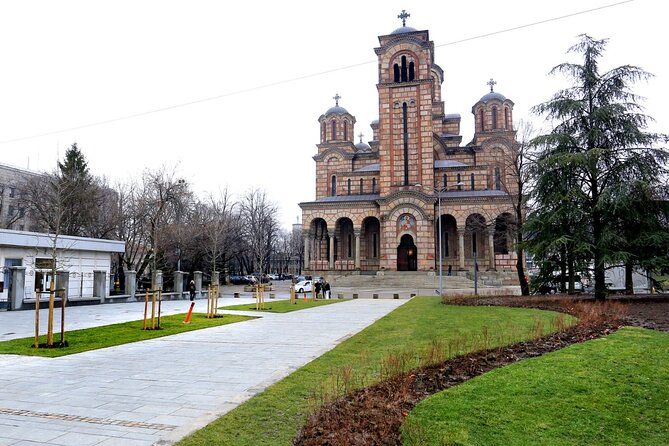
- Crkva Svetog Marka begins the story
- Tašmajdan Park and the children’s memorial
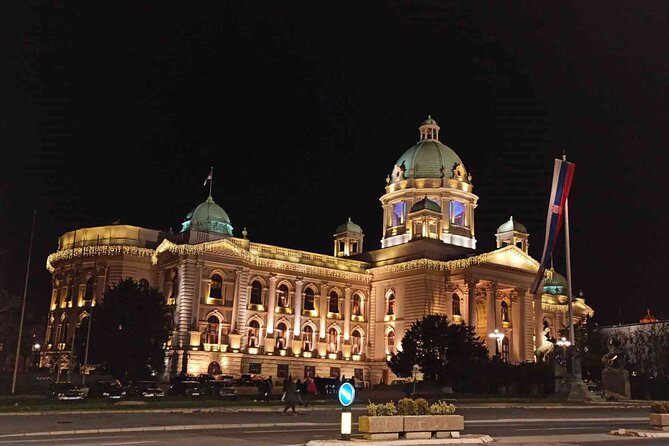
- The Serbian Parliament and national power
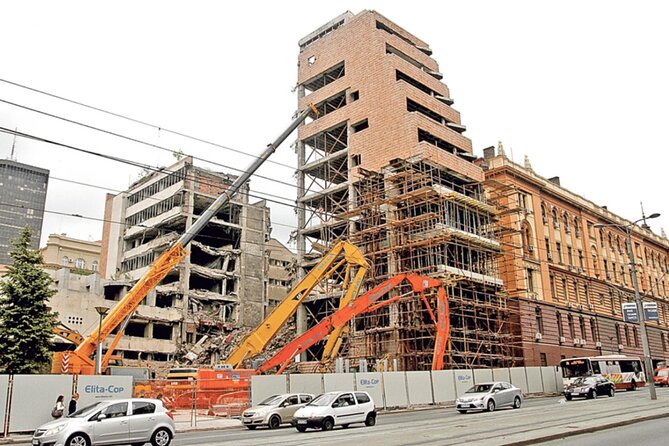
- Generalštab, Belgrade’s most powerful visual reminder
- The old railway station and the old king’s palace
- Tsar Nicholas II Romanov’s monument
- What $69.99 buys you
- The two-hour pace and private format
- Who will get the most from this experience
- How to prepare for the visit
- Should you book the NATO Bombing of Belgrade Historical Tour?
- FAQ
- How long does the NATO Bombing of Belgrade Historical Tour last?
- What time does the tour start?
- Is pickup available?
- Is the tour private?
- What language is the tour offered in?
- Is the price per person?
- Can I cancel for a full refund?
Key points at a glance
- A Serbian view of the NATO bombing: The tour focuses on how the events are remembered in Serbia, rather than presenting only a broad international account.
- The children’s memorial in Tašmajdan Park: This is one of the most emotional stops, honoring children who died during the bombing.
- Generalštab in just 10 minutes: You see one of Belgrade’s best-known bombing symbols, but the short stop allows little time for extended discussion.
- Private transport and pickup included: An air-conditioned vehicle keeps the route simple, especially if you prefer not to arrange city transport between sites.
- A compact two-hour route: You get a focused introduction, not a full study of the Yugoslav wars or NATO intervention.
- Good value for a private experience: At $69.99 per person, the price makes more sense for a small group that values convenience and personal transport.
Why this tour matters in Belgrade
Belgrade is a city where modern politics and older national memory sit close together. A church, a government building, a park, a railway station, and a damaged military complex can all form part of the same historical conversation.
The NATO bombing remains a sensitive subject. This tour is useful because it does not treat the event as a distant headline. It places the bombing within central Belgrade, where memorials and damaged buildings remain part of the city people see every day.
I would not choose this experience if you want a neutral, highly academic account of every side of the Yugoslav wars. The appeal is different. You get a Serbian interpretation, local context, and a guide who can connect visible places with the way the events are remembered in Serbia.
The tour is also practical for a first visit. You do not need to work out a route between scattered stops, and private transport means you can focus on the explanations rather than watching the clock for buses or taxis.
A couple more Belgrade trips to weigh up
- Belgrade: 3-Hour Serbian History Walking Tour
★ 4.9 · 108 reviews - History and Culture in my Belgrade
★ 5.0 · 41 reviews - Belgrade: Women’s Side of History Walking Tour with Coffee
★ 5.0 · 16 reviews
Crkva Svetog Marka begins the story
The first stop is Crkva Svetog Marka, one of Belgrade’s most important churches. You have about 20 minutes here, and admission is included.
Beginning at a major church gives the tour a wider frame. This is not only a sequence of damaged buildings. Serbia’s religious and national identity also matters when you try to understand how the country remembers war, loss, and outside intervention.
Twenty minutes is enough for an introduction and a look around, but it is not a long church visit. If you are especially interested in architecture or religious history, you may want to return later on your own. For the tour, the church works mainly as a setting for context before the more direct memorial sites.
I like this opening because it avoids starting with the most graphic or politically charged location. You first get a sense of an important Belgrade landmark, then move toward the personal cost of the bombing.
Tašmajdan Park and the children’s memorial
Tašmajdan Park is scheduled for another 20 minutes. Its key feature on this route is a monument honoring children who died during the NATO bombing.
This is likely to be the most affecting stop. A memorial to children changes the scale of the story. Military strategy and political arguments can feel abstract, but the monument points directly to individual loss.
You should expect this part of the tour to be reflective rather than packed with sightseeing. The park itself is free to enter, and the value comes from the guide’s explanation and the meaning of the memorial, not from an admission ticket.
One practical point matters here: 20 minutes can pass quickly if the guide gives a detailed account or if you want time to pause at the monument. If you prefer to read memorial inscriptions slowly or take your own time, keep your expectations modest. This is a guided stop within a short route, not an extended memorial visit.
The Serbian Parliament and national power
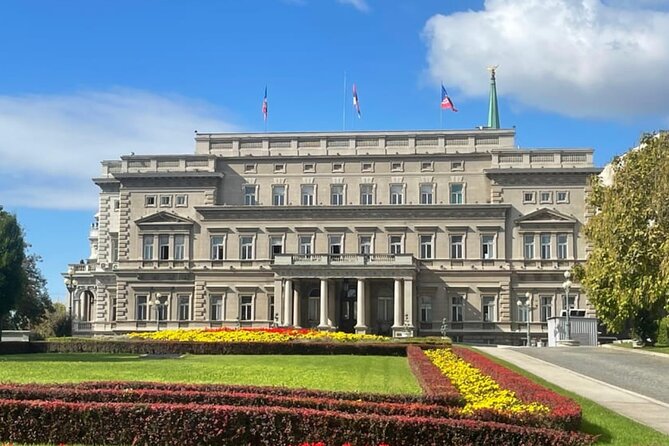
The House of the National Assembly of the Republic of Serbia receives about 10 minutes. This is the Serbian Parliament, and it adds a government setting to the tour.
After the church and children’s memorial, the Parliament helps you consider the political side of the story. It is a useful contrast to Tašmajdan Park: one stop focuses on personal loss, while this one points toward state decisions, public authority, and national representation.
The visit is an exterior stop with free admission listed. Ten minutes is enough to see the building and hear an explanation, but not enough for an extensive political discussion. If you want to understand the full chain of events surrounding the bombing, you will need to treat this tour as an introduction and do more reading afterward.
Still, the sequence is sensible. The route moves from national and religious identity to remembrance, then to the institutions connected with Serbia’s public life.
Out of the city, and a slower way to spend the day:
- From Belgrade: Novi Sad & Sremski Karlovci Full-Day Tour
★ 4.7 · 1,068 reviews - From Belgrade: Gems of Eastern Serbia Tour
★ 5.0 · 427 reviews - Northern Serbia: Sremski Karlovci and Novi Sad Full-Day Tour from Belgrade
★ 5.0 · 425 reviews - Day Trip from Belgrade: Gems of Eastern Serbia
★ 5.0 · 424 reviews
Generalštab, Belgrade’s most powerful visual reminder
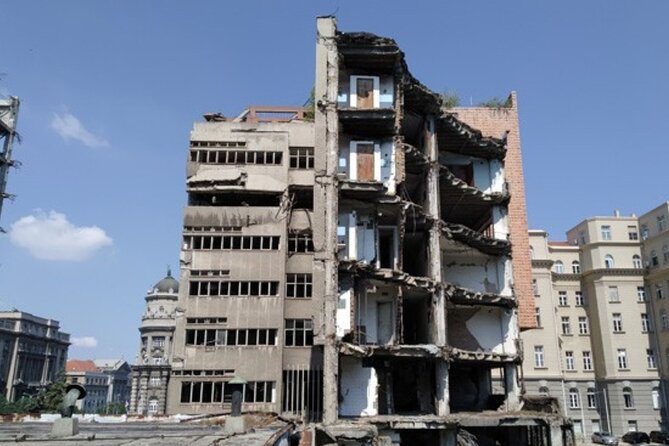
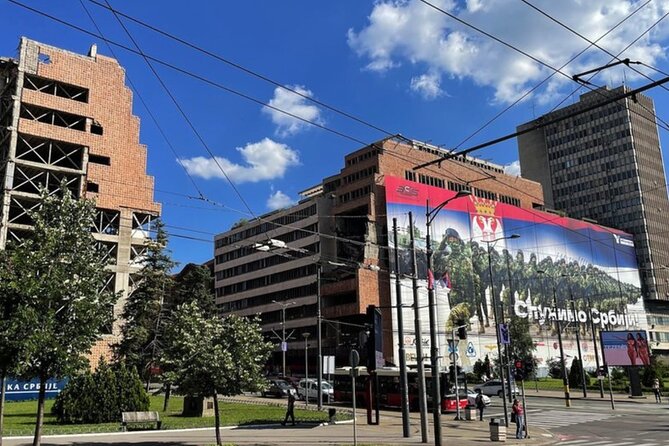
Generalštab is allotted 10 minutes and is described as one of the symbols of the bombing. For many people, this will be the clearest visual stop on the route.
The damaged complex makes the subject immediate. Rather than hearing only about airstrikes in the past, you see a place that remains linked to that period. The building gives the tour a strong physical focus, even though the visit is brief.
You should not expect to enter or spend a long time exploring the site. The information provided describes an outside stop with free admission, so the experience centers on viewing the location and hearing the guide’s account.
This is also where the guide’s communication matters most. One review found the guide friendly and well informed but sometimes difficult to understand. On a tour built around political and historical explanation, clear English makes a real difference. If you have trouble following an explanation, ask the guide to repeat or simplify it.
The old railway station and the old king’s palace
The Railway Museum stop lasts about 10 minutes and includes the old railway station. The route also includes the old king’s palace, although no separate duration or admission detail is provided for that stop.
These locations widen the tour beyond the bombing itself. The railway station points to Belgrade’s transport and civic past, while the palace connects the route with Serbia’s royal history. You are not simply moving from one wartime site to another. You are seeing the bombing within a city that has passed through different political eras.
The short timing remains the trade-off. Ten minutes at the railway museum is enough for a quick look and a focused explanation, but it is not a full museum visit. If railway history is a main interest, this stop may leave you wanting more.
The old king’s palace is best viewed as an added landmark rather than a major standalone segment. Since no detailed timing is supplied, you should ask the guide at the start how it fits into the route.
Tsar Nicholas II Romanov’s monument
The final listed stop is the monument to Tsar Nicholas II Romanov, with about five minutes set aside and no admission charge.
Five minutes tells you what this stop is designed to do. It is a quick landmark visit and a chance to connect Serbian memory with the Russian imperial figure honored here. The monument adds another layer to the route’s focus on national identity, alliances, and historical memory.
Do not expect a long explanation or extended time for photographs. The stop is short, and the tour’s main subject remains the NATO bombing and its impact on Belgrade.
I see this as a useful closing detail rather than a major highlight. It gives the route a broader historical finish, but people most interested in the bombing will likely remember Generalštab and the children’s memorial more strongly.
What $69.99 buys you
The price is $69.99 per person. That is not the cost of a basic walk around central Belgrade, but this is a private experience with pickup, transport, an air-conditioned vehicle, WiFi on board, and a guide.
The value depends heavily on your group size. For one person, the price is a significant outlay for a two-hour tour. For a couple, family, or small group sharing a private vehicle, the convenience becomes more attractive.
You are paying for three things: transport between sites, a planned route, and interpretation. The entrance fees do not drive the price because most stops are free, while admission at Crkva Svetog Marka is included. The real service is having a guide connect the sites and provide a Serbian perspective.
I would consider it fair value if you want a focused historical orientation soon after arriving in Belgrade. It is less compelling if you are comfortable using public transport, reading in advance, and visiting central landmarks independently.
The tour is booked an average of 17 days ahead, so you should not assume you can always arrange it at the last moment. Confirmation is provided at booking, and free cancellation is available up to 24 hours before the 11:00 a.m. start.
The two-hour pace and private format
Two hours sounds manageable, but the route contains several stops. Crkva Svetog Marka and Tašmajdan Park receive 20 minutes each. The Parliament, Generalštab, and Railway Museum each receive about 10 minutes, while the Romanov monument gets five minutes, with the old king’s palace also included.
That schedule gives you a clear overview, but it leaves little room for delays, long questions, or extended photography. One review described the tour as too fast and felt that some stops did not require a paid tour. That criticism is fair if you judge the experience only by the amount of time spent at each location.
The private format helps in some ways. Only your group participates, so you can ask questions and avoid waiting for a large party. Pickup also saves time at the start, especially if you are staying outside the immediate center.
The format cannot solve everything. A private vehicle still has to move through city streets, and a short tour remains short. I would treat the experience as a guided orientation rather than a complete historical course.
Who will get the most from this experience
I recommend this tour most strongly to people who want to understand Belgrade through local memory. It suits first-time visitors, history-minded couples, and small groups who prefer a guide and private transport to planning the route themselves.
It also works well if you have only part of a day available. The 11:00 a.m. start and approximately two-hour duration leave the rest of the day open for museums, lunch, or independent sightseeing.
You may want to skip it if you need a slow, detailed examination of every site. The schedule is tight, and the feedback points to occasional difficulty understanding the guide. Clear communication is especially important here because the subject involves complex politics and painful events.
A moderate level of physical fitness is recommended. The tour is near public transportation, but pickup is offered, and the air-conditioned vehicle reduces the amount of effort needed to get between stops.
How to prepare for the visit
I would do a little reading before you arrive. You do not need a long academic book, but knowing the basic outline of the Yugoslav wars and NATO’s intervention will help you follow the guide’s perspective.
Keep your questions focused. Ask about how the bombing is remembered in Serbia, why Generalštab remains important, or how the children’s memorial fits into public memory. Those questions are likely to make better use of the limited time than asking for a broad history of the entire region.
Plan for a listening-heavy experience. Several stops are outside and free, and the guide’s explanation is the main reason to book. Take notes if the topic matters to you, especially if you plan to visit related museums or memorials later.
The mobile ticket is convenient, and confirmation arrives when you book. Since pickup is offered, check the meeting details carefully before the start time, particularly if you are staying somewhere outside central Belgrade.
Should you book the NATO Bombing of Belgrade Historical Tour?
Book it if you want a short, private introduction to Belgrade’s wartime memory, value pickup and air-conditioned transport, and specifically want a Serbian point of view.
At $69.99 per person, the experience is easiest to justify for two or more people sharing the private format. The 4.8 rating and full recommendation record suggest that the approach works well for many people, but the two-hour schedule is genuinely brisk.
Skip it if you prefer to explore slowly, want long museum visits, or expect a fully balanced academic account of the Yugoslav wars. For everyone else, this is a useful first layer of understanding, especially when paired with independent sightseeing afterward.
FAQ
How long does the NATO Bombing of Belgrade Historical Tour last?
The tour lasts approximately two hours.
What time does the tour start?
The listed start time is 11:00 a.m.
Is pickup available?
Yes. Pickup is offered, and private transportation is included.
Is the tour private?
Yes. Only your group participates in the activity.
What language is the tour offered in?
The tour is offered in English.
Is the price per person?
Yes. The listed price is $69.99 per person.
Can I cancel for a full refund?
Yes, if you cancel at least 24 hours before the experience start time. Cancellations or changes made less than 24 hours before the start are not accepted for a refund.
Just added in Belgrade
- Your Own Belgrade: Street Art and Hidden Gems Walking Tour★ 5.0 · 2 reviews
- Private Half Day Serbia Tour Novi Sad and Petrovaradin Fortress★ 5.0 · 3 reviews
- 3-Hour Belgrade Zemun Neighborhood Tour★ 5.0 · 8 reviews
- Private Belgrade Street Art and Adventures Walking Tour★ 5.0 · 4 reviews
- Private Wine Tasting by Party in Belgrade★ 5.0 · 3 reviews
- From Belgrade:Uvac Nature Reserve Tour★ 5.0 · 4 reviews
- VIP Reservation Service in Belgrade★ 5.0 · 2 reviews
- Belgrade Bike Tour: Be a local in the hood of Belgrade!★ 5.0 · 5 reviews
Historical Tours, compared.
Women’s Side of History Walking Tour with Coffee
Read our review →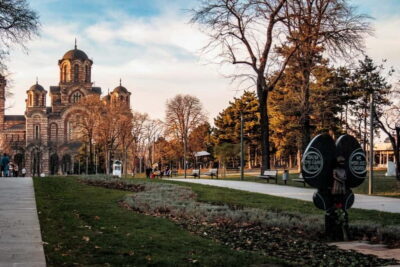
Football tour: Red Star and Partizan Ultras History
Read our review →
Belgrade E-Bike Tour: 3h Journey Through History & Culture
Read our review →
Browse the lists this tour appears in