
Reviewed · HISTORICAL TOURS
Football tour: Red Star and Partizan Ultras History
Football in Belgrade is never just football. This 3 to 4 hour walking tour connects Partizan and Red Star fan districts with both major stadiums, giving you a sharper sense of how sport, neighborhoods, and Serbian identity overlap. I especially like the street murals in Dorcol and Senjak, plus the chance to enter stadium areas that most city tours skip. Guides such as Andrija and Tihomir have earned strong praise for their warmth and command of the subject.
The main consideration is pace. You begin at 10:00 am and move through several parts of Belgrade before returning to the starting point, so expect a fairly full morning. The maximum group size is listed as 99, which could feel less personal if the tour fills up, though group discounts may help lower the $84.21 price.
In This Review
- Five things that make this football tour different
- Why Belgrade football tells you more than league tables
- Dorcol, where Partizan fandom meets café life
- Senjak and the guarded Red Star murals
- Inside Red Star’s Marakana stadium and museum
- Partizan Stadium and the old-school football setting
- A closer look at the guide-led experience
- Is $84.21 good value?
- Timing, meeting point, and what to expect
- Who will enjoy this most?
- Should you book the Red Star and Partizan tour?
- FAQ
- Where does the tour start?
- What time does the tour begin?
- Where does the tour end?
- How long does the experience last?
- Is the tour offered in English?
- How much does the tour cost?
- Are group discounts available?
- What is the largest possible group size?
- Is admission to Partizan Stadium included?
- What happens if bad weather cancels the tour?
Five things that make this football tour different
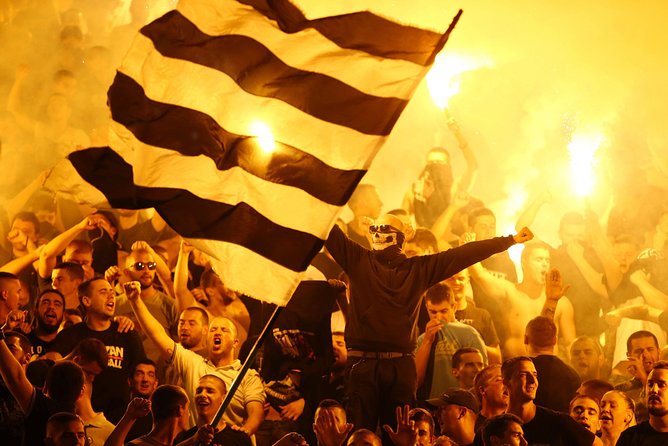
- Two rival fan cultures in one morning: You visit districts linked with both Partizan and Red Star, rather than seeing only one club.
- Old supporter graffiti in Senjak: Some Red Star murals date from the 1990s and are watched by fans around the clock.
- A Champions League trophy in Marakana: The Red Star museum displays the club’s 1991 European Cup trophy.
- A beer inside a stadium: The experience includes time to have a beer inside one team’s stadium.
- Pitch access at Partizan: You walk down onto the field and see one of Europe’s remaining stadiums with a rough, old-school feel.
- A guide-led look at Belgrade: The tour uses football fandom to introduce neighborhoods, social ties, and Serbia’s sporting past.
Why Belgrade football tells you more than league tables
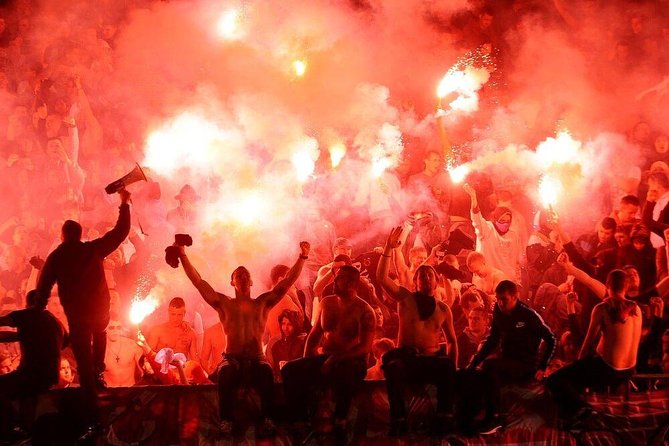
You do not need to know every player or result to enjoy this experience. The appeal is the way football gives you a local map of Belgrade. Dorcol is linked with Partizan supporters, while Senjak is associated with Red Star fans. The murals, club colors, and stories attached to them turn ordinary streets into places with a clear identity.
That makes this a useful choice if you want to see a side of Belgrade beyond churches, old fortresses, and cafés. You are not simply checking two stadiums off a list. You are walking through neighborhoods where football loyalties have social weight.
The focus is on ultras culture, including the fierce supporter groups connected with both clubs. That subject can be sensitive. You should expect discussion of hooliganism, rivalry, and the effect of organized fandom on Serbian society and history. This is not a soft, family-sports presentation that avoids difficult subjects.
At the same time, the tour is presented as a guided cultural experience rather than a match-day confrontation. You walk with a guide, visit public neighborhoods, and enter stadium spaces. The balance depends partly on your guide, which is why the names Andrija and Tihomir matter. Andrija has been praised for helping with a Red Star match later in the day and even joining a basketball game the following day. Tihomir has been singled out for his grasp of ultras history and his professional manner.
A couple more Belgrade trips to weigh up
- Belgrade: 3-Hour Serbian History Walking Tour
★ 4.9 · 108 reviews - History and Culture in my Belgrade
★ 5.0 · 41 reviews - NATO Bombing of Belgrade Historical Tour
★ 5.0 · 17 reviews
Dorcol, where Partizan fandom meets café life
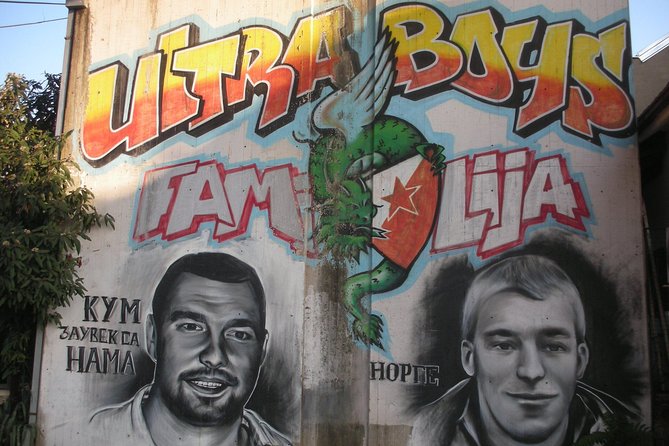
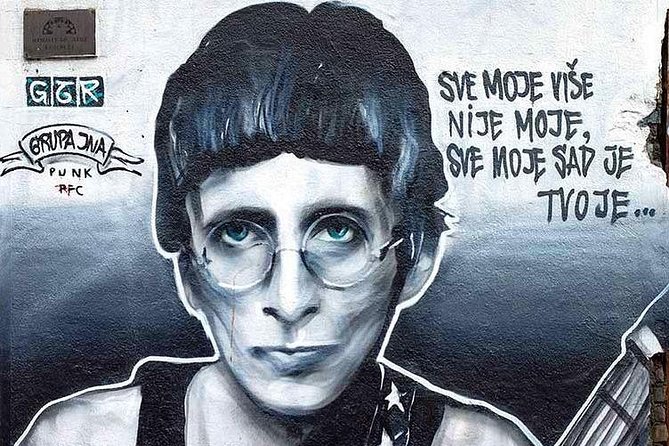
The first stop is Dorcol, with about an hour devoted to the neighborhood. It is described as a Partizan supporters’ district, known for graffiti linked with famous fan groups. This is likely the most street-focused part of the morning, so keep your attention on walls, symbols, and the way the guide explains them.
Dorcol also has another side. It is a popular district with bars, pubs, and an attractive neighborhood feel. That contrast is important. You are not walking through a single-purpose sports zone. You get a place where supporter culture sits beside ordinary city life, drinks, restaurants, and local streets.
I like this opening because it gives context before you reach the stadiums. A trophy room can tell you what a club won. A neighborhood can show you how a club is claimed by its supporters.
The drawback is that graffiti can be hard to interpret without explanation. Some murals may be changed, covered, or difficult to photograph depending on the street and conditions. The guide is central here, so do not rush ahead with your camera. The meaning is in the stories attached to the artwork.
If you have extra time after the tour, Dorcol is also a practical area for a drink or meal. The tour itself lasts only part of the day, and this neighborhood gives you an easy place to continue the football theme without needing another paid activity.
Senjak and the guarded Red Star murals
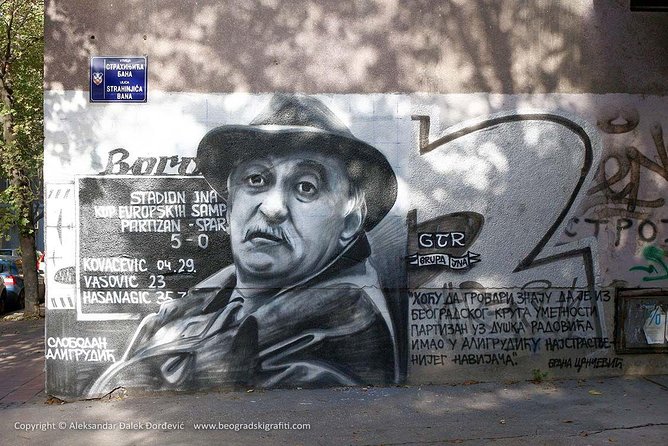
The tour then takes you to Senjak, a Red Star supporters’ district. The scheduled visit lasts about 20 minutes, making it a short stop rather than a long neighborhood walk.
The main point is the graffiti. Some of the oldest Red Star murals in Belgrade date from the 1990s, and the most important artwork is said to be guarded by supporters around the clock. That detail gives the stop a stronger edge than a simple photo break. It suggests that these images are treated as part of the group’s identity, not just decoration.
You should listen closely during this section. Twenty minutes passes quickly, and the value comes from the guide’s explanation of the rivalry and the social meaning of the artwork. A visitor who only wants stadium architecture may find the stop brief. Someone interested in fan culture will likely find it one of the most revealing parts of the morning.
The two neighborhood visits also create a useful comparison. Dorcol has a Partizan connection and a relaxed café setting. Senjak carries Red Star symbolism and older supporter markings. Seeing both sides prevents the tour from becoming a one-club tribute.
Inside Red Star’s Marakana stadium and museum
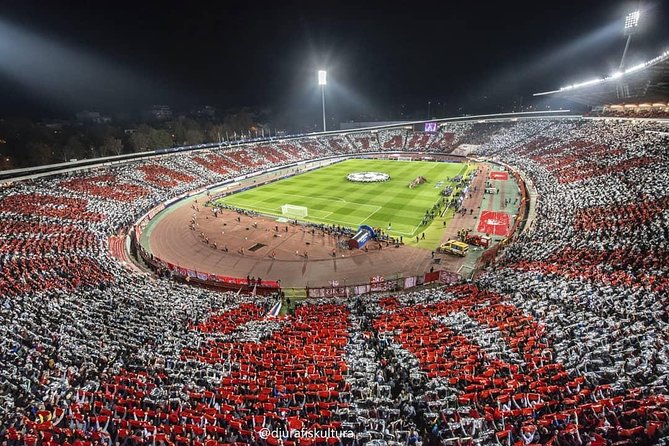
The Red Star stadium, widely known as Marakana, receives about two hours of the experience. This is the longest stop, and it is where the tour shifts from street culture to club history.
The museum contains trophies, flags, important club documents, and the 1991 Champions League trophy. The club is described as one of only two Eastern European winners to have this trophy, alongside Steaua Bucharest. That gives the museum real sporting importance, even if you are not a dedicated Red Star supporter.
The museum matters because it places Serbian football in a wider European setting. You can see the objects connected with a major achievement rather than hearing only a general story about past success. Flags and documents also add a human side, showing how supporters and club officials marked important moments.
You should allow time for the guide’s explanations here. The strongest part of a stadium visit is not simply walking through rooms. It is understanding why certain trophies, documents, and flags matter to the club’s supporters.
The tour also includes a beer inside one team’s stadium. The information does not specify which stadium or exactly when the drink is served, so confirm the details with the guide if that matters to you. Still, the inclusion adds a relaxed pause to what could otherwise be a very information-heavy morning.
One useful point is that the museum and stadium visit are combined under the experience rather than requiring a separate museum outing. The supplied details list admission as free for the Red Star stop and admission included for Partizan, so you should not expect a separate entrance charge for the planned visits.
Out of the city, and a slower way to spend the day:
- From Belgrade: Novi Sad & Sremski Karlovci Full-Day Tour
★ 4.7 · 1,068 reviews - From Belgrade: Gems of Eastern Serbia Tour
★ 5.0 · 427 reviews - Northern Serbia: Sremski Karlovci and Novi Sad Full-Day Tour from Belgrade
★ 5.0 · 425 reviews - Day Trip from Belgrade: Gems of Eastern Serbia
★ 5.0 · 424 reviews
Partizan Stadium and the old-school football setting
Partizan Stadium is the final major stop, with about 30 minutes scheduled for the visit. Here you walk down onto the pitch and see what is described as one of the last remaining ghetto-style stadiums in Europe.
That phrase points to a more worn, traditional atmosphere than the polished arenas built for corporate hospitality. If you prefer football grounds with visible age and character, this may be one of the tour’s most memorable moments. The pitch visit also gives you a physical sense of the stadium that a museum cannot provide.
The stop is shorter than the Red Star visit, so expect a quick look rather than a long architectural tour. One past tour was customized to include access to the pitch and conference rooms, but you should not assume every booking includes every extra area. Ask in advance if conference-room access is important to you.
The stadium also provides strong city views, according to the experience details shared by a past participant. Bring a phone or camera, but keep the focus on the guide’s commentary. You are there to understand the rivalry and the place, not just to collect another stadium photograph.
A closer look at the guide-led experience
This tour depends heavily on the guide. The route itself is good, but the subject is too layered for a simple checklist. You need someone who can explain why a mural matters, how supporter groups developed, and how the rivalry connects with Serbian society.
Andrija receives especially warm praise for combining football knowledge with Serbian hospitality. His help arranging a Red Star game later that day shows the sort of added local assistance that can make a short tour more useful. Tihomir is praised for his professional approach and strong understanding of ultras history.
Those details suggest that the provider, Serbian Adventure Factory, treats the tour as more than a fixed script. One booking was even adjusted to include pitch and conference-room access. That does not guarantee customization for every group, but it is worth asking if you have a particular football interest.
The listed maximum of 99 people is the one point that gives me pause. A group that large would not suit everyone, especially during the mural stops or inside the museum. The published rating is 5 from 14 reviews, with 100 percent recommending the experience, but the sample is small. I would book for the content and guide rather than assume a tiny walking group.
Is $84.21 good value?
At $84.21 per person, this is not the cheapest way to see Belgrade. Its value comes from the combination of access and explanation.
You are getting a guided walk through two rival fan areas, entry to Red Star’s stadium and museum, a visit to Partizan Stadium, and a stadium beer. You also avoid having to work out how the two stadiums and separate neighborhoods fit together. For a football fan, that bundle is much more useful than paying for a basic stadium photo visit.
The price is easier to justify if you care about European football, ultras culture, or Serbian sporting history. It is less compelling if you only want to see the interiors of famous stadiums. In that case, the social and political background may feel like more than you need.
Group discounts are available, which could improve the value for friends or families booking together. The mobile ticket also keeps the practical side simple, and the tour is offered in English.
Timing, meeting point, and what to expect
The tour starts at 10:00 am from Student Park, at Studentski trg 16 in Belgrade. It ends back at the same meeting point. Since the route includes several areas and stadiums, wear comfortable shoes and plan for a morning on foot.
Public transportation is nearby, which makes the starting point easier to reach from other parts of central Belgrade. The total duration is listed as approximately three to four hours, but allow room for minor changes in timing, especially if stadium access or group movement takes longer.
Most people can take part, and service animals are allowed. The activity requires good weather. If poor weather causes cancellation, you can select another date or receive a full refund.
You can cancel for a full refund up to 24 hours before the local start time. A cancellation or change made inside that 24-hour window is not refundable, so keep that cutoff in mind when planning around flights or other fixed bookings.
Who will enjoy this most?
I would recommend this tour first to football fans who want more than a standard stadium tour. It suits people interested in European club rivalries, supporter art, Serbian social history, and the way sports shape neighborhoods.
It also works for visitors who have already seen Belgrade’s main sights and want a more local subject. You do not need to support Red Star or Partizan, but you should be comfortable hearing about fierce rivalry and hooligan culture.
The experience may be less suitable if you want a quiet museum morning, dislike walking, or have no interest in football. The neighborhood murals and supporter history are the heart of the tour. The stadiums are important, but they are not the whole story.
Families can take part because most people are eligible, but parents should decide if discussion of ultras and hooligan groups suits their children. The large possible group size is another factor for anyone seeking a personal, slow-paced visit.
Should you book the Red Star and Partizan tour?
Book it if you want to understand why football matters so much in Belgrade. The best parts are the two rival neighborhoods, the old Red Star graffiti, the 1991 trophy at Marakana, and the chance to step onto the Partizan pitch.
I would ask about expected group size and any extra stadium access before paying. If you can join a smaller group, the guide’s stories will be easier to hear and the mural stops should feel more personal.
At $84.21, this is a specialized experience, not a general city tour. For a serious football fan, it offers strong value because it combines both clubs, fan districts, museum objects, and stadium access in one morning. For everyone else, it is worth booking only if the social side of football sounds as interesting as the sport itself.
FAQ
Where does the tour start?
It starts at Student Park, Studentski trg 16, Belgrade 11000, Serbia.
What time does the tour begin?
The scheduled start time is 10:00 am.
Where does the tour end?
The tour ends back at the original meeting point in Student Park.
How long does the experience last?
The tour lasts approximately three to four hours.
Is the tour offered in English?
Yes. The experience is offered in English.
How much does the tour cost?
The listed price is $84.21 per person.
Are group discounts available?
Yes. Group discounts are offered.
What is the largest possible group size?
The activity can have a maximum of 99 participants.
Is admission to Partizan Stadium included?
Yes. Admission to Partizan Stadium is included.
What happens if bad weather cancels the tour?
If poor weather causes cancellation, you will be offered another date or a full refund.
Just added in Belgrade
- Your Own Belgrade: Street Art and Hidden Gems Walking Tour★ 5.0 · 2 reviews
- Private Half Day Serbia Tour Novi Sad and Petrovaradin Fortress★ 5.0 · 3 reviews
- 3-Hour Belgrade Zemun Neighborhood Tour★ 5.0 · 8 reviews
- Private Belgrade Street Art and Adventures Walking Tour★ 5.0 · 4 reviews
- Private Wine Tasting by Party in Belgrade★ 5.0 · 3 reviews
- From Belgrade:Uvac Nature Reserve Tour★ 5.0 · 4 reviews
- VIP Reservation Service in Belgrade★ 5.0 · 2 reviews
- Belgrade Bike Tour: Be a local in the hood of Belgrade!★ 5.0 · 5 reviews
Historical Tours, compared.
Women’s Side of History Walking Tour with Coffee
Read our review →

Belgrade E-Bike Tour: 3h Journey Through History & Culture
Read our review →
HISTORY WINE & ROYALTY (Avala mountain – Topola – Oplenac)
Read our review →Browse the lists this tour appears in