
Reviewed · WALKING TOURS
Belgrade: 3-Hour Serbian History Walking Tour
Belgrade makes more sense when you walk through its battles. This three-hour tour links the National Assembly, Kneza Mihaila, Kalemegdan, and the fortress into a clear story of Serbia. I especially like the way it joins major sights with present-day politics, and the guides, including Marija, Tibor, Tibi, and Dusen, are praised for strong English, humor, and patient answers. The main consideration is simple: you will cover about 4 kilometers, so comfortable shoes matter.
I also like the balance between grand events and ordinary city life. You get churches, parks, military displays, river views, and time for questions about Serbia today. The tour is wheelchair accessible, but its length and several walking stops are worth considering when planning your day.
In This Review
- Key points to know before booking
- Starting at Terazije, where modern Belgrade begins
- The National Assembly and Serbia’s public face
- Kneza Mihaila and Republic Square
- Student Park and the Holy Archangel Michael
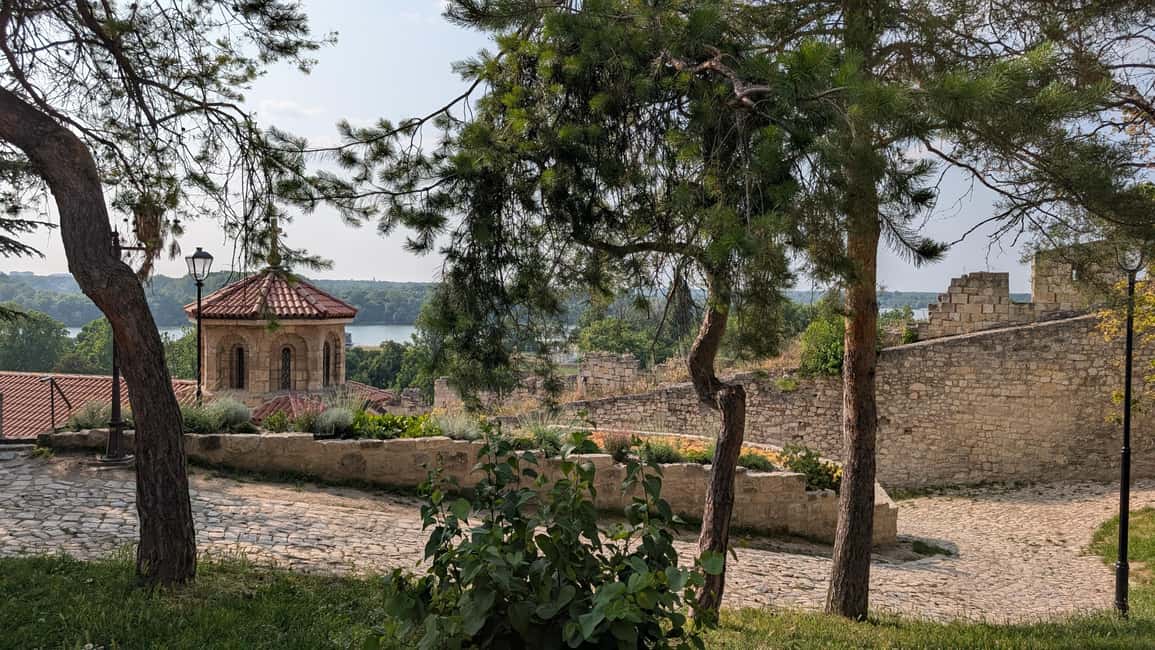
- Kalemegdan Park and Belgrade Fortress
- Ružica Church and the Military Museum
- The Monument of Gratitude to France
- What the guides do best
- Pace, accessibility, and practical comfort
- Value, flexibility, and what is included
- Who should book this Belgrade walk
- Should you book the Serbian History Walking Tour?
- FAQ
- How long is the Belgrade Serbian history walking tour?
- Where does the tour start?
- Where does the tour finish?
- How far do you walk?
- What language is the tour conducted in?
- Is the tour wheelchair accessible?
- What should you bring?
- Is the Military Museum included?
- Can I cancel for a full refund?
Key points to know before booking
- A 4-kilometer route with a strong historical arc: You move from central Belgrade to Kalemegdan and the fortress rather than seeing isolated monuments.
- Clear explanations of complicated politics: The guides connect Serbian history with the larger struggles between eastern and western powers.
- Kalemegdan is the visual high point: The park, fortress, and views toward the meeting of the Sava and Danube give the tour its best sense of place.
- Skadarska Street is not included in the listed stops: The tour description highlights it, but the detailed route begins at Terazije and follows the central pedestrian district toward the fortress.
- Guide quality is the biggest strength: Marija and Marijia receive repeated praise for historical detail, balanced discussion, and excellent English. Tibor, Tibi, and Dusen are also singled out for warmth and humor.
- Flexible booking helps: You can cancel up to 24 hours before the tour for a full refund and reserve now without paying immediately.
Starting at Terazije, where modern Belgrade begins
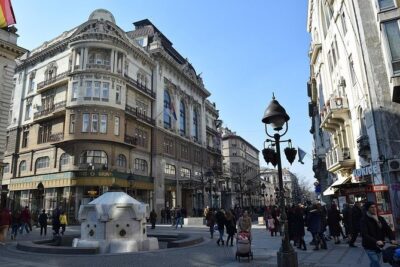
Meet at Terazije Square, next to the fountain. This is a practical starting point because it places you in central Belgrade, close to major streets, public buildings, shops, and cafés.
The guide begins a story that reaches back to the period of Roman rule and continues through Byzantine, Ottoman, Austro-Hungarian, German, and Russian influence. That sounds like a lot for three hours, but the value is not in memorizing every date. It is in learning why Belgrade has repeatedly been treated as a frontier city and why its location still shapes Serbian politics.
I would use this tour early in your stay. The guide does more than point out buildings. You can ask about geography, modern Serbian life, Balkan politics, and the forces that have shaped the country. Several participants praised the guides for answering spontaneous questions, including questions about current student protests and unusual city details.
That makes the tour useful for first-time visitors who want a working framework before exploring alone. It is less suited to someone who wants a slow architectural walk with lots of interior visits.
More guided walks around Belgrade:
- Belgrade: 3-Hour Small Group Walking Tour
★ 5.0 · 180 reviews - Belgrade: Shared Group or Private Guided Walking Tour
★ 4.8 · 162 reviews - Walking Tour in Belgrade
★ 4.8 · 122 reviews
The National Assembly and Serbia’s public face
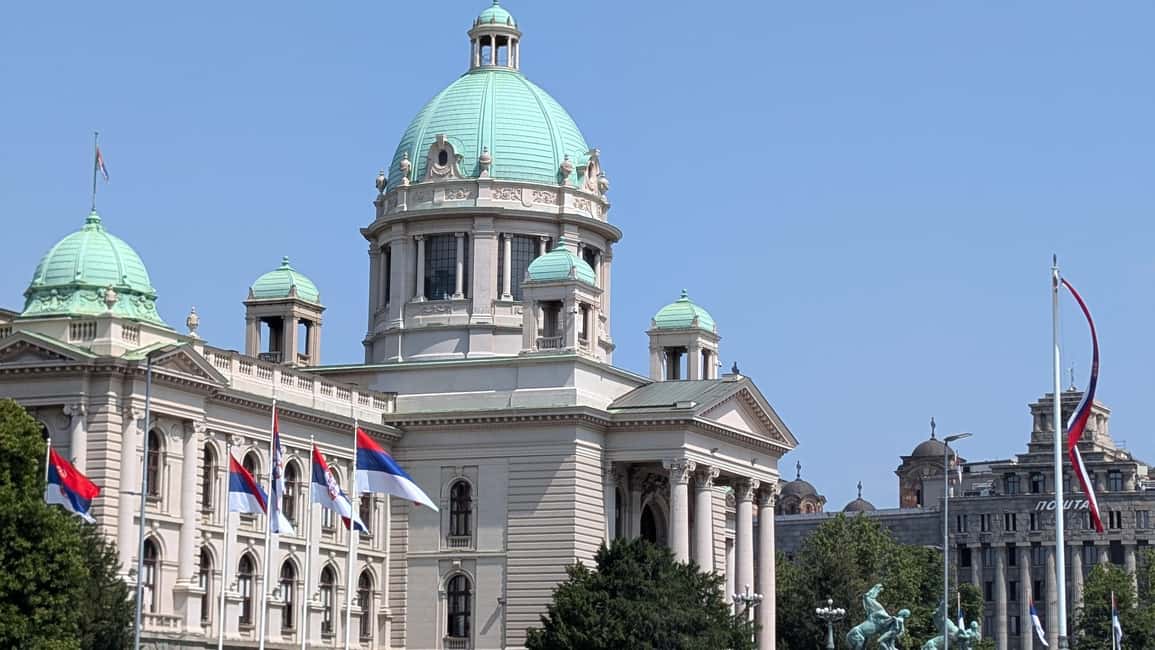
The first listed stop is the National Assembly of the Republic of Serbia, with about 20 minutes for guided explanation, sightseeing, and some free time.
This is a good early stop because it introduces Serbia as a modern state, not just an old fortress on a river. Your guide can place the building within the country’s political story and explain how the capital’s public institutions connect with the larger events discussed throughout the tour.
Twenty minutes is enough to understand the role of the site, but not enough for an extensive architectural study. Think of this as context rather than a formal building tour. The focus is on what the place means and how it fits into Belgrade today.
The guides’ ability to discuss current affairs is one of the strongest reasons to choose this walk. Marija, in particular, is praised for giving a balanced view of complicated Serbian and Balkan subjects. That balance matters here, since political history in the region can quickly become a contest of competing memories.
Kneza Mihaila and Republic Square
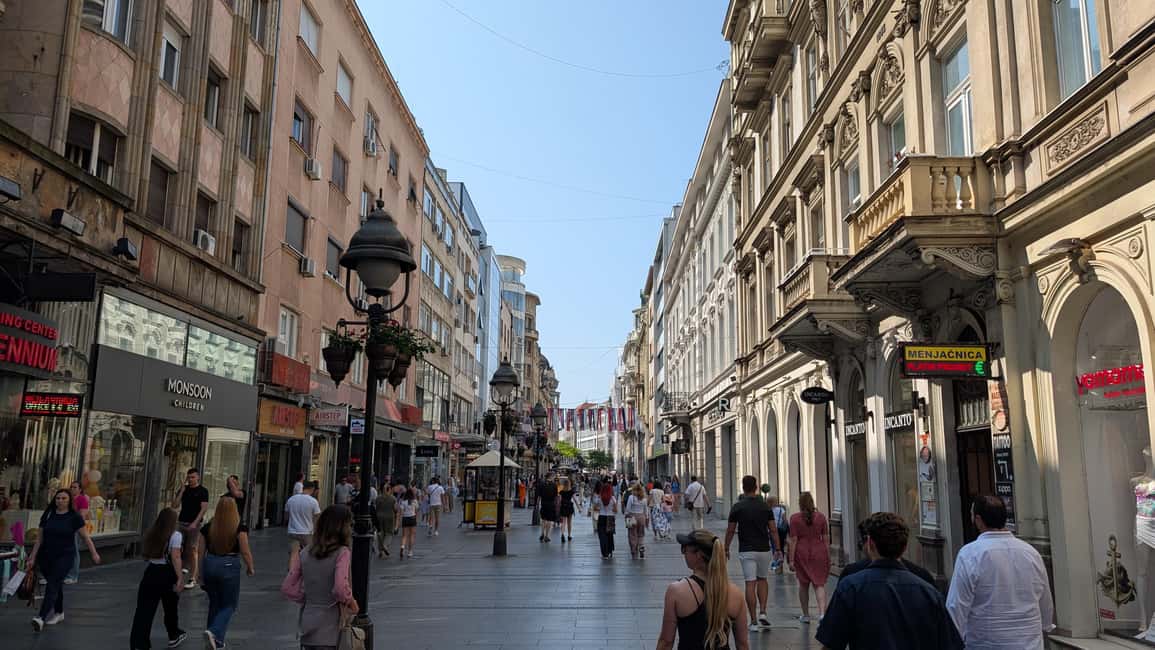
From the assembly, the route continues toward Kneza Mihaila, one of Belgrade’s best-known central streets. You have around 20 minutes here for a guided walk and sightseeing.
This section helps you understand the city as a living capital. Rather than staying only among ruins, you pass through the part of Belgrade where people shop, meet, walk, and spend time in the center. It is a useful contrast with the military setting of Kalemegdan later in the tour.
The next stop is Republic Square, also allocated about 20 minutes. The square is a natural place to discuss Belgrade’s public life and changing identity. Your guide can connect the central city to Serbia’s political and cultural story, while you get a sense of the route and the city’s layout.
The tour is not built around long periods of independent wandering. The guide leads the group from one location to the next, which keeps the history connected. If you prefer plenty of free time for shopping or photography, you may find this portion brisk.
Student Park and the Holy Archangel Michael
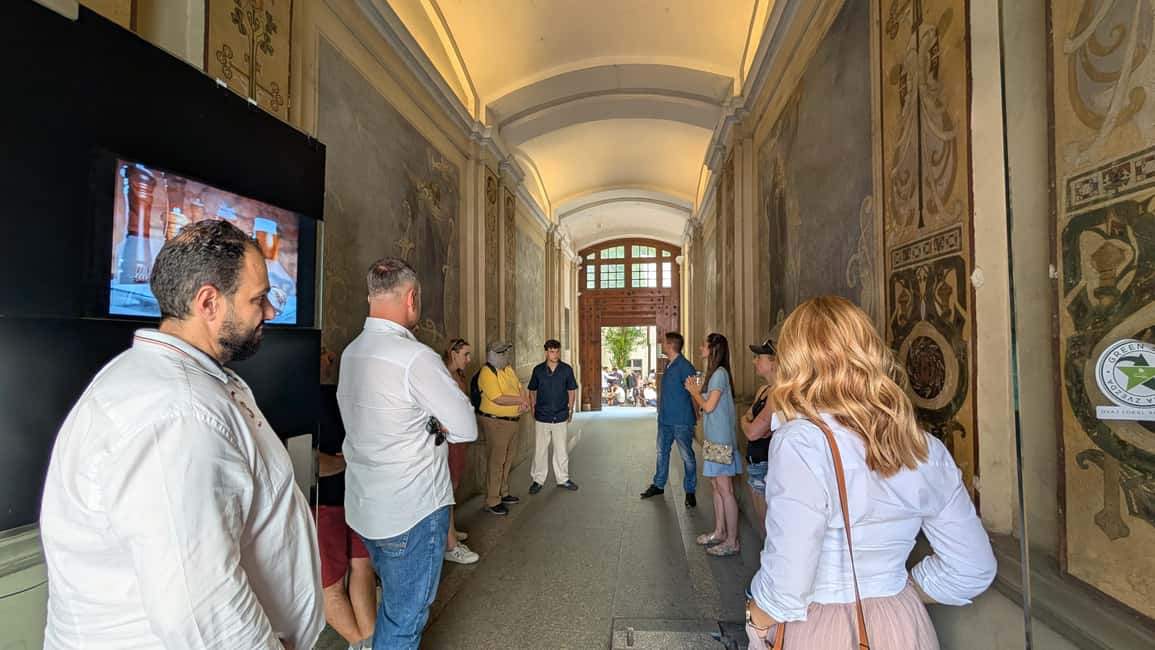
Student Park receives about 10 minutes. It is a short stop, but it gives the route a change of pace before the churches and fortress.
The itinerary then includes the Church of the Holy Archangel Michael, with around 15 minutes for a visit and explanation. This is one of the places where the tour moves from broad political history to religious and cultural life.
The guide’s role is especially helpful in a country shaped by several empires and traditions. You can ask questions rather than trying to decode every layer alone. The reported guide style is interactive, with time for discussion, humor, and follow-up questions. That approach helps prevent the tour from becoming a string of dates delivered while you walk.
You should keep your expectations realistic. The available details do not promise extended interior access or a long worship-site visit. The church is one part of a wide city route, not a stand-alone religious tour.
A couple more Belgrade trips to weigh up
- History and Culture in my Belgrade
★ 5.0 · 41 reviews - NATO Bombing of Belgrade Historical Tour
★ 5.0 · 17 reviews - Belgrade: Women’s Side of History Walking Tour with Coffee
★ 5.0 · 16 reviews - Football tour: Red Star and Partizan Ultras History
★ 5.0 · 14 reviews
Kalemegdan Park and Belgrade Fortress
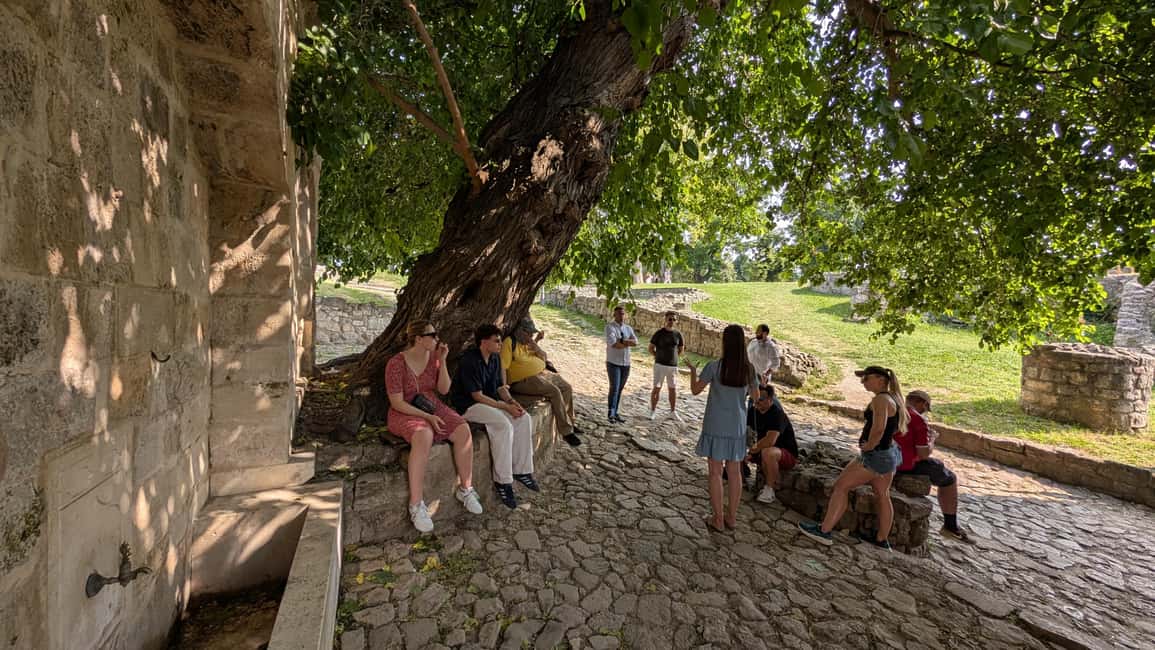
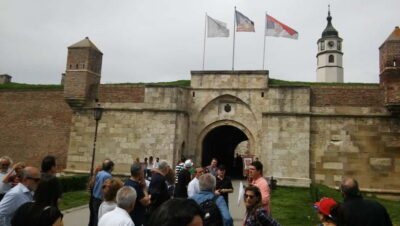
Kalemegdan Park gets approximately 20 minutes, followed by another 20 minutes around Belgrade Fortress. This is the core of the experience.
Kalemegdan offers the tour’s strongest sense of Belgrade’s position. The city sits where the Sava meets the Danube, and the fortress occupies the high ground above those waterways. That geography explains much of the city’s past importance. Armies wanted this point because it controlled movement between river routes and the wider region.
The fortress is not simply a picturesque ruin. It represents the repeated collision of powers that fought to control Belgrade. Romans, Byzantines, Ottomans, Austro-Hungarians, Germans, Russians, and others have left their mark on the city’s story. A good guide turns those changes into a connected explanation instead of a confusing list.
You get time for photos, scenic views, guided sightseeing, and walking. The route may also pass by parts of the site rather than stopping at every section. That is normal for a three-hour city introduction. The goal is to give you the fortress’s meaning and orientation, not to inspect every stone.
The views are a major payoff. You can see why Belgrade’s location mattered long before modern roads and railways. I would save extra energy for this part, since the open setting and river outlook are likely to be the most memorable moments of the walk.
Ružica Church and the Military Museum
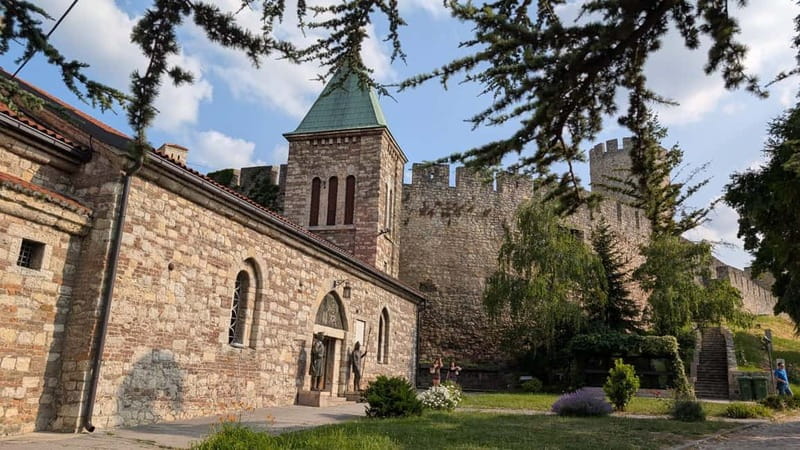
Ružica Church is listed as a 15-minute stop. The description calls it a lovely church built in the 15th century, and it adds a quieter, more intimate note to the fortress area.
Its presence near the military complex is fitting. Belgrade’s religious buildings and defenses often sit close together, reflecting the city’s long role as a contested border point. The guide can help you see how faith, warfare, and daily life overlap in the old city.
The Military Museum is named among the tour highlights, although the detailed stop list does not assign it a separate timed visit. You should therefore expect the guide to encounter or explain the museum as part of the fortress area, rather than assume that a full museum tour is included.
That distinction is important. The listed inclusion is a tour guide, not museum admission or a private museum visit. If the Military Museum is a priority, ask the operator how the stop is handled on your chosen departure.
The Monument of Gratitude to France
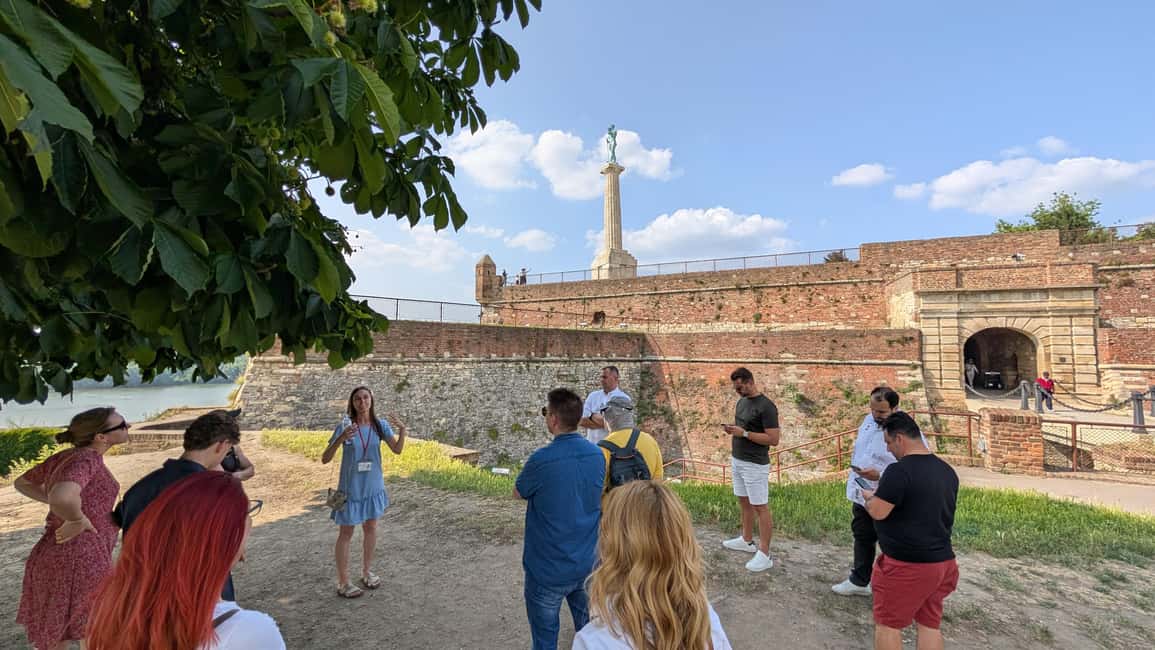
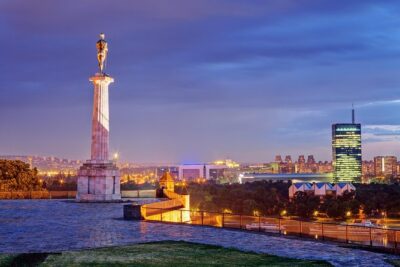
The route also includes the Monument of Gratitude to France, with about 15 minutes for sightseeing.
This stop adds an international layer to the walk and shows how Belgrade remembers its foreign relationships. It also fits the tour’s wider theme: Serbian history cannot be understood only within present-day national borders. The guide places local events alongside the decisions and rivalries of larger powers.
The monument is a brief stop, so expect explanation and sightseeing rather than a long ceremony or formal visit. Its value comes from the connection to the tour’s larger story of alliances, conflict, and memory.
What the guides do best
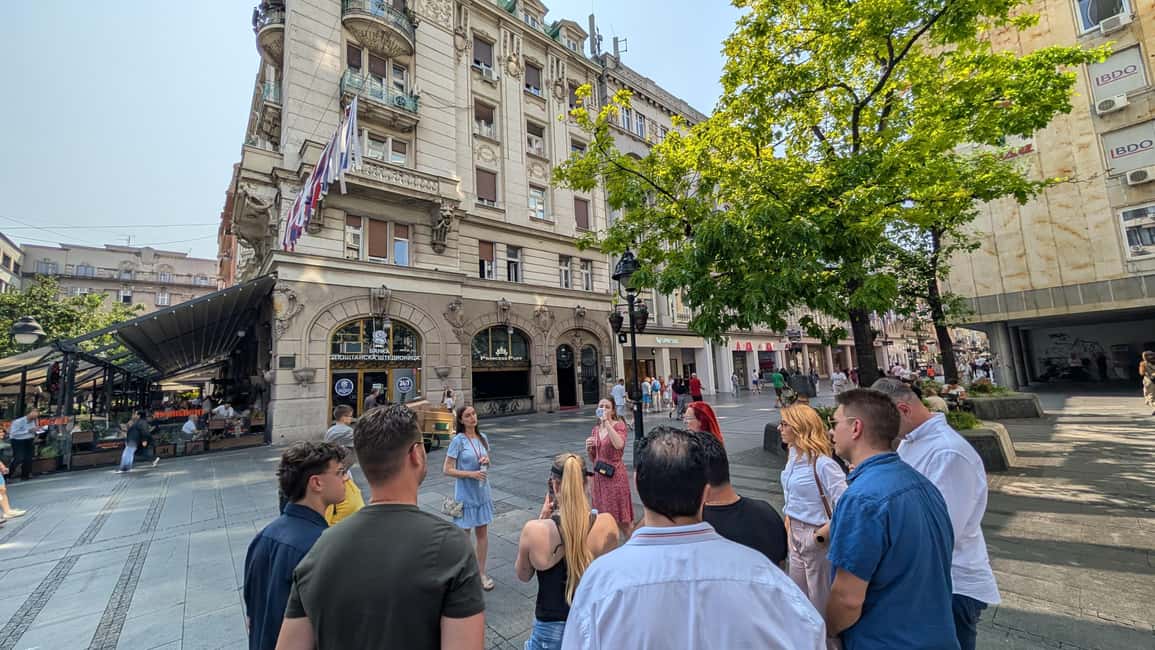
The clearest strength is the guiding. The highest praise focuses on historical command, excellent English, balanced explanations, and an ability to answer questions without losing the group.
Marija and Marijia are mentioned repeatedly. Their style is described as detailed but relaxed, with enough humor to keep difficult subjects approachable. One guide gave visitors a clearer view of Serbia’s present-day politics, student protests, and social life alongside the older events.
Tibor and Tibi are also praised for careful answers and a willingness to extend the discussion when the group showed interest. Dusen is described as talented, warm, and funny. Names and spellings may vary in the booking information, but the useful point is that the experience depends heavily on the individual guide assigned that day.
The best fit is someone who enjoys asking questions. You can ask about Belgrade, Serbia as a whole, Balkan politics, geography, or modern life. If you want only a quiet walk with a short script, this may feel more talkative than expected.
Group size is not specified. Some past departures were described as very small, which made it easier to ask questions and get detailed answers, but you should not treat a small group as guaranteed.
Pace, accessibility, and practical comfort
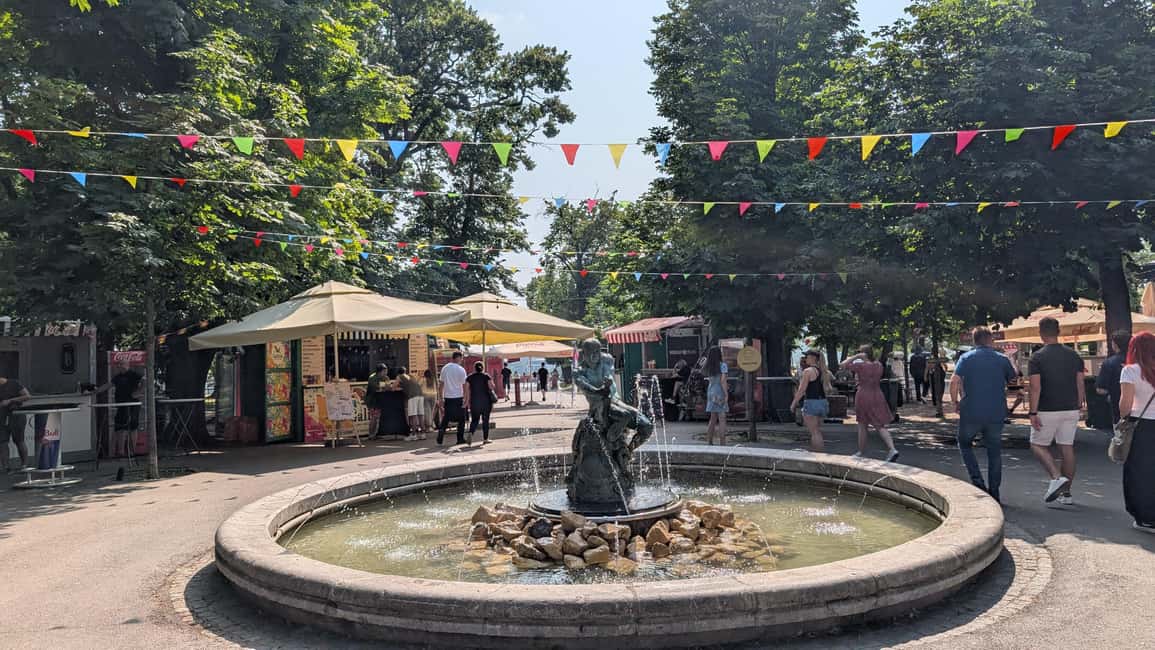
The tour lasts three hours and covers about 4 kilometers. That is manageable for many visitors, but it is still an active walk with several stops, so wear comfortable shoes as requested by the operator.
The route includes city streets, parks, a fortress area, churches, and viewpoints. The activity is marked wheelchair accessible, which is useful information, though the published details do not explain the exact surfaces, slopes, or access arrangements at every stop. If you need specific support, confirm those details before booking.
Bathroom and sitting breaks have been worked into at least some departures, according to the tour experience described by participants. Still, the schedule is organized around sightseeing rather than long café stops.
The meeting point is Terazije Square by the fountain. The detailed route gives Rajićeva Shopping Center as the finish, while the meeting-point information says the activity ends back at the meeting point. Because those details do not fully match, confirm the final drop-off point when you book.
Value, flexibility, and what is included
The published information does not give a tour price, so I cannot judge the exact cost. The value is easiest to assess by looking at what you receive: three hours with a live English-speaking guide, a central route, major landmarks, history, current affairs, and time for questions.
There is no transportation listed, and the only stated inclusion is the guide. That is not a weakness for this experience. The point is to walk through Belgrade and connect the places yourself. You are paying for explanation, structure, and local perspective rather than a vehicle or a collection of ticketed attractions.
The reserve-now, pay-later option can help if your schedule is still changing. Free cancellation is available up to 24 hours in advance for a full refund. Starting times vary, so check availability for the day you want.
Who should book this Belgrade walk
I would recommend it to first-time visitors who want the city explained rather than merely photographed. It is particularly useful if Serbian or Balkan history is unfamiliar, since the guide builds a basic understanding before moving through the sights.
It also suits visitors interested in current affairs. The guide may discuss modern politics and social issues, and the experience described by participants suggests that questions are welcome. That makes it more substantial than a standard landmark checklist.
Couples, solo visitors, and small groups can all benefit, especially if they enjoy conversation. Families should consider the 4-kilometer distance and three-hour duration. Visitors with limited mobility should confirm the practical access details despite the wheelchair-accessible designation.
You may want something else if your main goal is museum interiors, shopping time, or a slow photography walk. The Military Museum is highlighted, but a separate museum visit is not clearly promised, and most stops are short.
Should you book the Serbian History Walking Tour?
Book it if you want a strong first orientation to Belgrade, especially one that links Ottoman, Roman, Austro-Hungarian, military, religious, and modern political themes. The guides are the main reason to choose it, with Marija, Marijia, Tibor, Tibi, and Dusen all associated with clear English, humor, patience, and serious subject knowledge.
Go in ready to walk, listen, and ask questions. Wear good shoes, allow the full three hours, and confirm the ending point and Military Museum arrangements before you set off. For a compact introduction to Belgrade that treats the city as both a historic frontier and a living capital, this is a very strong choice.
FAQ
How long is the Belgrade Serbian history walking tour?
The tour lasts three hours.
Where does the tour start?
It starts at Terazije Square, next to the fountain.
Where does the tour finish?
The detailed route lists Rajićeva Shopping Center as the finish, while the meeting-point information says the activity ends back at the meeting point. Confirm the final location when booking.
How far do you walk?
The tour covers around 4 kilometers.
What language is the tour conducted in?
The live tour guide speaks English.
Is the tour wheelchair accessible?
Yes, the activity is listed as wheelchair accessible.
What should you bring?
Bring comfortable shoes because this is a walking tour covering about 4 kilometers.
Is the Military Museum included?
The Military Museum is listed among the highlights, but it does not appear as a separate timed stop in the detailed route. Confirm whether the visit includes entry or an exterior explanation.
Can I cancel for a full refund?
Yes. You can cancel up to 24 hours in advance for a full refund. You can also reserve now and pay later.
More 3-Hour Experiences in Belgrade
- Belgrade: 3-Hour Sightseeing City Tour
★ 4.9 · 54 reviews - 3-Hour Belgrade Zemun Neighborhood Tour
★ 5.0 · 8 reviews - Belgrade E-Bike Tour: 3h Journey Through History & Culture
★ 4.9 · 8 reviews - 3 Hour Private Walking Tour in Novi Sad City
★ 5.0 · 6 reviews
Just added in Belgrade
- Your Own Belgrade: Street Art and Hidden Gems Walking Tour★ 5.0 · 2 reviews
- Private Half Day Serbia Tour Novi Sad and Petrovaradin Fortress★ 5.0 · 3 reviews
- 3-Hour Belgrade Zemun Neighborhood Tour★ 5.0 · 8 reviews
- Private Belgrade Street Art and Adventures Walking Tour★ 5.0 · 4 reviews
- Private Wine Tasting by Party in Belgrade★ 5.0 · 3 reviews
- From Belgrade:Uvac Nature Reserve Tour★ 5.0 · 4 reviews
- Urban & Alternative Belgrade tour★ 5.0 · 4 reviews
- VIP Reservation Service in Belgrade★ 5.0 · 2 reviews
Walking Tours, compared.

Walking Tour city center and Petrovaradin Fortress
Read our review →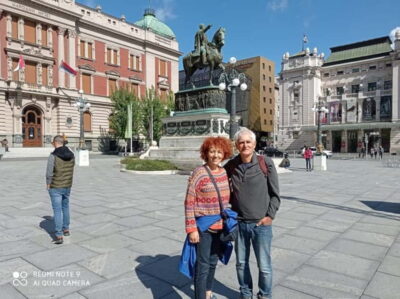
Half-Day Sightseeing and Walking Tour of Belgrade City
Read our review →Browse the lists this tour appears in