
Reviewed · WALKING TOURS
Half-Day Sightseeing and Walking Tour of Belgrade City
Belgrade rewards a walking tour. This small-group outing links Serbian history with everyday city life, from St. Mark’s Church and the Old Palace to Kalemegdan Fortress and the Danube-Sava meeting point. I like the intimate maximum of six people, and I like that coffee is built into the experience rather than treated as an afterthought. The main catch is that the route covers a lot in two to three hours, so the fortress portion may feel brief.
I also like the guides’ personal approach. Aleksandar Bastic is praised for explaining difficult subjects clearly, while Milica is described as warm, lively, and attentive. The one practical concern is language: the experience is offered in English, yet language expectations have caused confusion before, so you should confirm this carefully if anyone in your group needs Russian or another language.
In This Review
- Key points to know before you book
- Why this Belgrade walk works well as a first outing
- St. Mark’s Church and the medieval Serbian story
- The Old Palace and the National Assembly
- Terazije Fountain and Prince Mihailo
- Knez Mihailova, Belgrade’s pedestrian spine
- Kalemegdan Park and the Belgrade Fortress
- The keys memorial and the final coffee
- The guides and the quality of the storytelling
- Who will get the most from this tour?
- Should you book this Belgrade walking tour?
- FAQ
- How much does the Belgrade sightseeing and walking tour cost?
- How long does the tour last?
- Where does the tour begin and end?
- Is coffee included?
- Are entrance tickets included?
- How many people can join the tour?
Key points to know before you book
- Small groups of up to six: You get a more conversational walk, with room for questions and occasional flexibility.
- A useful first look at Belgrade: The route connects central squares, royal buildings, Knez Mihailova, and Kalemegdan.
- History is the main attraction: Expect context on Serbia, Yugoslavia, Ottoman rule, World War I, and the forces that shaped modern Belgrade.
- Coffee is included: Serbian coffee is presented as a social ritual, not simply a quick drink.
- Mostly outdoor sightseeing: The tour is free to enter at each listed stop, but you should be ready for steady walking and city noise.
- Good for first-time visitors: It gives you a map in your head and practical ideas for the rest of your stay.
Why this Belgrade walk works well as a first outing
At $38.34 per person, this is not the cheapest way to see Belgrade. It is still a fair price if you want a guide who explains why the city looks and feels the way it does, rather than someone who simply points out buildings.
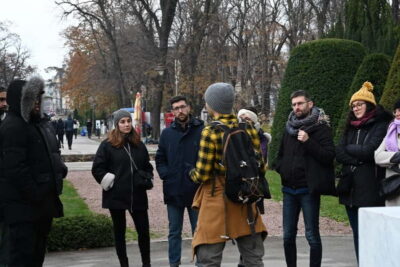
The group size matters. With no more than six people, you are less likely to be herded along in a large crowd. You can ask about Serbian politics, daily life, religion, architecture, or the former Yugoslavia without trying to catch a guide’s voice from the back of a group.
The advertised duration is two to three hours, though one outing described in the feedback lasted four hours. That suggests some flexibility, especially with a very small group, but you should plan around the stated two to three hours rather than count on extra time.
The tour begins at 11:00 a.m. on Kosovska 47, near the National Assembly area, and ends in front of the Belgrade City Library at 56 Knez Mihailova Street. Transportation and lunch are not included. That is not a problem for most people because the experience is designed as a city walk, but comfortable shoes are essential.
More guided walks around Belgrade:
- Belgrade: 3-Hour Small Group Walking Tour
★ 5.0 · 180 reviews - Belgrade: Shared Group or Private Guided Walking Tour
★ 4.8 · 162 reviews - Walking Tour in Belgrade
★ 4.8 · 122 reviews
St. Mark’s Church and the medieval Serbian story
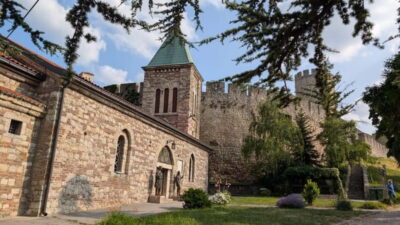
The first stop is Crkva Svetog Marka, or St. Mark’s Church. The visit introduces the tomb and sarcophagus of Emperor Stefan Uroš IV Dušan, one of medieval Serbia’s most important rulers.
Dušan ruled as king from 1331 to 1346 and then as Emperor of the Serbs, Greeks, and Albanians from 1346 to 1355. His reign represents the high point of medieval Serbian power, and this stop gives the guide a natural way to explain how Serbia’s borders, identity, and ambitions changed over time.
You should think of this as a history stop rather than a long church visit. The tour allows about 20 minutes, and admission is free. A useful clothing tip came up from a family with a 12-year-old: children need pants to enter the churches. If you are visiting with children, dress them with church access in mind.
This is also where a strong guide can make a major difference. Aleksandar is praised for turning complex Serbian history into a clear story, and that skill is especially useful here. Serbia’s past can involve shifting kingdoms, empires, religious traditions, and modern borders. A good explanation keeps the subject from becoming a pile of names and dates.
The Old Palace and the National Assembly
The route then moves through Belgrade’s political center. The Old Palace, at the corner of Kralja Milana and Dragoslava Jovanovića streets, was built between 1882 and 1884 for the Obrenović dynasty. It now houses the City Assembly of Belgrade.
The building is an example of 19th-century academic architecture, and the allotted 30 minutes gives you time to look at its exterior and hear how royal Serbia presented itself. This is a valuable contrast with the medieval material at St. Mark’s Church. You move from a Serbian emperor of the 14th century to a modernizing royal state trying to establish itself in Europe.
The National Assembly building is another visual highlight. Its construction took almost 30 years, held back by limited funds, wars, and disagreement within society. The sculpture group called Play of the Black Horses adds a memorable feature outside the building.
The tour starts in front of the National Assembly, so you will see this area right away or revisit it as the route develops. Allow 15 minutes for the stop. Since these are exterior visits, the guide’s explanation is what gives them meaning. Without that context, you might admire the facades and move on without understanding why these buildings matter.
Terazije Fountain and Prince Mihailo
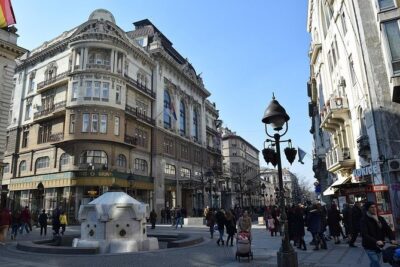
Terazije Fountain is a smaller stop, but it helps you read the city’s development. Built in 1860 as both a practical and decorative feature, it reflects a time when public water sources were useful civic objects as well as urban decoration.
The tour gives it about 15 minutes. That may feel generous for a fountain, but the value lies in the surrounding explanation. Belgrade’s central streets changed as the city moved away from Ottoman control and developed a more European civic style.
Nearby, the Prince Mihailo Monument provides another connection to Serbia’s 19th-century statehood. The monument was created by Italian sculptor Enrico Pazzi, with decorative reliefs by Konstantin Jovanović. Prince Mihailo Obrenović is closely tied to Serbia’s growing independence, so this is more than a statue in a traffic-heavy square.
The route later reaches the place where the city keys were handed to Prince Mihailo in 1867. Taken together, the monument and the keys memorial help explain Serbia’s gradual move toward full international recognition. The Ottoman Turks handed over the keys to several Serbian fortresses on April 6, 1867. The moment helped set the stage for recognition at the Treaty of Berlin in 1878.
A couple more Belgrade trips to weigh up
- From Belgrade: Novi Sad & Sremski Karlovci Full-Day Tour
★ 4.7 · 1,068 reviews - From Belgrade: Gems of Eastern Serbia Tour
★ 5.0 · 427 reviews - Northern Serbia: Sremski Karlovci and Novi Sad Full-Day Tour from Belgrade
★ 5.0 · 425 reviews - Day Trip from Belgrade: Gems of Eastern Serbia
★ 5.0 · 424 reviews
Knez Mihailova, Belgrade’s pedestrian spine
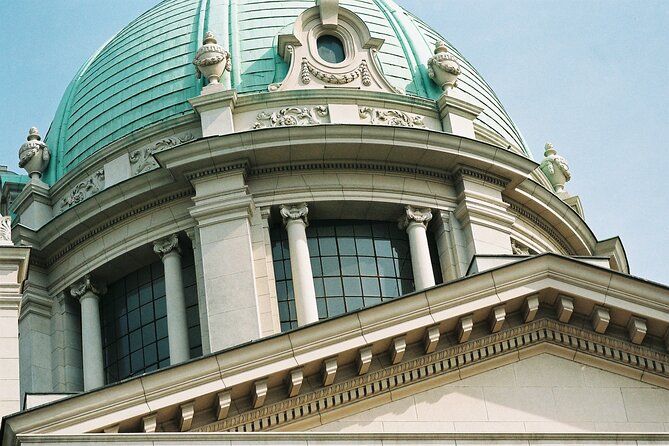
Knez Mihailova is the city center’s main pedestrian street and a natural transition between formal civic Belgrade and the fortress area. It leads toward Kalemegdan and gives you a chance to observe the city as it functions today.
The stop lasts about 20 minutes. You can expect a broad street, central shopping and meeting areas, and a steady flow of people. The guide’s local perspective is useful here because the street is not only an architectural corridor. It is also a place to discuss food, nightlife, daily routines, and what to do after the tour.
Aleksandar is praised for giving practical suggestions for restaurants and evening activities. That makes this stop especially useful early in your stay. You can ask where to eat, how to spend the evening, or which parts of Belgrade deserve more time.
One minor drawback is sound. Traffic noise caused one person to miss parts of the explanation during the walk. Knez Mihailova itself is pedestrian, but the route includes busy central areas, so stay close to the guide and ask for repetition when needed.
Kalemegdan Park and the Belgrade Fortress
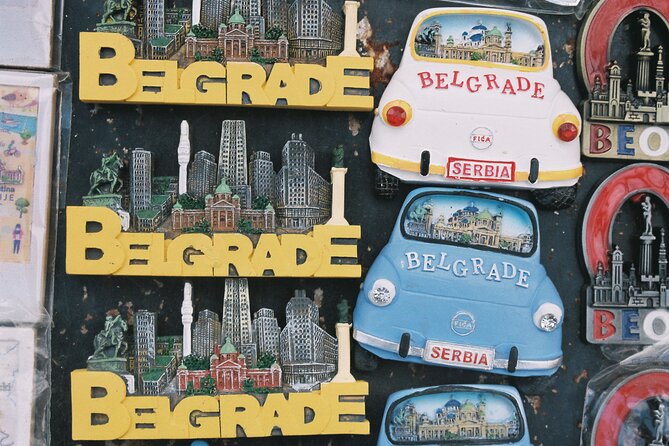
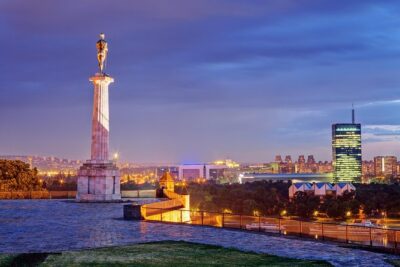
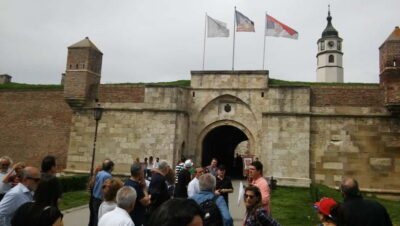
The longest stop is Kalemegdan Park and Belgrade Fortress, with about 45 minutes allotted. This is the visual centerpiece of the walk.
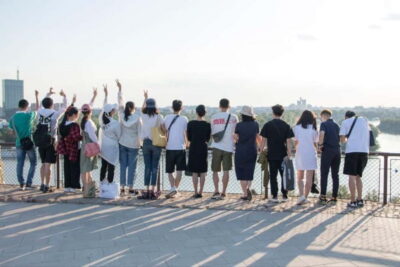
The fortress occupies a ridge where the Sava and Danube meet. That position gave armies control over the surrounding plain and made the site important from prehistoric times onward. The setting explains Belgrade’s strategic importance better than any map alone. From here, you can understand why different powers fought over the city for centuries.
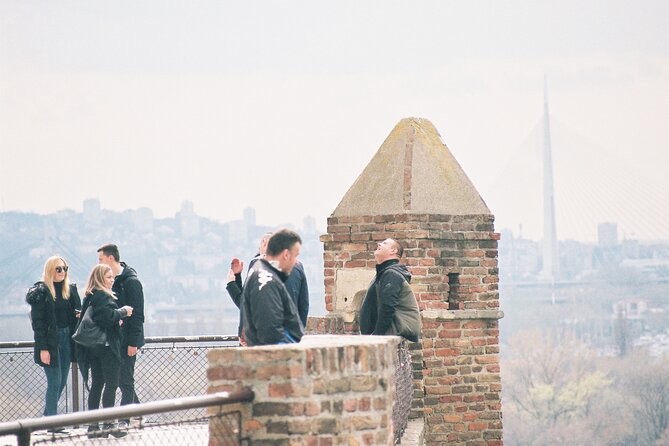
The route also includes the Clock Tower, or Sahat Kula. Construction began under Austrian rule and was completed under Ottoman rule between 1740 and 1789. That detail captures Belgrade’s layered past in a single structure. Political control changed, but the city kept adapting and adding new marks to the same ridge.
The Monument of Gratitude to France sits just outside the fortress. It honors the friendship and cooperation between Serbia and France during World War I. This stop widens the story beyond local rulers and empires, showing how Serbia’s modern identity was shaped by international alliances as well.
I would set realistic expectations for Kalemegdan. The fortress area is large, and 45 minutes is enough for a strong introduction, key views, and the main historical points. It is not enough for every section, museum, path, and defensive wall. One person specifically wanted more fortress detail, so if Kalemegdan is your main reason for coming, plan a separate visit afterward.
The keys memorial and the final coffee
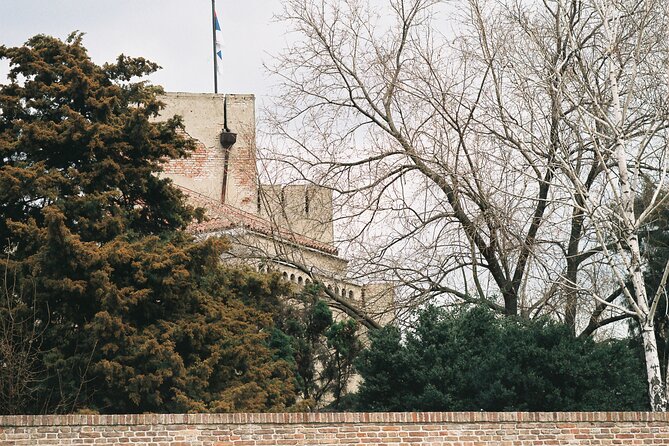
The memorial marking the 1867 handover of the city keys gives the walk a clear historical payoff. The earlier stops introduce royal power, Serbian independence, and Ottoman influence. Here, those themes come together in one event.
The final destination is in front of the Belgrade City Library on Knez Mihailova Street. This is a convenient central ending, since you can continue walking, stop for lunch, or follow the guide’s suggestions for the rest of the day.
Coffee and tea are included. Serbian coffee is treated as a ritual, and that small detail gives the experience a more local tone. It also offers a pause after the walking and a chance to ask questions that do not fit neatly beside a monument.
Do not expect lunch. It is not included, and the experience does not promise a full meal. The coffee stop is best understood as part of the cultural explanation, not as a substitute for eating.
The guides and the quality of the storytelling
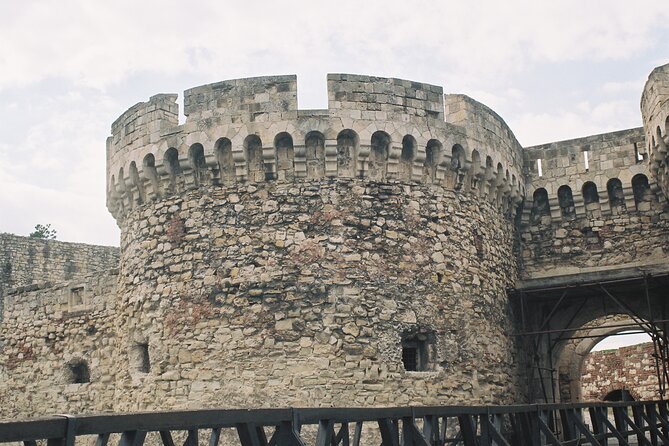
The strongest part of this experience is the guide. Aleksandar Bastic receives repeated praise for combining serious knowledge of Belgrade and Serbia with an easy, friendly manner. He is described as able to explain the wider Balkan region, Yugoslavia, Serbian politics, and the events that shaped the country without making the walk feel like a lecture.
That matters because Belgrade needs context. A building may look impressive, but the reason it matters can involve medieval rulers, Ottoman rule, royal dynasties, World War I, or the breakup of Yugoslavia. Aleksandar is also praised for handling sensitive questions calmly, which is useful when a conversation moves into politics and national identity.
The personal approach seems strongest when the group is tiny. A solo participant had a private outing in January and found the extra flexibility a benefit. Another solo visitor felt comfortable from the start, and a family with an infant and stroller received accommodating help.
Milica is described as bubbly, professional, friendly, and full of useful information. So the exact style may vary by guide, but the experience appears designed around personal attention rather than a fixed speech.
Language deserves a careful note. The tour is listed as offered in English. One booking involving a Russian-speaking family led to disappointment when the tour was conducted in English, while another person completed a Russian-language tour with Aleksandar. If Russian is important to your booking, confirm the language directly before you go.
Who will get the most from this tour?
I would recommend it most strongly to first-time visitors who want orientation before exploring alone. The route covers enough of central Belgrade to help you decide where to return, while the historical background gives meaning to places you might otherwise pass quickly.
It also suits solo visitors. A small group can feel more social, and the guide has room to tailor the conversation. Couples and families can benefit as well, especially if children are old enough to follow a history-focused walk.
This may not be the right choice if you want long interior visits, museum time, or a detailed fortress study. Much of the tour happens outside, and the route moves through public streets, squares, and park paths. You should also be comfortable with a moderate amount of walking and possible traffic noise.
At $38.34, the value depends on what you want from a guide. If you only need directions to Knez Mihailova and Kalemegdan, you can explore more cheaply on your own. If you want a human explanation of Serbia’s complicated past, local suggestions, a coffee ritual, and a group capped at six, the price is reasonable.
Should you book this Belgrade walking tour?
Book it if you are new to Belgrade, enjoy history told through places, and want a friendly guide who can answer questions beyond the standard script. The combination of central landmarks, Kalemegdan views, Serbian coffee, and practical local advice makes it a strong first-day activity.
Book with caution if your main goal is an in-depth fortress visit or if someone in your group needs a language other than English. In those cases, confirm the language and consider allowing extra time at Kalemegdan afterward.
For most visitors, I would choose this as an orientation walk, not as the only sightseeing experience in Belgrade. It gives you the city’s basic framework, then leaves enough of the story unfinished to make you want to keep exploring.
FAQ
How much does the Belgrade sightseeing and walking tour cost?
The listed price is $38.34 per person.
How long does the tour last?
The advertised duration is approximately two to three hours. One reported outing lasted four hours, but you should plan around the stated duration.
Where does the tour begin and end?
It starts at Kosovska 47 in Belgrade at 11:00 a.m. It ends in front of the Belgrade City Library at 56 Knez Mihailova Street, listed as Kneza Mihaila 54a.
Is coffee included?
Yes. Coffee and/or tea are included, with Serbian coffee presented as a cultural ritual.
Are entrance tickets included?
All listed stops show free admission. Transportation and lunch are not included.
How many people can join the tour?
The group has a maximum of six participants. Confirmation is provided at booking, and service animals are allowed.
Just added in Belgrade
- Your Own Belgrade: Street Art and Hidden Gems Walking Tour★ 5.0 · 2 reviews
- Private Half Day Serbia Tour Novi Sad and Petrovaradin Fortress★ 5.0 · 3 reviews
- 3-Hour Belgrade Zemun Neighborhood Tour★ 5.0 · 8 reviews
- Private Belgrade Street Art and Adventures Walking Tour★ 5.0 · 4 reviews
- Private Wine Tasting by Party in Belgrade★ 5.0 · 3 reviews
- From Belgrade:Uvac Nature Reserve Tour★ 5.0 · 4 reviews
- Urban & Alternative Belgrade tour★ 5.0 · 4 reviews
- VIP Reservation Service in Belgrade★ 5.0 · 2 reviews
Walking Tours, compared.
Walking Tour city center and Petrovaradin Fortress
Read our review →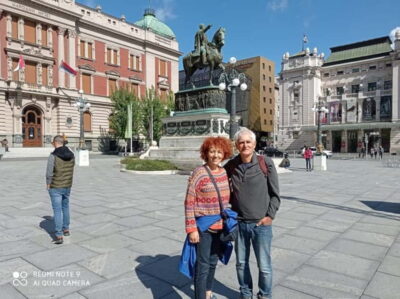
Browse the lists this tour appears in