
Reviewed · HISTORICAL TOURS
Belgrade: Ottoman heritage tour
Belgrade keeps its Ottoman past in plain sight. This three-hour private walk links the Bajrakli Mosque and old Dorćol with Belgrade Fortress, Nebojša Tower, and Princess Ljubica’s residence, giving you a clear picture of how Ottoman rule shaped the city. I like the route because it joins religious sites, fortifications, fountains, and domestic life instead of treating Ottoman Belgrade as a single monument. I also like that entry to Nebojša Tower and the residence is included.
The main consideration is pace. You cover several parts of the old city in three hours, mostly on foot, and the tour runs rain or shine. The subject also includes conquest, forced recruitment, rebellion, and religious change, so it suits you best if you want serious historical context rather than a light sightseeing stroll.
Milan has received especially warm praise for his guiding, with specific approval for his storytelling, route planning, and ability to explain a great deal in an enjoyable way. At $57 per person, the price is easiest to justify if you value a private English-speaking guide and the two included admissions.
In This Review
- Key points to know before booking
- Starting at Prince Mihailo Monument and Trg Republike
- Dorćol and the story of everyday Ottoman Belgrade
- The Cukur Fountain and a local clash with international consequences
- Bajrakli Mosque and Sheikh Mustafa’s Türbe
- House of Princess Ljubica: Ottoman-era life at home
- Belgrade Fortress, Zindan Gate, and Mehmed Pasha’s Fountain
- Inside Nebojša Tower
- What $57 includes, and where the value lies
- Timing, weather, and who will enjoy this walk
- Should you book the Ottoman heritage tour?
- FAQ
- Where does the tour start?
- How long does the Ottoman heritage tour last?
- What language is the tour conducted in?
- Is this a private tour?
- What admission tickets are included?
- Is hotel pickup and drop-off provided?
- Are food and drinks included?
- Can I cancel the tour for a full refund?
Key points to know before booking
- Ottoman Belgrade is presented as a border city: You learn why Belgrade mattered to the Ottoman Empire as a military, religious, and political outpost.
- Bajrakli Mosque is the city’s only preserved Islamic religious building: It gives the tour a rare surviving link to Belgrade’s Ottoman Muslim community.
- Two admission tickets are included: You enter Nebojša Tower and the House of Princess Ljubica without paying extra at the door.
- The walk connects major sites rather than isolating them: Dorćol, the old city, the fortress, fountains, mosque, tomb, and residences fit into one historical story.
- The tour is private and conducted in English: Your group does not share the guide with a large public crowd.
- The route includes difficult subjects: Devshirme, Janissaries, uprisings, and Ottoman military campaigns are part of the story.
Starting at Prince Mihailo Monument and Trg Republike
Your meeting point is the Prince Mihailo Monument, a useful place to begin because it puts you near Trg Republike and the old center. The opening section helps you place Ottoman Belgrade within the modern city rather than viewing it as a separate historical zone.
At Trg Republike, the guide spends about 15 minutes on a photo stop and introduction. This is not the longest stop, but it gives the tour a sensible start. You begin with the public heart of present-day Belgrade, then move toward older streets where Ottoman influence is easier to trace.
I appreciate this kind of opening because it gives you a basic question to carry through the walk: how much of a former empire remains after centuries of political change? In Belgrade, the answer is not always a surviving building. It may be a street name, a word in the Serbian language, a fountain, or the position of a fortress.
The private format matters here. With only your own group, you can ask for clarification when the story becomes complicated, especially when the guide moves between Ottoman administration, Serbian resistance, and later national history.
A couple more Belgrade trips to weigh up
- Belgrade: 3-Hour Serbian History Walking Tour
★ 4.9 · 108 reviews - History and Culture in my Belgrade
★ 5.0 · 41 reviews - NATO Bombing of Belgrade Historical Tour
★ 5.0 · 17 reviews
Dorćol and the story of everyday Ottoman Belgrade
The tour then reaches Dorćol, where you spend about 30 minutes walking and sightseeing. This section is important because it moves the story away from battles and rulers. You get a sense of the old city as a place where people lived, worshipped, traded, studied, and dealt with Ottoman authority.
The guide discusses Belgrade as an important borderline settlement of the Ottoman Empire. The city was not simply a quiet provincial outpost. Ottoman armies passed through it on campaigns toward central European cities, and Belgrade also served as a religious center with more than 200 active Islamic religious objects at one point.
That number gives you a useful measure of what has disappeared. Today, the surviving Ottoman buildings are only a small part of the city’s former Islamic presence. The tour helps you understand that absence instead of pretending the old city remains unchanged.
You also hear about Islamic schools that operated in Belgrade for decades. This adds an educational and social layer to the story. Ottoman influence was not limited to soldiers behind fortifications. It included religious instruction, administration, language, architecture, and daily customs.
This is also where the guide can explain the story of outlaws and Janissaries, along with devshirme, sometimes described as the tribute in blood. The subject refers to the Ottoman practice of taking Christian boys from subject populations and training some of them for state or military service.
It is a difficult topic, and that is part of the value. You are not getting a polished story about architecture alone. You are being shown how imperial systems affected families and communities, as well as how those systems produced powerful military institutions.
The tour also points to the long effect of Ottoman contact on Serbian language. Turkish words entered Serbian over many years and remain part of everyday speech. That is a small but memorable reminder that cultural influence can survive long after political control ends.
The Cukur Fountain and a local clash with international consequences
One of the more unusual stories concerns the Cukur drinking fountain. Here, the guide recounts how a Serbian boy confronted Turkish soldiers, an incident that helped trigger an international crisis.
The supplied details do not promise a long stop at the fountain, so you should think of it as a storytelling point along the old-city walk rather than a full museum visit. Still, it is exactly the sort of place that gives the tour character. A major political crisis can begin with a small confrontation in an ordinary urban setting.
I like this part because it brings imperial history down to street level. You can look at a fountain and consider how tension between local people and occupying forces could turn a minor encounter into something much larger.
Bajrakli Mosque and Sheikh Mustafa’s Türbe
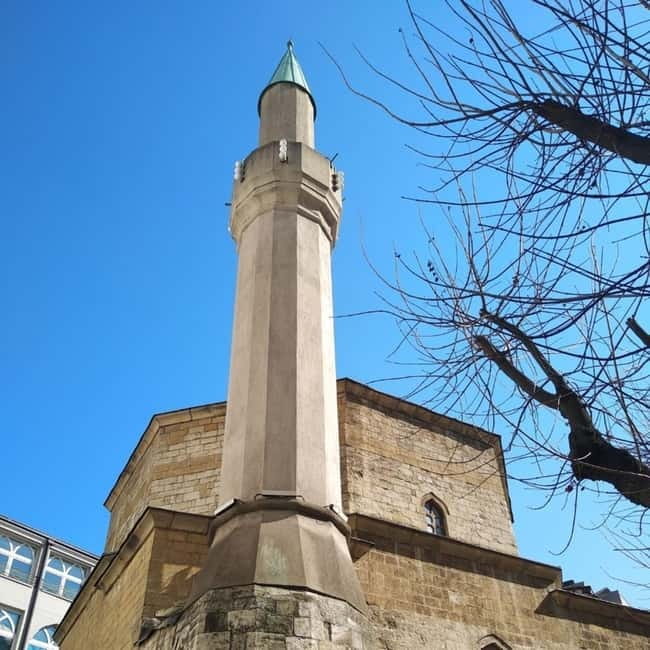
The Bajrakli Mosque is one of the tour’s main highlights. It is the only preserved example of Islamic sacral architecture in Belgrade, making it especially important in a city that once had many Islamic religious buildings.
The mosque is described as one of the city’s flag places, meaning a site with a visible public role. Its survival gives you a direct connection to Ottoman religious life, while the surrounding changes in the city show how much has been lost or transformed.
You should not expect a large collection of preserved Ottoman mosques. The appeal here is the opposite. One surviving mosque carries unusual weight because it represents a much broader religious world that no longer exists in physical form.
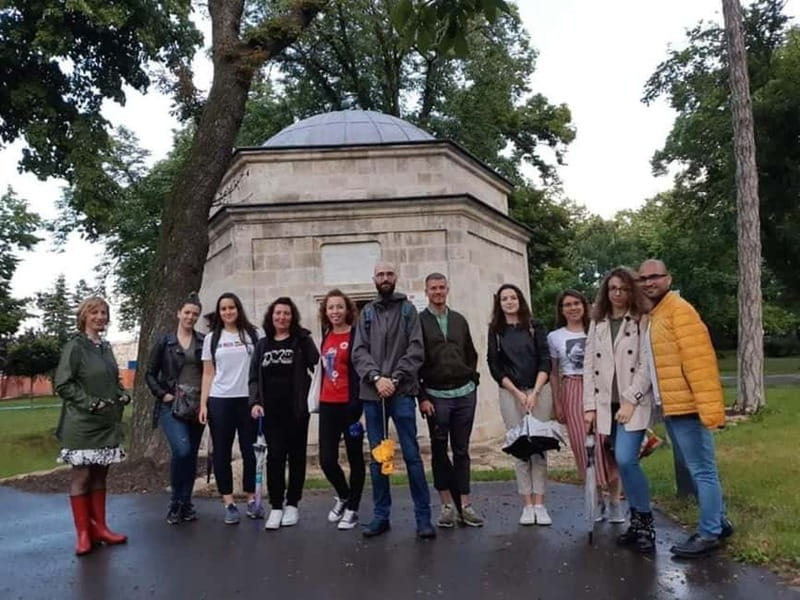
Not far from the mosque, the route includes Sheikh Mustafa’s Türbe, a tomb built in the late 18th century. A türbe is a mausoleum, and this small site adds another side of Ottoman religious practice to the mosque visit.
The mosque and tomb work well together. One represents communal worship. The other points to the memory and honor attached to an individual religious figure. Their closeness also helps you understand how religious buildings once formed part of a wider network across the old city.
Access details for the mosque and tomb are not specified, so you should follow the guide’s instructions and treat them mainly as heritage stops. The clearly included indoor entries are Nebojša Tower and the House of Princess Ljubica.
Out of the city, and a slower way to spend the day:
- From Belgrade: Novi Sad & Sremski Karlovci Full-Day Tour
★ 4.7 · 1,068 reviews - From Belgrade: Gems of Eastern Serbia Tour
★ 5.0 · 427 reviews - Northern Serbia: Sremski Karlovci and Novi Sad Full-Day Tour from Belgrade
★ 5.0 · 425 reviews - Day Trip from Belgrade: Gems of Eastern Serbia
★ 5.0 · 424 reviews
House of Princess Ljubica: Ottoman-era life at home
The House of Princess Ljubica gives the tour a change of scale. After fortifications, religious buildings, and stories of resistance, you enter a residence where the focus turns to domestic life in Ottoman-ruled Serbia.
The visit and guided section last about 30 minutes. Admission is included, which improves the $57 value because you receive more than an outside walking tour.
The house helps you picture how people lived during a period when Serbian rulers operated within the wider political world shaped by the Ottoman Empire. The tour description presents it as a place where you can see everyday life, so expect the guide to use the rooms and furnishings to explain social customs and domestic routines.
This stop is useful because military history can make Ottoman Belgrade seem like a permanent battlefield. A residence reminds you that people also cooked, hosted guests, raised families, and managed ordinary routines during periods of political pressure.
The building also creates a bridge between Ottoman rule and the growing Serbian struggle for independence. You are not asked to see the period as only Ottoman or only Serbian. Instead, you see a society in transition, with outside rule, local leadership, and cultural exchange all operating at once.
Belgrade Fortress, Zindan Gate, and Mehmed Pasha’s Fountain
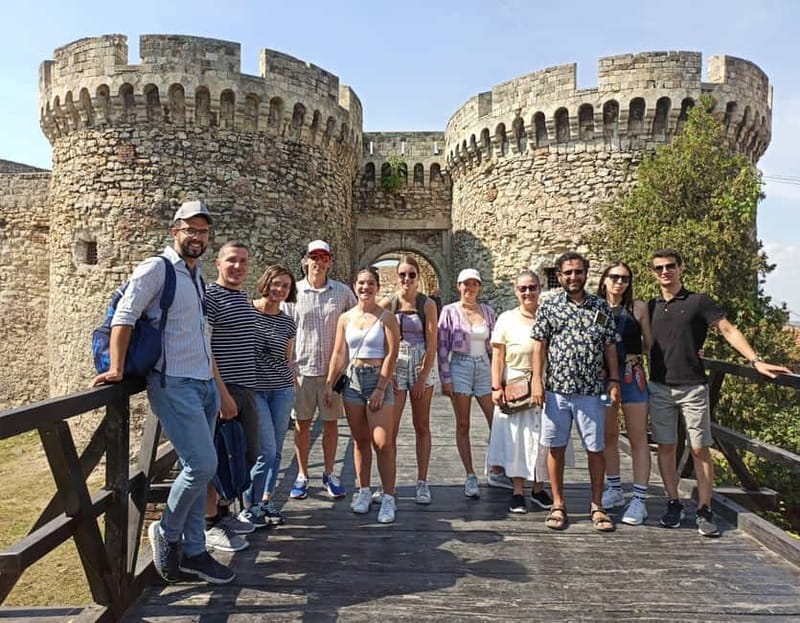
The tour then reaches Belgrade Fortress for about 45 minutes of walking, sightseeing, photographs, and guided explanation. This is the longest section of the route, and rightly so. The fortress is where the military importance of Belgrade becomes easiest to understand.
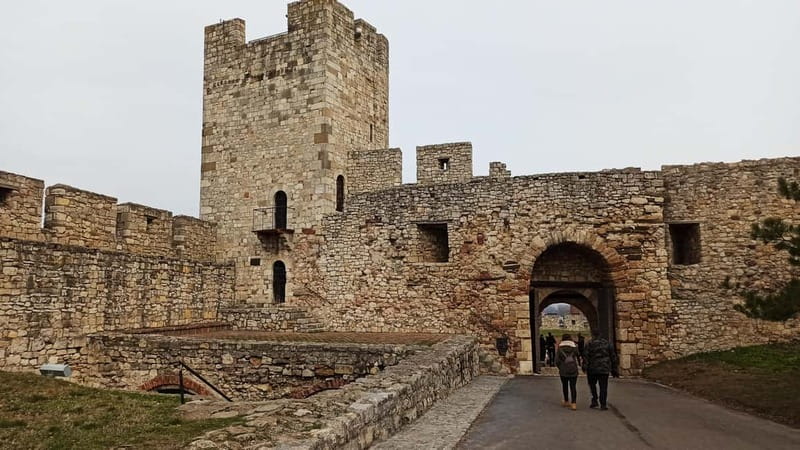
The guide discusses Ottoman influence at the fortress, including the 15th-century Zindan Gate. The gate helps you picture how the fortress functioned as a defended border position, not simply as a pleasant viewpoint or pile of old walls.
The route also includes the drinking fountain of Mehmed Pasha Sokolović, erected in 1576. A fountain inside or near a fortress may seem like a small feature, but it points to the practical needs of a military city. Water, gates, roads, and defensive works all formed part of the same system.
The fortress section is likely to be the most physically demanding part of the tour because it involves walking through an old fortified area. The activity information does not give a detailed accessibility description, so you should be prepared for an outdoor route and uneven historic surroundings.
The benefit is that the guide can connect the physical setting to the larger Ottoman campaigns. Numerous Ottoman armies moved from or through Belgrade toward central Europe. Standing among the gates and walls gives that movement a concrete setting.
At the same time, the fortress has many layers of history. The Ottoman period is the focus here, but you are walking through a site shaped by repeated conflict and changing powers. If you want a narrowly Ottoman experience with no other historical material, ask the guide to keep the emphasis on the period named in the tour.
Inside Nebojša Tower
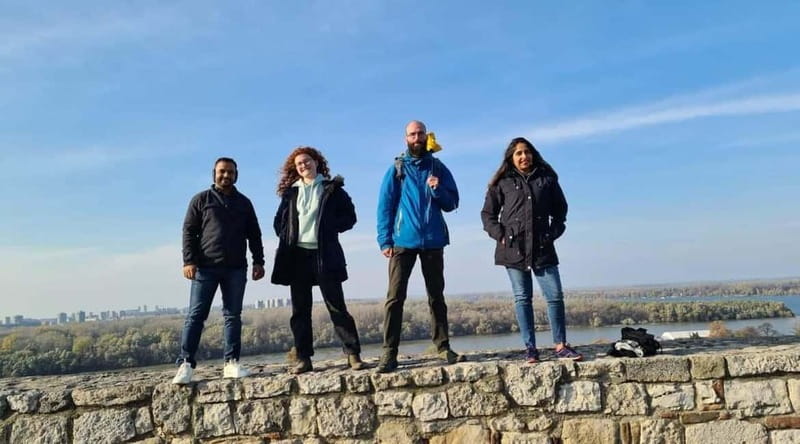
Nebojša Tower is the final named stop, with about 30 minutes for a visit and guided tour. Entry is included, so this is the second major indoor admission covered by the price.
The tower gives you a closer look at the fortress as a working defensive complex. Its inclusion makes the tour more than a street walk. You get inside one of the key structures and hear the story in the place itself.
The name and setting also suit the tour’s darker themes. The route covers resistance, imprisonment, military authority, and the hard edge of border life. Nebojša Tower gives those subjects a physical anchor.
The available details do not specify a separate exhibit list or the exact interior route, so you should avoid expecting a large museum program. The value comes from entering the tower with a guide who can connect it to the fortress and Ottoman period.
Milan has been singled out for making this kind of explanation especially effective. His route planning has also been praised, which matters on a short tour with several stops. A well-ordered route can prevent the experience from feeling like a string of unrelated monuments.
What $57 includes, and where the value lies
The price is $57 per person. Included are a professional English-speaking guide, entry to Nebojša Tower, and entry to the House of Princess Ljubica.
You pay separately for food and drinks, and there is no hotel pickup or drop-off. That is not a problem for most people choosing a three-hour city walk, but it does mean you should make your own way to the Prince Mihailo Monument and plan your return afterward.
I see the strongest value in the private format. A shared group tour can be cheaper, but a private guide gives you more room to ask about the subjects that interest you most. You can spend more time on Ottoman architecture, Serbian resistance, language, or military history instead of following a fixed lecture for strangers.
The two included tickets also matter. If you visited the tower and residence separately, you would need to arrange the visits and learn the context on your own. Here, the admissions support one continuous story.
The tour is less compelling if you only want famous sights and quick photographs. Several of the best moments depend on explanation. Without the guide’s stories, a fountain, tomb, or gate could be easy to overlook.
Timing, weather, and who will enjoy this walk
The tour lasts three hours and is offered with a live English-speaking guide. It is a private group experience, so the exact feel depends on the size of your own party, but you will not be placed into a general public group according to the activity details.
The walk takes place rain or shine. Bring suitable clothing and shoes for the forecast, since the route includes Dorćol and the fortress area. Food and drinks are not included, so plan those around the tour rather than expecting a scheduled refreshment break.
I would choose this experience if you have already seen Belgrade’s central sights and want to understand the city’s Ottoman layer. It also suits anyone interested in borderlands, military history, religious change, or the way words and customs pass between cultures.
You may want a different tour if your priority is modern Belgrade, Serbian royal history alone, or a relaxed café-and-viewpoint walk. The content is serious, and the route covers a lot in a short time.
The booking terms are flexible: you can reserve now and pay later, and cancellation is free up to 24 hours before the start for a full refund. Check the available starting times when choosing your date.
Should you book the Ottoman heritage tour?
Book it if you want a focused, private history walk that explains why Belgrade mattered to the Ottoman Empire and what remains of that period today. The combination of Bajrakli Mosque, Sheikh Mustafa’s Türbe, Cukur Fountain, Princess Ljubica’s residence, Belgrade Fortress, Zindan Gate, Mehmed Pasha’s Fountain, and Nebojša Tower gives you a broad story without requiring a full day.
I especially like the contrast between the sites. You move from a mosque to a royal residence, from a street fountain to a fortified tower, and from local resistance stories to the wider reach of Ottoman armies.
At $57, the tour makes the most sense for you if you want interpretation and private attention, not just transportation between sights. Keep the weather policy and walking demands in mind, then book with Milan in mind if his availability matches your date. His praised storytelling and carefully planned route are exactly what this subject needs.
FAQ
Where does the tour start?
The tour starts at the Prince Mihailo Monument.
How long does the Ottoman heritage tour last?
The tour lasts three hours.
What language is the tour conducted in?
The live tour guide conducts the experience in English.
Is this a private tour?
Yes. The activity is organized for a private group.
What admission tickets are included?
Entry to Nebojša Tower and the House of Princess Ljubica is included.
Is hotel pickup and drop-off provided?
No. Hotel pickup and drop-off are not included.
Are food and drinks included?
No. Food and drinks are not included.
Can I cancel the tour for a full refund?
Yes. You can cancel up to 24 hours in advance for a full refund. You can also reserve now and pay later.
Just added in Belgrade
- Your Own Belgrade: Street Art and Hidden Gems Walking Tour★ 5.0 · 2 reviews
- Private Half Day Serbia Tour Novi Sad and Petrovaradin Fortress★ 5.0 · 3 reviews
- 3-Hour Belgrade Zemun Neighborhood Tour★ 5.0 · 8 reviews
- Private Belgrade Street Art and Adventures Walking Tour★ 5.0 · 4 reviews
- Private Wine Tasting by Party in Belgrade★ 5.0 · 3 reviews
- From Belgrade:Uvac Nature Reserve Tour★ 5.0 · 4 reviews
- Urban & Alternative Belgrade tour★ 5.0 · 4 reviews
- VIP Reservation Service in Belgrade★ 5.0 · 2 reviews
Historical Tours, compared.
Women’s Side of History Walking Tour with Coffee
Read our review →
Football tour: Red Star and Partizan Ultras History
Read our review →
Belgrade E-Bike Tour: 3h Journey Through History & Culture
Read our review →
Browse the lists this tour appears in