Reviewed · BELGRADE TOURS
Small Group Balkans Tour; Belgrade to Athens or Corfu in 14 Days
Seven countries, one very full journey. This 14-day small-group tour links Belgrade, Sarajevo, Mostar, Kotor, Albania, Kosovo, North Macedonia, and Greece with a maximum of 10 people. I like the blend of famous sights and local stops, especially Mrizi i Zanave farm and Tirana’s food walk. I also like that transport, breakfast, hotels, entry fees, fuel, and road costs are included. The main drawback is the pace: border crossings, long drives, and frequent hotel changes leave little room for unscheduled wandering.
You begin at Belgrade Fortress and finish in Athens or at Igoumenitsa Port for the ferry to Corfu. The small group size should make the road days easier and allow the tour leader to adjust explanations and stops to the group. Still, this is best for an energetic sightseer who prefers covering ground to settling into one place.
In This Review
- Key points to know before booking
- What this Balkan route does especially well
- Belgrade to Sarajevo, with a Drina River pause
- Sarajevo and Mostar, from war memories to Ottoman streets
- Kotor and Montenegro’s Adriatic coast
- Shkoder, Kruja, and Albania’s strong sense of place
- Kruja and Tirana, two very different Albanian days
- Lake Ohrid and the road into Greece
- Berat, Gjirokaster, Ioannina, and Meteora
- What the $4,833.96 price includes
- Who will enjoy this tour most
- Should you book the Belgrade to Athens or Corfu route?
- FAQ
- How long is the tour?
- Which countries does the tour visit?
- What is the maximum group size?
- What time does the tour begin?
- Are hotels included?
- Are meals included?
- Is transport included?
- Are attraction entry fees included?
- Is the ferry to Corfu included?
Key points to know before booking
- Seven countries in 14 days: Serbia, Bosnia and Herzegovina, Montenegro, Albania, Kosovo, North Macedonia, and Greece all appear in one route.
- A maximum of 10 people: This keeps the group more personal than a large coach tour.
- UNESCO sites throughout: Mostar, Kotor, Ohrid, Berat, Gjirokaster, Meteora, and other protected places feature prominently.
- Three-star hotels with breakfast: Accommodation is practical rather than luxurious, with 13 breakfasts included.
- Food is part of the experience: Try Albanian byrek, qofte, raki, local coffee, Balkan dishes, and a traditional farm lunch at Mrizi i Zanave.
- Athens or Corfu finish: You can end in Athens with a hotel drop-off or continue to Igoumenitsa Port, with ferry tickets supplied for Corfu.
What this Balkan route does especially well
The great strength here is range. You move from Serbia’s Danube and Sava rivers to Bosnia’s Ottoman bazaars, Montenegro’s Adriatic coast, Albania’s mountain towns, Kosovo’s religious sites, Lake Ohrid, and Greece’s stone monasteries. Each country brings a different feel, and the changes come quickly.
I like that the route does not rely only on headline sights. You stop in Zvornik for lunch, visit a working agricultural tourism farm, see Rahovec’s vineyards, pause in Tushemisht, and walk through local markets in Tirana. These are the moments that help connect the grand monuments to daily life.
The tradeoff is time. Several stops are listed for only 30 minutes to one hour, and some days involve multiple borders or long road sections. You will see a lot, but you should not expect slow mornings, long museum visits, or several free days beside the sea.
A couple more Belgrade trips to weigh up
- From Belgrade: Novi Sad & Sremski Karlovci Full-Day Tour
★ 4.7 · 1,068 reviews - From Belgrade: Gems of Eastern Serbia Tour
★ 5.0 · 427 reviews - Northern Serbia: Sremski Karlovci and Novi Sad Full-Day Tour from Belgrade
★ 5.0 · 425 reviews
Belgrade to Sarajevo, with a Drina River pause
Your first morning starts with hotel pickup in Belgrade at 8:00 am. The opening walk through Kalemegdan Park and Belgrade Fortress gives you a strong introduction to the region. From the Upper Town, you see the Pobednik monument and the meeting point of the Sava and Danube rivers before walking along Knez Mihailova toward Republic Square.
This is a sensible first stop because it combines views, public life, and centuries of history without requiring a complicated start. The park also gives you a little breathing room before the road journey begins.
You then cross into Bosnia and Herzegovina and stop in Zvornik for about an hour. This riverside town is less famous than Sarajevo or Mostar, which is exactly why the pause is useful. You can have lunch, walk beside the Drina, and get an early taste of smaller Balkan towns.
The drive continues to Sarajevo in the afternoon. The first day is more about orientation than extensive sightseeing, so do not expect a full Belgrade or Sarajevo experience before dinner. Your hotel and breakfast are included, but lunch, dinner, drinks, and snacks are your responsibility throughout the tour.
Sarajevo and Mostar, from war memories to Ottoman streets
Day two gives Sarajevo proper attention. The walking route includes uneven ground and visible reminders of the Yugoslav War, including bullet holes and cannon marks. That makes comfortable walking shoes important, even though the daily distances are not specified.
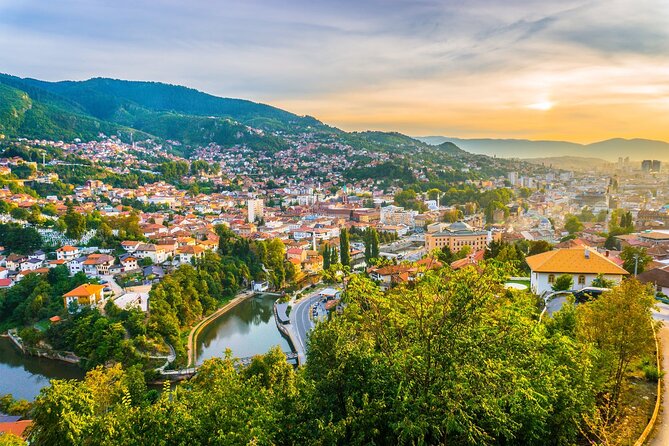
The city’s character comes from its mixture of Ottoman and Austria-Hungarian influence. Markets, mosques, churches, and synagogues sit close together, offering a clear sense of why Sarajevo is often described as a European Jerusalem. The tour also covers the medieval Bosnian Kingdom and the city’s origins, giving you context rather than a quick photo stop.
At Latin Bridge, you learn how the 1914 assassination of Archduke Franz Ferdinand helped trigger the First World War. The stop is brief but significant. Sarajevo rewards careful attention, and I would use any free time here to sample local meat dishes or desserts.
Later, the route reaches Mostar and its celebrated Stari Most. The 16th-century bridge, rebuilt after wartime destruction, is the city’s visual center and part of the UNESCO World Heritage site. The surrounding Old Bazaar brings stone lanes, old mosques, Turkish-style shops, and the repeated reminder not to forget the city’s past.
Mostar can feel busy and polished around the bridge, but the narrow streets still reveal the meeting of old and new. You receive an hour at the bridge and time in the old city area, enough for a good first look, though not enough for every museum or side street.
Kotor and Montenegro’s Adriatic coast
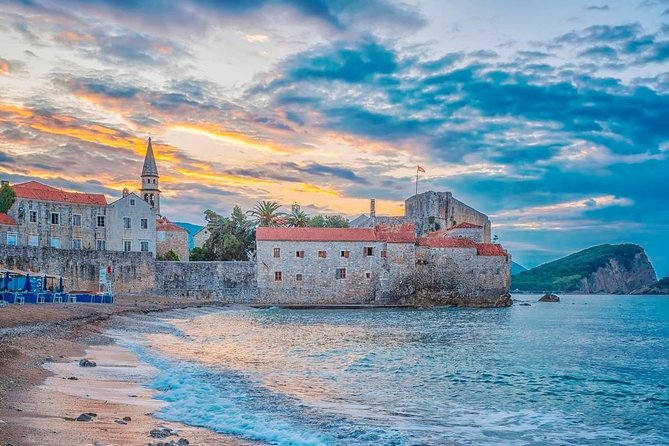
Kotor is one of the tour’s strongest scenic and architectural stops. The old town is enclosed by mountains and crossed by narrow cobbled lanes that were intentionally confusing to invaders. Small plaques on old buildings explain their former use and construction dates, giving the walk a pleasant sense of discovery.
The visit includes St. Luke’s Church, important locally as a symbol of unity, followed by afternoon time to explore on your own. That free period matters. Kotor is the sort of place where you want to pause for a coffee, browse a quiet lane, or simply look up at the walls and church towers.
The next day brings Budva, another coastal town with a clear split between modern development and the historic center. The old town includes St. Ivan Church, St. Mary’s Church, and medieval buildings, while the newer area has shops, offices, restaurants, and bars.
You also stop at a viewpoint for Sveti Stefan. The former fishing village now operates as an exclusive residential resort, so the island itself cannot be visited. The stop is mainly for the view and a photograph, but it is a worthwhile coastal pause if you understand its limits.
Out of the city, and a slower way to spend the day:
- Day Trip from Belgrade: Gems of Eastern Serbia
★ 5.0 · 424 reviews - Belgrade: Sunset Cruise with Live Guide
★ 4.4 · 418 reviews - Belgrade: Underground Tour with Riverside Sparkling Wine
★ 4.8 · 411 reviews - Western Serbia 1-Day Tour of the Key Sites from Belgrade
★ 4.8 · 333 reviews
Shkoder, Kruja, and Albania’s strong sense of place
After crossing into Albania, you reach Shkoder, one of the country’s oldest cities. Rozafa Castle is the main attraction, with views over the lake and the area where three rivers flow toward the Adriatic. Venetian influence appears in the city’s architecture, and a February visit may coincide with the Shkoder carnival.
The next day includes Mrizi i Zanave, a farm and slow-food operation that works with regional organic products. You tour the farm, learn how old communist buildings were adapted for storage, and have time for lunch or local produce. I especially like this stop because it adds a working, present-day side of Albania to a route otherwise heavy on fortresses and old towns.
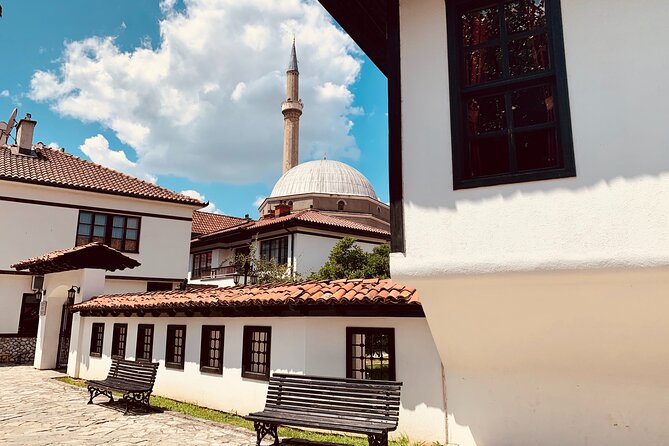
Prizren follows, with its river, bridges, Ottoman buildings, and lively streets. The Sinan Pasha Mosque is included, as is Kalaja Fortress, where the hilltop view looks across the town. The climb and stone surfaces may be tiring, but the panorama earns the effort.
Gjakova brings another change of pace. Its large old bazaar has been destroyed and rebuilt several times, including after the Kosovo War. Today, it is a useful place to browse handmade crafts and stop for a meal.
At the Dečani Monastery, Orthodox monks still live on site and produce food such as cheese. The monastery is known for its 14th-century frescoes and is part of UNESCO. Because Kosovo sites can involve additional security or access considerations, the schedule may need to adapt, as the operator notes for all stops.
The route then passes through Rahovec Valley, a wine-growing area with vineyards dating back to Illyrian times. If your dates align with the annual September wine festival, the region may be especially lively, though the tour information does not promise festival attendance.
Kruja and Tirana, two very different Albanian days

Kruja sits on rocky ground about 560 meters above sea level. Its old bazaar, lined with wooden houses and narrow lanes, is one of the best places on the route for handmade Albanian souvenirs such as carpets and jewelry.
Kruja Castle recalls the country’s resistance to Ottoman expansion. The tour leader takes you along less obvious paths linked to the castle’s past. The castle stop is listed as very short, so your real time here is likely to be spent in the bazaar and surrounding streets.
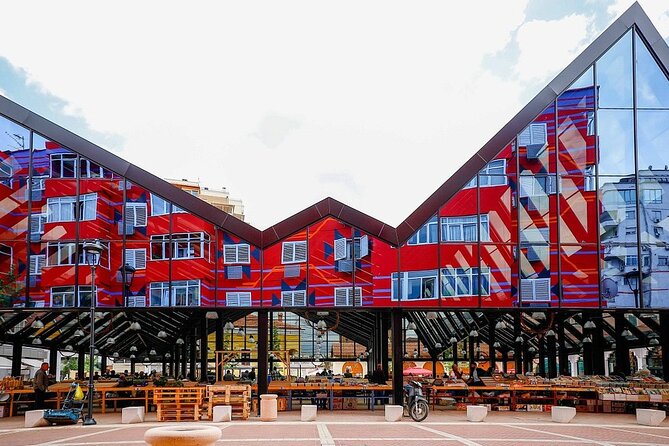
Tirana then shifts the mood from medieval Albania to the capital’s modern daily life. A local companion leads a food-focused walk through smaller markets and neighborhoods. You start with byrek, a pastry filled with cheese, meat, or spinach, then continue through Çam Bazaar, where bargaining is part of the experience.
The food walk includes a traditional dessert, Albanian coffee, and qofte with bread at the New Bazaar. Vegetarians can have bread with gjize, a local cottage cheese. You also taste raki, the strong fruit spirit found across the region.
The final stop is BUNK’ART 2, a former nuclear bunker converted into a museum about Albania’s communist army and ordinary life under Enver Hoxha’s regime. This is one of the most useful museums on the route because it gives modern political context to the buildings, monuments, and stories you encounter elsewhere.
Lake Ohrid and the road into Greece
North Macedonia begins with a quick stop in Struga beside the source of the Drini River. It is a short visit, but the water and lakeside setting provide a welcome break from the road.
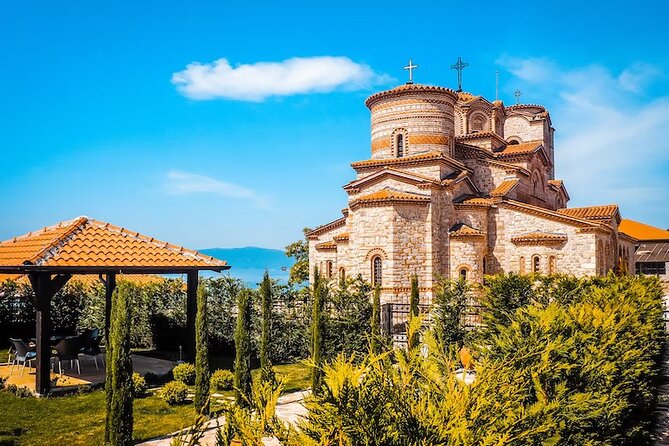
Ohrid receives more attention. The city and lake have UNESCO status, and the town is an important Orthodox center with churches, viewpoints, and older religious buildings. The route includes St. John, St. Nicholas, and the Halveti Hayati Tekke mosque.
Day ten continues to the Monastery of Saint Naum, located at the source of the Crni Drim where it flows from Lake Ohrid. The monastery sits within Galicica National Park, and the clear spring water is one of the most peaceful natural settings on the trip.
You then cross back into Albania for Tushemisht and Drilon National Park. Tushemisht is presented as a quiet lakeside stop, while Drilon has spring-fed water, willow trees, and a small lake. These visits help break up the long route to Berat and give you time in places that are less monumental and more restful.
Berat, Gjirokaster, Ioannina, and Meteora
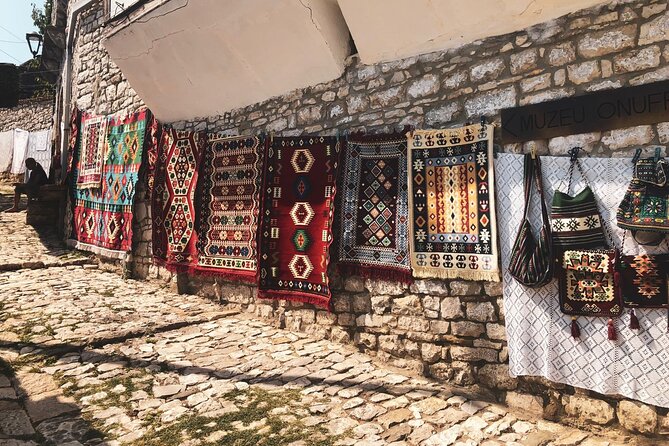
Berat is known for its many hillside windows and is one of Albania’s most rewarding old towns. People still live inside the castle walls, which keeps the site from feeling like an empty archaeological display.
The schedule includes Berat Castle, the Onufri Iconographic Museum, and the Gorica neighborhood. The museum focuses on Onufri, a celebrated church painter known for a distinctive red pigment. The Gorica Bridge and neighborhood offer a different angle on the city, across the river from the castle slopes.
Gjirokaster, the Stone City, is another major UNESCO stop. Its houses resemble small fortresses, and the old bazaar leads toward the castle through steep, stone-paved lanes. Handmade goods are sold along the way, but the surfaces and hills require steady footing.
Ioannina in Greece provides another old town and castle walk, with Byzantine and Ottoman remains inside the fortress area. Cafes and local Greek food give the stop a more relaxed feel before the final major sight.
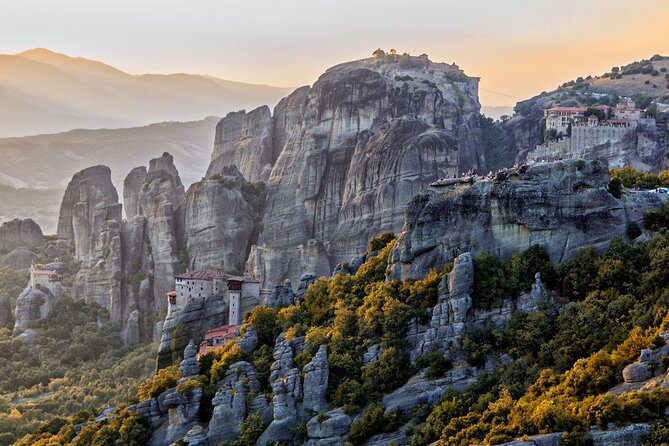
Meteora is the visual finale. Monasteries sit on tall rock formations, and the tour is timed to include a sunset view. The visit is listed for about an hour, so you will see the setting rather than explore every monastery in detail. Still, this is an excellent closing image before the final transfer to Athens or Corfu.
What the $4,833.96 price includes
At nearly $4,834 per person, this is not a budget road trip. The value comes from the amount bundled into the price: 13 nights in three-star hotels, 13 breakfasts, private company transport, a professional tour guide, hotel pickup in Belgrade, hotel drop-off in Athens, or transfer to Igoumenitsa, ferry tickets to Corfu, entry fees for included sites, tourist taxes, international car insurance, road taxes, and petrol.
You still pay for every lunch, dinner, drink, snack, souvenir, and personal purchase. That can be an advantage if you prefer choosing your own restaurants, but you should budget carefully because food costs accumulate across two weeks and seven countries.
Room pricing is based on double, twin, triple, or quadruple occupancy. Solo pricing and any single-room supplement are not specified, so ask before paying. Group discounts may be available, and confirmation is supplied at booking.
The strongest value is convenience. Planning seven border crossings, hotels, road routes, site entries, and a Corfu ferry on your own would take considerable work. The weaker value is the limited hotel detail: three-star quality can vary, and the exact properties are not listed.
Who will enjoy this tour most
I would recommend this route to you if you want a broad first look at the Balkans and are happy to trade depth for variety. It suits people who enjoy history, old towns, scenic drives, regional food, religious architecture, and small-group company.
It is less suitable if you need leisurely mornings, nightlife, beach time, or a fixed base. The itinerary is active, with uneven terrain in Sarajevo and stone streets in Kotor, Prizren, Berat, Gjirokaster, and Kruja. Most people can participate, but you should be comfortable walking on cobbles and hills.
The guides are a major part of the experience. Specific guides praised in the supplied feedback include Eri Veseli, Bledi, and Sokol, with particular appreciation for their organization, warmth, flexibility, and ability to explain local history. Tip your tour leader and driver if they provide good service. Tipping is not compulsory, but it is customary as an international courtesy.
The tour is non-refundable and cannot be changed after booking. Travel insurance is your responsibility, and the operator can alter the schedule for weather, strikes, holidays, closures, or other events outside its control.
Should you book the Belgrade to Athens or Corfu route?
Book it if your priority is seeing a large portion of the Balkans efficiently, with transport and accommodation handled for you. The best parts are the small group, the strong range of UNESCO sites, the food experiences in Albania, and the chance to reach places such as Kosovo and North Macedonia without building a complicated route yourself.
Think twice if you prefer slow travel or want detailed time inside every museum and old town. At this price, you are paying for breadth, logistics, and a guided route, not luxury or complete independence.
For a first Balkan journey, I find the plan unusually ambitious and rewarding. Choose Athens if you want to finish in the Greek capital. Choose Corfu if the ferry connection suits your plans and you would rather end on an island.
FAQ
How long is the tour?
The tour lasts approximately 14 days, beginning in Belgrade and ending in Athens or at Igoumenitsa Port for a ferry to Corfu.
Which countries does the tour visit?
The route covers Serbia, Bosnia and Herzegovina, Montenegro, Albania, Kosovo, North Macedonia, and Greece.
What is the maximum group size?
The tour has a maximum of 10 participants.
What time does the tour begin?
The listed start time is 8:00 am. Hotel pickup is provided in Belgrade.
Are hotels included?
Yes. Accommodation and breakfast are included for all overnight stays in three-star hotels. The price is based on double, twin, triple, or quadruple occupancy.
Are meals included?
Thirteen breakfasts are included. Lunches, dinners, drinks, snacks, and personal purchases are not included.
Is transport included?
Yes. Company transport, petrol, road taxes, and international car insurance are included.
Are attraction entry fees included?
Entry tickets for the sites scheduled for visits are included. The itinerary specifically lists included admission for places such as Sinan Pasha Mosque, Kalaja Fortress, BUNK’ART 2, Saint Naum Monastery, the Onufri Museum, and Gorica Bridge.
Is the ferry to Corfu included?
Yes. If you choose the Corfu finish, the drop-off is at Igoumenitsa Port and the ferry tickets are included. The alternative finish is hotel drop-off in Athens.
Just added in Belgrade
- Your Own Belgrade: Street Art and Hidden Gems Walking Tour★ 5.0 · 2 reviews
- Private Half Day Serbia Tour Novi Sad and Petrovaradin Fortress★ 5.0 · 3 reviews
- 3-Hour Belgrade Zemun Neighborhood Tour★ 5.0 · 8 reviews
- Private Belgrade Street Art and Adventures Walking Tour★ 5.0 · 4 reviews
- Private Wine Tasting by Party in Belgrade★ 5.0 · 3 reviews
- From Belgrade:Uvac Nature Reserve Tour★ 5.0 · 4 reviews
- Urban & Alternative Belgrade tour★ 5.0 · 4 reviews
- VIP Reservation Service in Belgrade★ 5.0 · 2 reviews
Belgrade Tours, compared.
Northern Serbia: Sremski Karlovci and Novi Sad Full-Day Tour from Belgrade
Read our review →
Day Trip from Belgrade: Gems of Eastern Serbia
Read our review →
Western Serbia 1-Day Tour of the Key Sites from Belgrade
Read our review →