
Reviewed · WALKING TOURS
Prishtina: Guided Walking Tour with a Local
Prishtina rewards curiosity. This three-hour walking tour gives you a useful first look at Kosovo’s capital, linking the Newborn Monument, war memorials, Ottoman landmarks, museums, squares, and cafés in one compact route. I especially like the way guide Besnik explains both the city’s recent past and everyday life, rather than treating Prishtina as a collection of buildings.
I also like the flexible, conversational format. You can ask about Kosovo’s politics, ethnic makeup, food, social customs, and personal stories, and the tour can adjust to your interests. The final café or restaurant stop is another strong point, since Besnik helps you choose local food or drinks rather than simply pointing toward the nearest tourist café.
The main consideration is walking comfort. The route covers a lot in three hours, and several stops may involve standing, uneven surfaces, or stairs. The information says the activity is not suitable for wheelchair users, so anyone with mobility concerns should ask for precise route details before booking.
In This Review
- Key points to know before you book
- Starting at the Newborn Monument
- Modern memorials and the city’s recent past
- The National Library and Mother Teresa Cathedral
- Squares that connect Prishtina’s daily life
- Entering the Old Town and the Great Mosque
- The Ethnological Museum and everyday Kosovo
- A local café or restaurant to finish
- How much value do you get for $41?
- Walking conditions, timing, and who should book
- What makes Besnik a strong guide?
- Final verdict: should you book it?
- FAQ
- How long does the Prishtina walking tour last?
- Where does the tour begin?
- Which languages does the guide speak?
- Are food and drinks included?
- Are entrance fees included?
- Is the tour suitable for wheelchair users?
Key points to know before you book
- Besnik’s personal approach: He explains Kosovo’s past and present with warmth, objectivity, and plenty of time for questions.
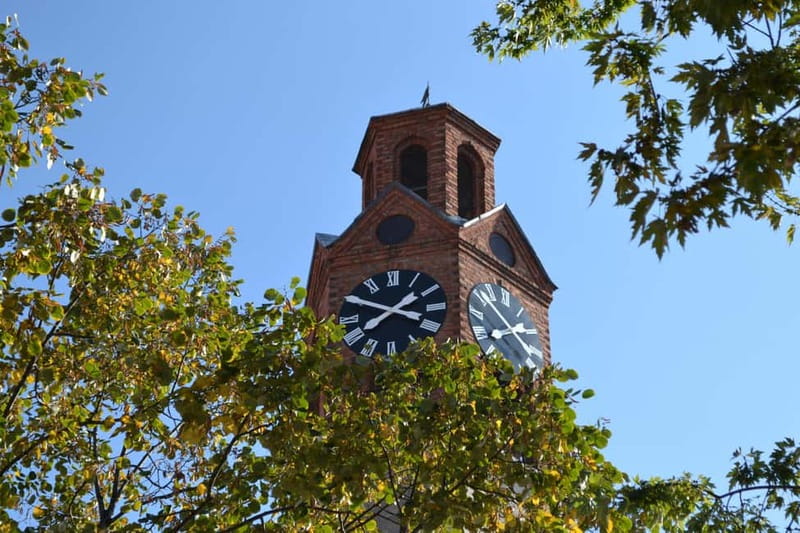
- A useful mix of old and new: You see the Newborn Monument and war memorials alongside Ottoman mosques, the clock tower, and the Old Town.
- Recent history is central: The House of Independence, Ibrahim Rugova Independence Museum, Heroinat Memorial, and other sites help place Prishtina in its modern context.
- The café stop adds local flavor: Food and drinks cost extra, but Besnik can help with menu choices and dietary needs.
- Three hours goes quickly: This is a strong orientation tour, not a slow museum-by-museum visit.
- Plan for practical details: Wear good shoes, carry water, cover your shoulders and knees for mosque visits, and check which interiors are open that day.
Starting at the Newborn Monument
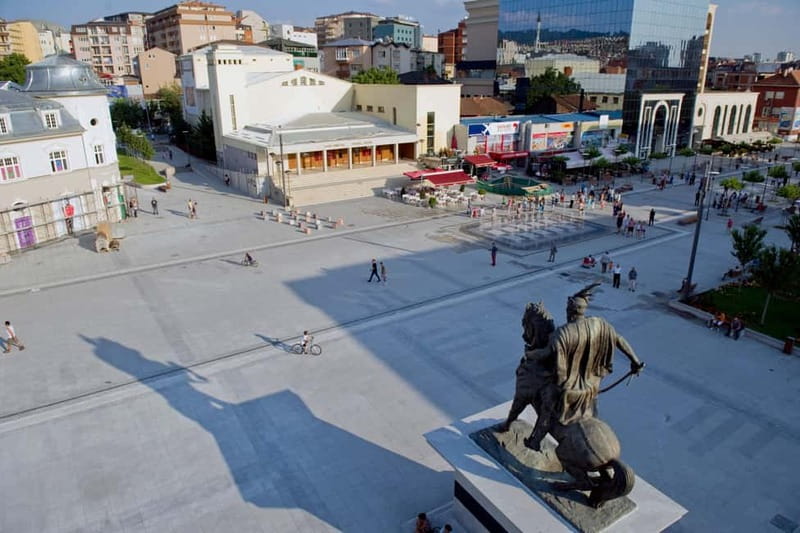
The tour begins at the Newborn Monument, one of Prishtina’s most recognizable meeting points. Its large letters are a fitting place to begin because the monument speaks to Kosovo’s modern identity and its declaration of independence.
Your first minutes here are less about taking a quick photograph and more about understanding how the city presents its recent past. Besnik uses the monument as a starting point for discussing Kosovo’s political story and the meaning of independence in daily life.
That context matters. Prishtina can look young and modern at first glance, with broad squares, contemporary buildings, and busy streets. Yet many of the questions you have about the city lead directly to the late twentieth century and Kosovo’s difficult path toward statehood.
The Newborn Monument is also a practical beginning. It sits near several central sights, so you can quickly get your bearings without spending tour time on a long transfer. There is no hotel pickup included, so you need to make your own way to the meeting point.
More guided walks around Serbia:
- Belgrade: 3-Hour Small Group Walking Tour
★ 5.0 · 180 reviews - Belgrade: Shared Group or Private Guided Walking Tour
★ 4.8 · 162 reviews - Walking Tour in Belgrade
★ 4.8 · 122 reviews
Modern memorials and the city’s recent past
From Newborn, the route moves through central Prishtina and its memorials. The Heroinat Memorial is one of the most important stops. Its design honors women affected by the Kosovo War and gives the tour a more human focus than a simple list of dates and political events.
This part of the walk may feel serious, and that is appropriate. Besnik’s strength is his willingness to discuss difficult subjects directly, including conflict, suffering, ethnic relations, and the challenges Kosovo still faces. At the same time, the experience is not presented as a lecture. You can ask questions and hear explanations tied to the streets and buildings around you.
The House of Independence is another particularly useful stop. It helps connect national history with the people and places involved in Kosovo’s independence movement. If you want to understand why certain monuments matter, this is the sort of context that a self-guided stroll often misses.
The Ibrahim Rugova Independence Museum may be visited inside if it is open. The same applies to several other interiors on the route, so do not assume every museum or attraction will be accessible during your exact departure. The tour remains worthwhile if an interior is closed, but the balance may shift more toward outdoor sightseeing and conversation.
The National Library and Mother Teresa Cathedral
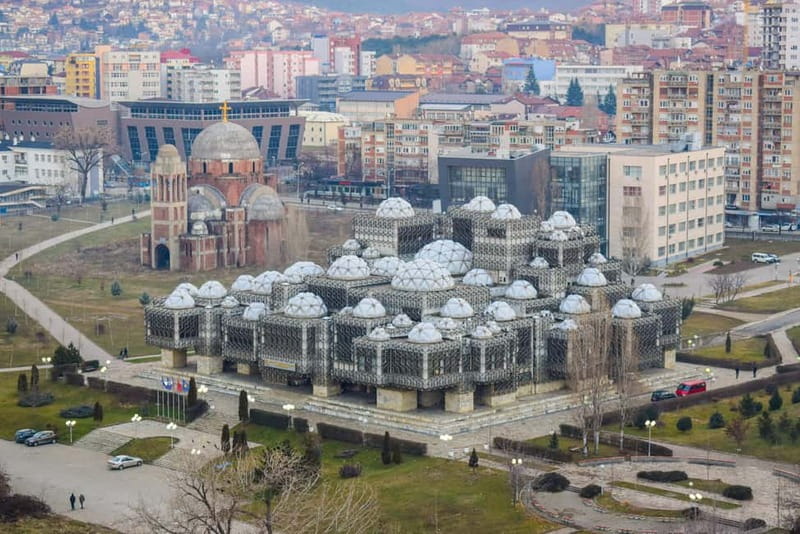
The National Library of Kosovo is one of Prishtina’s most unusual buildings. Its exterior is the main focus of the visit, and its striking architecture gives Besnik a chance to discuss Kosovo’s cultural identity, public institutions, and the way the capital has changed.
You might find the building visually puzzling at first. That is part of its appeal. It is not a conventional grand library, and seeing it with a guide gives you a reason to look beyond the surface and ask how architecture reflects a city’s history and ambitions.
The tour continues to Mother Teresa Cathedral, a calmer stop after the memorials and civic buildings. Entry is included when possible, and you may have the option of climbing the tower if it is open. The tower can provide a fine view over Prishtina, but treat it as a possibility rather than a guaranteed part of the experience.
The cathedral also adds an important religious and cultural layer. Kosovo is often discussed mainly through politics and conflict, but this stop reminds you that the capital has several faith traditions and public symbols. You should bring clothing that covers your shoulders and knees if you plan to enter religious monuments, particularly mosques later in the tour.
Squares that connect Prishtina’s daily life
The route passes through Zahir Pajaziti Square, Skanderbeg Square, and Mother Teresa Square. These spaces help you see how Prishtina works as a living capital, not just as a set of historic stops.
Squares are useful on a walking tour because they offer room to pause and discuss what you have seen. Besnik can explain figures connected with Kosovo’s past, local customs, and current life while you watch the city move around you.
The Grand Hotel is also included as a photo and sightseeing stop. Its presence offers another way to consider Prishtina’s twentieth-century story and changing public image. You may find that the city’s appeal comes from this mixture of grand civic spaces, rough edges, new construction, and older streets.
Do not expect every stop to have a polished tourist presentation. Prishtina is still developing its visitor infrastructure, and that is part of what makes a local guide useful. Besnik can fill in the gaps with practical advice, background, and personal perspective.
A couple more Serbia trips to weigh up
- Belgrade: Sunset Cruise with Live Guide
★ 4.4 · 418 reviews - Belgrade Sunset Cruise w/ Live Tour Guide
★ 4.5 · 106 reviews - Belgrade: Guided City Tour and Kalemegdan Fortress Visit
★ 4.9 · 72 reviews - From Belgrade: 3 Danube Fortresses Guided Day Trip
★ 4.9 · 38 reviews
Entering the Old Town and the Great Mosque
The Old Town brings a clear change of mood. Here you encounter Ottoman-era mosques, traditional streets, and the Sahat Kulla, or Clock Tower. The Great Mosque is one of the principal stops, with a guided visit if it is open.
These buildings give you a stronger sense of Prishtina before its modern political era. The mosque interiors and surrounding streets are valuable not just for their age, but because they show the Ottoman influence that remains part of Kosovo’s cultural makeup.
Mosque visits require respectful clothing. Cover your shoulders and knees, and follow any instructions given at the entrance. The activity prohibits smoking inside public areas, apart from open terraces or designated smoking spaces.
The Old Town section may be the most atmospheric part of the walk, but it also deserves realistic expectations. This is not a preserved open-air museum with every building restored for visitors. You are seeing a real urban district, and some sites may be open only if local conditions allow.
The Ethnological Museum and everyday Kosovo
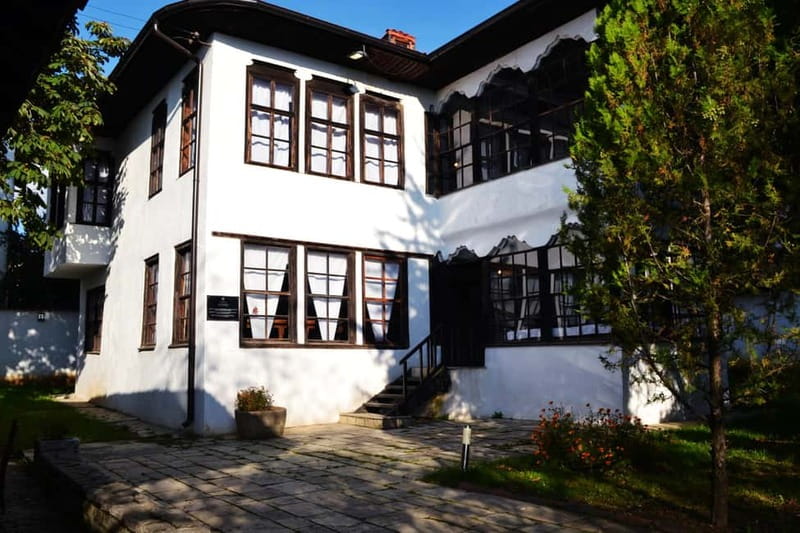
The Ethnological Museum offers a closer look at household life, customs, and traditional culture. If it is open, you can go inside with the guide. This is a useful counterweight to the monuments and political sites because it moves the conversation toward ordinary people and how they lived.
I value this kind of stop on a city tour. Buildings and memorials explain public events, while an ethnological collection can show clothing, domestic objects, family traditions, and local ways of life. The museum helps make Kosovo feel less abstract.
Again, opening conditions matter. The tour includes a visit if the museum is open, but entry is not guaranteed and any admission fee is not included. If the interior is closed, Besnik can still explain the area and continue the walking route.
The itinerary includes many points between the named attractions, so the tour is not simply a dash from one landmark to the next. You will walk through central streets, pause for explanations, and have opportunities to ask about local life. Still, three hours is a firm limit, and you should not expect long, detailed visits at every site.
A local café or restaurant to finish
The final stop is a local café or restaurant, where you can take a break and order a drink, snack, ice cream, or meal. Food and drinks are not included in the $41 price, but this ending adds real value because it gives you a chance to discuss the city away from the formal sightseeing route.
Besnik’s help with restaurant choices is one of the practical strengths of this experience. He can assist with menu decisions and address food allergies or dietary concerns. Some participants have also extended the conversation over lunch, but you should treat that as an optional social moment, not a promised part of the three-hour tour.
This is where the tour’s local character is clearest. A café stop lets you ask the questions that often come up after seeing the monuments: how people live in Prishtina, what younger Kosovars think about the country’s future, what to eat, and which places to visit next.
The cost of your food or drink is extra, so budget for it. You may prefer a coffee and small snack, or you may choose a fuller meal. The important point is that you are not being pushed toward a fixed group menu.
How much value do you get for $41?
At $41 per person, this is not the cheapest way to walk around Prishtina. You can see the Newborn Monument, squares, cathedral exterior, library exterior, and many streets without paying for a guide.
The price makes more sense if you value interpretation. Besnik brings together Kosovo’s ancient background, Ottoman period, twentieth-century politics, war, independence, ethnic composition, religion, and daily life. That is a lot to place in context on your own, especially if Prishtina is your first stop in Kosovo.
The tour also saves planning time. You do not need to build a route connecting the Newborn Monument, Heroinat Memorial, National Library, cathedral, Old Town, Great Mosque, Clock Tower, Ethnological Museum, and independence sites. You simply follow a central walking route and ask questions as you go.
Admission fees are not included, and some interiors depend on opening hours. That means the final value depends partly on what you choose to enter. I would view the $41 mainly as payment for Besnik’s time, explanations, local advice, and route planning, not as a bundle of museum tickets.
For a solo visitor or a couple who wants a strong introduction to Kosovo, the price is reasonable. If you prefer to wander silently, take long photographs, or spend half an hour inside each museum, a self-guided route may suit you better.
Walking conditions, timing, and who should book
The tour lasts three hours and is conducted in English or Albanian. Comfortable shoes are essential, since the experience is entirely based on walking through central Prishtina and the Old Town.
Bring water and sunscreen, and be ready for changing weather. A camera is useful, especially at the Newborn Monument, the National Library, the Clock Tower, and the cathedral tower if it is open.
The route is described as suitable for a wide range of ages, including pregnant people and children under 18, but the same information says it is not suitable for wheelchair users. That is an important distinction. If you have limited mobility, use a wheelchair, or need frequent sitting breaks, contact the provider before booking and ask which sections can be adapted.
This tour suits first-time visitors who want a clear introduction to Prishtina. It is also a good match if you want to discuss politics, history, social norms, and food without worrying that your questions are too complicated.
It is less suitable if your main goal is shopping, nightlife, or a specialist museum visit. The tour gives you a broad city orientation rather than a narrow subject-focused outing.
What makes Besnik a strong guide?
The most praised part of this experience is Besnik himself. His approach combines detailed explanations with a friendly, open manner, and he is comfortable answering many questions about Kosovo’s history and present-day politics.
That matters in the Balkans, where a short explanation can leave you with more confusion than clarity. Besnik’s value is his ability to explain competing identities, conflicts, important figures, and personal experience without turning the walk into a dry classroom session.
He also appears willing to adjust the experience. The route can respond to your interests, and the café or restaurant choice can take dietary needs into account. Last-minute bookings may sometimes be accepted, but you should not rely on that, since availability can change.
The personal element is especially useful at sites connected with the Kosovo War and independence. These places can feel distant when viewed only through a guidebook. A local guide can explain why they matter to people in Prishtina today.
Final verdict: should you book it?
Book this tour if you want Prishtina explained by someone who can connect its monuments to real political, cultural, and everyday questions. The strongest reasons are Besnik’s personal style, the broad route, and the final local café or restaurant stop.
I would recommend it early in your Kosovo visit, ideally on your first day in Prishtina. You will leave with a map of the center, useful advice for the rest of your stay, and a better understanding of why the capital looks and feels the way it does.
Skip it if you want a slow architectural tour with guaranteed museum entry, or if walking for three hours is difficult. Also remember that food, drinks, and entrance fees cost extra.
For most curious first-time visitors, $41 buys more than sightseeing. It buys context, conversation, and a friendly introduction to a capital that makes much more sense once a local has helped you read it.
FAQ
How long does the Prishtina walking tour last?
The tour lasts three hours. Starting times vary, so you need to check availability when choosing a date.
Where does the tour begin?
The meeting point is the Newborn Monument in Prishtina.
Which languages does the guide speak?
The live guide speaks Albanian and English.
Are food and drinks included?
No. The final café or restaurant stop is included in the route, but participants pay for their own food and drinks.
Are entrance fees included?
No. Entry fees for museums and other attractions are not included. Museum visits and some interior stops depend on whether the sites are open.
Is the tour suitable for wheelchair users?
The activity information says it is not suitable for wheelchair users. Anyone with mobility concerns should ask the provider about the route before booking.
Just added in Serbia
- Zlatibor tour – Gold gondola, Stopic cave, Sirogojno & falls★ 5.0 · 3 reviews
- Your Own Belgrade: Street Art and Hidden Gems Walking Tour★ 5.0 · 2 reviews
- Treasures of Eastern Serbia shared tour★ 5.0 · 3 reviews
- Stara Plana Day Tour★ 5.0 · 4 reviews
- Private Guided Truffle Hunting Tour in Serbia with Lunch★ 5.0 · 3 reviews
- Private Half Day Serbia Tour Novi Sad and Petrovaradin Fortress★ 5.0 · 3 reviews
- 3-Hour Belgrade Zemun Neighborhood Tour★ 5.0 · 8 reviews
- Private Belgrade Street Art and Adventures Walking Tour★ 5.0 · 4 reviews
Walking Tours, compared.
Walking Tour city center and Petrovaradin Fortress
Read our review →
Browse the lists this tour appears in