
Reviewed · WALKING TOURS
Belgrade Walking Tour in French
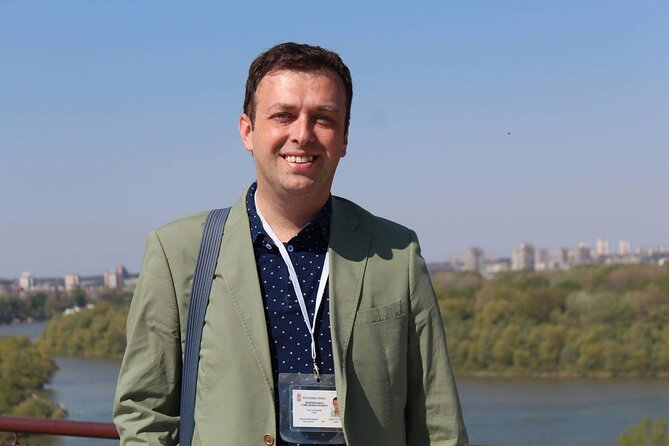
Belgrade reveals itself one story at a time. This 3.5-hour walk with French-speaking journalist Nenad blends Serbian history, everyday life, local culture, and unusual city tales in a small group of no more than eight people. I like the French-language focus and the way the route connects major sights with less obvious corners, including Dorćol and the fortress. I also like the clear French connection running from Rue de France to the Monument of Gratitude to France and the French Embassy.
The main consideration is pace. At $43.94 per person, this is not the cheapest way to see Belgrade, especially since the sights are viewed from outside and admission is free. You are paying for interpretation, conversation, and access to Nenad’s journalistic anecdotes, not entry tickets or transport.
In This Review
- Key points to know before booking
- Why this French-language walk is different
- Republic Square, the best place to begin
- Skadarlija and the bohemian side of Belgrade
- Dorćol, Cyrillic signs, and old Belgrade
- Ružica Church inside the Belgrade fortress
- Kalemegdan Park and the Sava-Danube view
- French-Serbian friendship at the Monument of Gratitude to France
- The French Embassy and King Peter I Street
- What $43.94 buys you
- Who should book this walk
- Practical details before you go
- Should you book the Belgrade Walking Tour in French?
- FAQ
- What language is the tour conducted in?
- How long does the Belgrade walking tour last?
- Where does the tour begin?
- What time does the tour start?
- Where does the tour end?
- How many people can join the tour?
- Can I cancel for a full refund?
Key points to know before booking
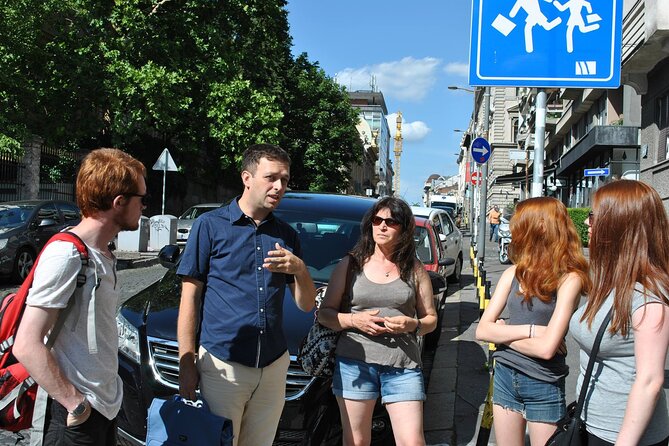
- French from start to finish: Nenad guides in French and brings a journalist’s eye to Serbian politics, culture, history, and daily life.
- A small group of eight maximum: The size should make it easier to ask questions and follow stories about complicated subjects.
- A strong first-day route: Republic Square, Skadarlija, Dorćol, Kalemegdan, the fortress, and central Belgrade landmarks give you a useful city orientation.
- The fortress is more than a viewpoint: You will see Ružica Church, learn about the Ottoman period, and look over the meeting point of the Sava and Danube.
- French-Serbian links are built into the walk: The route includes Rue de France, the Monument of Gratitude to France, the French Embassy, and King Peter I Street.
- Easy booking terms: Confirmation arrives at booking, public transport is nearby, and cancellation is free up to 24 hours before the 9:30 a.m. start.
Why this French-language walk is different
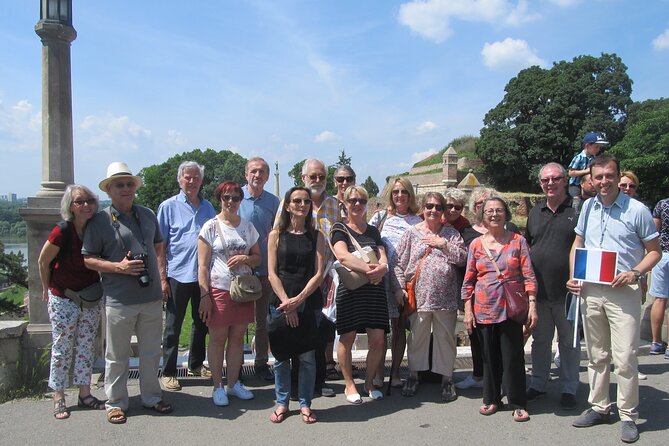
Belgrade can be hard to read on your own. Its buildings reflect several periods and ruling powers, while its recent past still shapes how people talk about the city and country. A standard sightseeing walk can point out a monument, give you a date, and move on. This experience aims to explain what the city means beneath the surface.
That difference comes from Nenad’s background as a journalist. The tour combines formal history with stories gathered through his work, including accounts of Belgrade’s underside and addresses that may not appear in ordinary guidebooks. The information provided does not promise a fixed set of secret stops, so you should think of the unusual places as part of the guide’s personal approach rather than a guaranteed checklist.
The French setting is also more than a language convenience. Belgrade has a clear cultural and historical relationship with France, and the route uses that connection as a thread. Starting near Rue de France and ending near Rue de Paris gives the walk a pleasing shape, while the Monument of Gratitude to France and the French Embassy add substance to that theme.
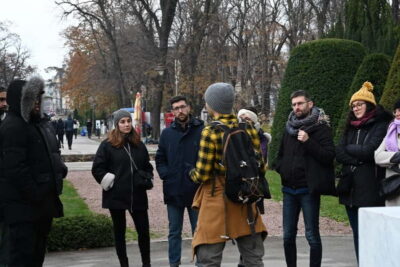
You should also expect a conversation, not a one-way lecture. The small maximum group of eight is useful here. Past participants have described Nenad as attentive, willing to answer many questions, and able to adjust his explanations to what catches your interest. One account even says he picked up a group at its accommodation, but the stated meeting point for this tour is Republic Square, so you should not assume hotel pickup is included.
More guided walks around Belgrade:
- Belgrade: 3-Hour Small Group Walking Tour
★ 5.0 · 180 reviews - Belgrade: Shared Group or Private Guided Walking Tour
★ 4.8 · 162 reviews - Walking Tour in Belgrade
★ 4.8 · 122 reviews
Republic Square, the best place to begin
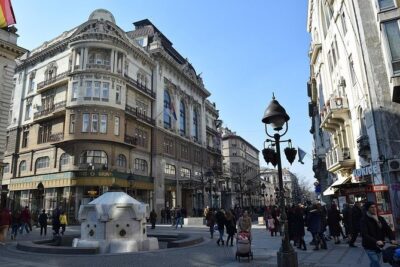
The walk starts at Trg Republike, or Republic Square, at 9:30 a.m. This is a sensible meeting point because several important institutions are gathered around it. You will see the monument to Prince Mihailo, the National Theatre, and the National Museum.
The opening 15 minutes are brief, but they set up the city well. Prince Mihailo is an important figure in Serbia’s modern story, and the square gives Nenad a natural place to explain how Belgrade developed as the capital of Serbia. The nearby theatre and museum also introduce the country’s cultural life, not just its political past.
I would pay close attention here to the way Nenad connects buildings with present-day Serbia. The tour promises a mix of past and current life, so this first stop should help you understand the city as a living capital rather than a collection of monuments.
There is no admission charge at this stop. The trade-off is that you will not be taking a guided tour inside the National Museum or National Theatre. If interiors are your priority, plan separate visits for another time.
Skadarlija and the bohemian side of Belgrade
From Republic Square, the route continues toward Skadarska Street in Skadarlija, Belgrade’s old bohemian district. The stop lasts about 10 minutes, which makes it an introduction rather than a long restaurant or café visit.
Skadarlija is often compared with Montmartre in Paris. The connection is not just a loose nickname: Skadarska Street is described as the only street twinned with Montmartre. That detail gives the French theme a playful early appearance, before the route reaches more serious Franco-Serbian memorials later in the morning.
This is a good place to notice how Belgrade presents its artistic and social identity. The district’s 19th-century character adds a different mood from the grand civic buildings around Republic Square. You will likely hear why the area became associated with bohemian life and how it fits into the city’s cultural story.
The short timing is worth noting. You will have enough time for an explanation and a look around, but not a leisurely meal. If you want to return for food, music, or a longer wander, Skadarlija is easy to revisit after the tour.
Dorćol, Cyrillic signs, and old Belgrade
The walk then moves into Dorćol, described as the center of old Belgrade. This section may be one of the most useful for people who want more than the main postcard sights.
Dorćol is known here for its mixture of architectural styles. That mix matters because Belgrade has repeatedly changed hands and directions, leaving different visual layers close together. Instead of treating those contrasts as random, Nenad can help you read them as evidence of the city’s changing identities.
The route includes Belgrade’s only mosque. This is an important stop for understanding the Ottoman influence on Serbia and the religious variety that has shaped the capital. The tour also asks you to look carefully at plates and signs, with a chance to learn how to read the Cyrillic alphabet.
That practical language lesson is a smart touch. Even a short introduction can make street names, shop signs, and public information easier to recognize during the rest of your stay. You are not signing up for a full language class, but you will gain a useful tool for moving around Serbia.
This portion may appeal especially to French-speaking visitors who want cultural context without a formal academic lecture. Nenad’s journalistic style should help keep the subject connected to real streets and present-day life.
A couple more Belgrade trips to weigh up
- From Belgrade: Novi Sad & Sremski Karlovci Full-Day Tour
★ 4.7 · 1,068 reviews - From Belgrade: Gems of Eastern Serbia Tour
★ 5.0 · 427 reviews - Northern Serbia: Sremski Karlovci and Novi Sad Full-Day Tour from Belgrade
★ 5.0 · 425 reviews - Day Trip from Belgrade: Gems of Eastern Serbia
★ 5.0 · 424 reviews
Ružica Church inside the Belgrade fortress
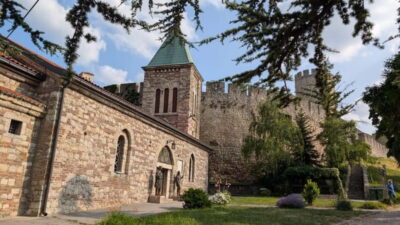
The fortress section includes Ružica Church, a small but unusual stop with a surprising past. The building began as a gunpowder warehouse before being converted into a military church between 1867 and 1869.
That change in purpose tells you something about Belgrade’s strategic position. The fortress was not simply a scenic monument. It was part of the city’s military story, and the church reflects how spaces can be reused as political and social conditions shift.
The visit is scheduled for about 10 minutes. Since no admission fee is listed, the value comes from the explanation and the setting rather than a ticketed interior experience. The tour information does not specify how much time is spent inside the church, so expect a focused stop rather than a long architectural visit.
I like this kind of detail because it gives the fortress a human scale. Large walls and panoramic views can become a blur after a while. A former powder store turned military church is the sort of fact that helps the place stay in your memory.
Kalemegdan Park and the Sava-Danube view
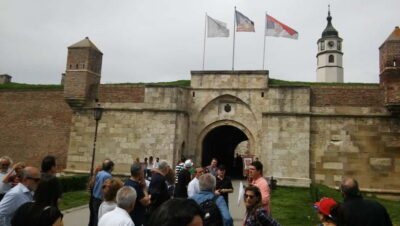
The main scenic moment comes at Kalemegdan Park and Belgrade Fortress. From the citadel, you will look toward the confluence of the Sava and Danube, one of the defining views in the Serbian capital.
The stop is listed at about 15 minutes, though the full movement through the fortress may take longer as part of the walking route. The view gives you a useful sense of Belgrade’s geography, while the fortress provides the setting for discussion of the Ottoman period and its effect on Serbian culture.
This is where the tour’s larger themes come together. Belgrade has a strategic location, a layered past, and a culture shaped by contact between empires and communities. Nenad’s job is to connect those broad subjects to what you can see from the walls and park.
You should expect open-air sightseeing here. The tour does not include a museum ticket, fortress attraction ticket, or separate transport. Bring the kind of footwear you normally use for a 3.5-hour city walk, and remember that the morning includes several stops rather than one continuous viewpoint visit.
The fortress is also the place where a guide can add the most value. You can walk to Kalemegdan alone, but you may miss why certain sections matter or how the Ottoman era shaped Serbian culture. The group limit of eight makes it easier to stop, listen, and ask for clarification without the loose feeling of a large crowd.
French-Serbian friendship at the Monument of Gratitude to France
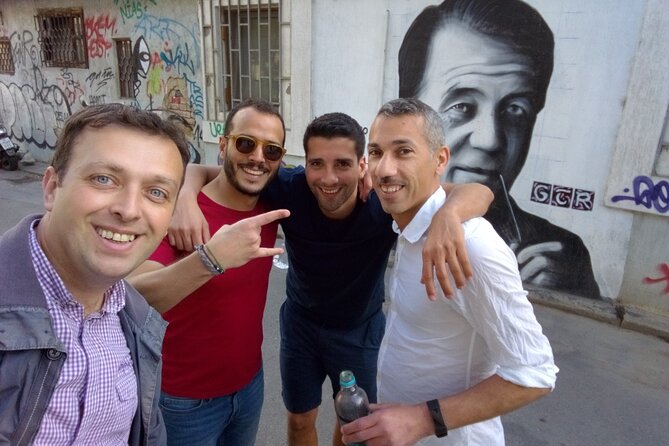
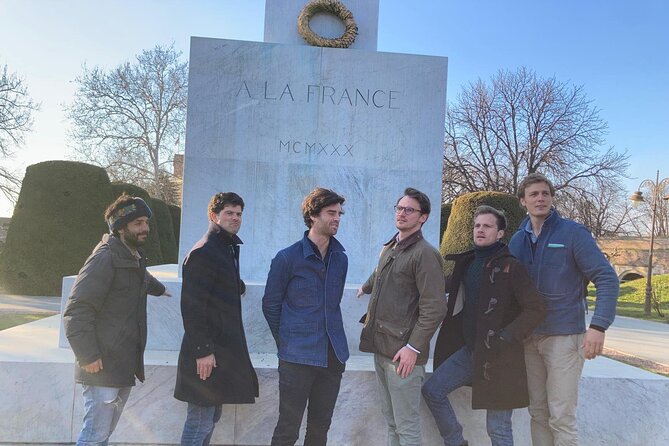
Before the walk ends, you visit the Monument of Gratitude to France. Here the guide explains the relationship between France and Serbia, with particular attention to the period of the Great War.
For French-speaking visitors, this may be the emotional center of the route. The monument gives a physical focus to a relationship that can otherwise feel abstract. It also keeps the tour from treating French connections as decoration. They are part of Serbia’s political and cultural story.
The stop lasts around 10 minutes. That is enough for the main explanation and some questions, but not for an extensive memorial tour. You will want to listen for the personal and national stories behind the monument, especially since Nenad’s anecdotes are a major reason to choose this experience over a self-guided walk.
The French Embassy and King Peter I Street
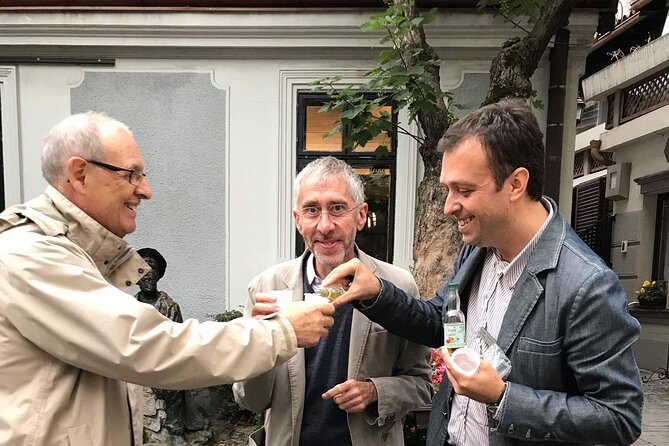
The route continues past the French Embassy, a refined interwar building shaped by monumental classicism and detailed sculpture. The tour does not list an interior visit, so you will be examining the building from outside while hearing its related stories and anecdotes.
This is a useful architectural pause. Belgrade is not defined by one style, and the embassy helps show how the city adopted European forms while developing its own character. It also strengthens the French thread before the final section.
The walk ends near Kneza Mihaila 49, at the crossroads of Kneza Mihaila and Kralja Petra streets. Along the way, you pass King Peter I Street, named for a French-speaking Serbian king. You also see Princess Ljubica’s residence and what is described as Belgrade’s oldest restaurant.
The ending is well chosen. Rather than finishing at an isolated monument, the route closes among streets with older buildings, royal connections, food history, and French ties. You finish near central pedestrian areas, which makes it practical to continue exploring on your own.
What $43.94 buys you
At $43.94 per person, the tour is best judged as a small-group, specialist-language service. You are not paying for admissions, meals, or transport. You are paying for three and a half hours with a French-speaking journalist who can explain Serbian culture, answer questions, and add stories that are difficult to find in a basic guidebook.
The value is strongest if French is your preferred language. A good explanation of Belgrade’s Ottoman past, Cyrillic signs, Yugoslav and Serbian developments, and Franco-Serbian relations is easier to follow when you do not have to translate in your head.
It is also a reasonable choice if you have only a short time in Belgrade. The route covers the central square, bohemian Skadarlija, Dorćol, the fortress, Kalemegdan, and several French-related sites in one morning. You receive both orientation and context.
The value is weaker if you only want free sightseeing or prefer to explore silently at your own pace. You can reach many of these locations without a paid guide. The price makes sense when the stories, language, and small group matter to you.
Who should book this walk
I would recommend it first to French-speaking visitors who want a thoughtful introduction to Belgrade. It suits couples, families with older children, and small groups who like to ask questions rather than simply follow a flag through the streets.
It also fits repeat visitors who have already seen the main fortress and central streets but want more context. The promise of unusual addresses and journalistic anecdotes may add a fresh layer, though the exact extra locations are not specified in advance.
This is less suitable for anyone seeking a museum-heavy tour, a food tour, or a relaxed café crawl. The route is focused on walking, explanation, architecture, public spaces, and history. Skadarlija receives only a short stop, and no meals or entrance tickets are included.
The tour is open to most participants and is near public transport. Since the start time is 9:30 a.m., it also leaves much of the day free for museums, lunch, shopping, or a second look at any district that catches your attention.
Practical details before you go
Meet at Republic Square, Trg Republike 3, in Belgrade, at 9:30 a.m. The walk ends at Kneza Mihaila 49, near the intersection with Kralja Petra Street.
The tour lasts about three hours and 30 minutes and has a maximum of eight people. That is a useful balance: small enough for conversation, but large enough to retain the energy of a group outing.
A mobile ticket is provided, and booking confirmation arrives at the time of booking. Public transport is nearby, and most people can participate. The stated cancellation terms allow a full refund if you cancel at least 24 hours before the start time. Changes or cancellations inside that window are not accepted for a refund.
Should you book the Belgrade Walking Tour in French?
Book it if you want Belgrade explained in French by a guide who brings journalism, personal anecdotes, and current Serbian life into the story. The strongest features are the small group, the wide route, the fortress and river view, and the well-shaped French connection from Rue de France to the Monument of Gratitude to France.
Skip it if your main goal is entering museums, eating in Skadarlija, or paying as little as possible for a walk. For the right audience, though, $43.94 is a fair price for a focused introduction that gives you both the city’s major sights and the stories between them.
FAQ
What language is the tour conducted in?
The tour is conducted in French by Nenad, a French-speaking journalist.
How long does the Belgrade walking tour last?
It lasts approximately three hours and 30 minutes.
Where does the tour begin?
The meeting point is Republic Square, Trg Republike 3, in Belgrade.
What time does the tour start?
The tour starts at 9:30 a.m.
Where does the tour end?
It ends at Kneza Mihaila 49, near the crossroads of Kneza Mihaila and Kralja Petra streets.
How many people can join the tour?
The group has a maximum of eight participants.
Can I cancel for a full refund?
Yes. You can cancel for a full refund up to 24 hours before the experience start time. Cancellations or changes made less than 24 hours before the start are not accepted for a refund.
Just added in Belgrade
- Your Own Belgrade: Street Art and Hidden Gems Walking Tour★ 5.0 · 2 reviews
- 3-Hour Belgrade Zemun Neighborhood Tour★ 5.0 · 8 reviews
- Private Half Day Serbia Tour Novi Sad and Petrovaradin Fortress★ 5.0 · 3 reviews
- Private Belgrade Street Art and Adventures Walking Tour★ 5.0 · 4 reviews
- Private Wine Tasting by Party in Belgrade★ 5.0 · 3 reviews
- From Belgrade:Uvac Nature Reserve Tour★ 5.0 · 4 reviews
- Urban & Alternative Belgrade tour★ 5.0 · 4 reviews
- VIP Reservation Service in Belgrade★ 5.0 · 2 reviews
Walking Tours, compared.
Walking Tour city center and Petrovaradin Fortress
Read our review →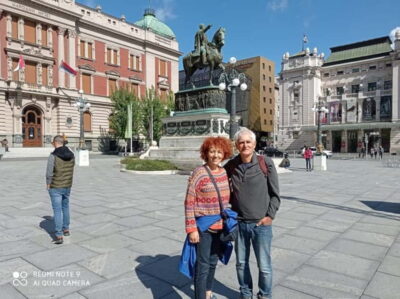
Browse the lists this tour appears in