Reviewed · BELGRADE TOURS
Belgrade: The White Emigration in Serbia in the Wake of the Russian Revolution
History can change a city without changing its name. This three-hour Belgrade walk follows the Russian emigration that arrived after the Bolshevik Revolution, with Baron Wrangel’s grave, Russian architects, royal connections, theaters, scientists, and cafés forming the main story. I like the way the tour connects major Serbian landmarks to one clear human drama. I also like that guide Julja brings warmth, strong historical detail, and an easy ability to answer questions. The main drawback is the price: at $173.64 per person, this is a costly walking tour unless you care deeply about Russian, Serbian, or 20th-century European history.
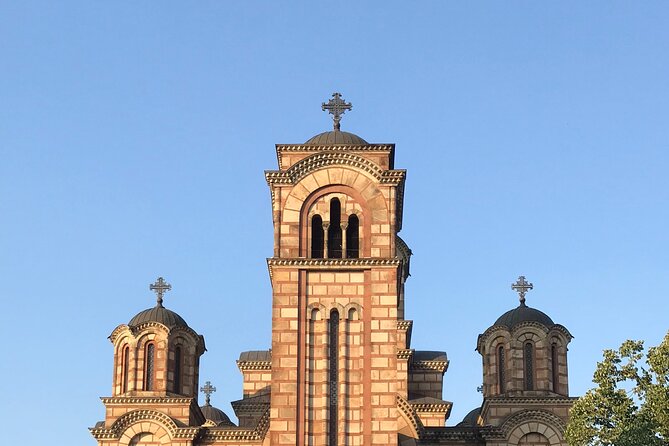
The tour is private, so only your group participates. That matters here. The subject includes military exile, royal politics, identity papers, and difficult choices, and a small group gives you room to ask questions rather than simply follow a flag through the city. The route lasts about three hours and ends where it begins, at St. Mark Orthodox Church.
In This Review
- Key points to know before booking
- Why the Russian emigration matters in Belgrade
- Holy Trinity Church and Baron Wrangel
- Parliament, ministries, and the Russian architectural mark
- Royal Palace, Nicholas II, and two dynasties
- Hotel Moskva and old Belgrade social life
- The National Theatre and Russian performance culture
- University, the Academy, and emigrant scientists
- Nemanjina, Gavrilo Princip, and the final historical turn
- Julja’s guiding style and the private format
- Is $173.64 a fair price?
- Practical details before you go
- Who should book this Belgrade walk?
- Should you book the White Emigration tour?
- FAQ
- Where does the tour begin?
- Where does the tour end?
- How long does the experience last?
- Is the tour private?
- Are admission tickets included?
- Can I cancel for a full refund?
Key points to know before booking
- A Russian military story in the heart of Belgrade: The tour explains how Serbia hosted a trained, partly armed Russian army in exile without allowing it to seize power, take territory, or collapse from hunger.
- Seven central Belgrade stops: Churches, parliament buildings, royal sites, the National Theatre, the Academy of Sciences, and old social meeting places all become part of the Russian story.
- Baron Wrangel’s burial place: Holy Trinity Church provides a direct link to the White Army and its famous commander, often called the Black Baron.
- Russian influence on Serbian architecture: You will look closely at the Parliament, post office, General Staff, and ministry buildings while discussing the work of Russian architects.
- Coffee and Moskva Hotel cakes: The route includes time at Hotel Moskva, where you can try the Moskva and Aurora cakes, made from recipes said to be about half a century old.
- A guide with a strong reputation for this subject: Julja is praised for her command of Serbian history, lively storytelling, and thoughtful answers to questions.
Why the Russian emigration matters in Belgrade
Between one and two million people left Russia during the three years after the Bolshevik Revolution. Up to 100,000 settled in the Kingdom of Serbs, Croats and Slovenes, a serious arrival for a country with a relatively small population.
This was not simply a story of refugees passing through. Many Russian arrivals were officers, architects, engineers, scientists, artists, clergy, and performers. They brought skills, habits, institutions, and political problems with them. Belgrade became one of the places where the Russian Civil War continued in exile, even after the fighting had moved elsewhere.
That makes this tour useful for anyone who wants more than a list of Belgrade’s grand buildings. You see the city as a meeting place between Serbian state-building and Russian displacement. The story also raises questions that still feel current: What happens to people who have no recognized country? How do governments host a foreign army? What does it mean to preserve identity after losing a homeland?
The tour’s references to Nansen passports add another layer. These documents helped stateless Russian emigrants travel when they could no longer rely on a normal national passport. You do not need to know the legal details in advance. The important point is that a passport normally proves your place in the political world, while a Nansen passport recognized that millions of people had been pushed outside that system.
A couple more Belgrade trips to weigh up
- From Belgrade: Novi Sad & Sremski Karlovci Full-Day Tour
★ 4.7 · 1,068 reviews - From Belgrade: Gems of Eastern Serbia Tour
★ 5.0 · 427 reviews - Northern Serbia: Sremski Karlovci and Novi Sad Full-Day Tour from Belgrade
★ 5.0 · 425 reviews
Holy Trinity Church and Baron Wrangel
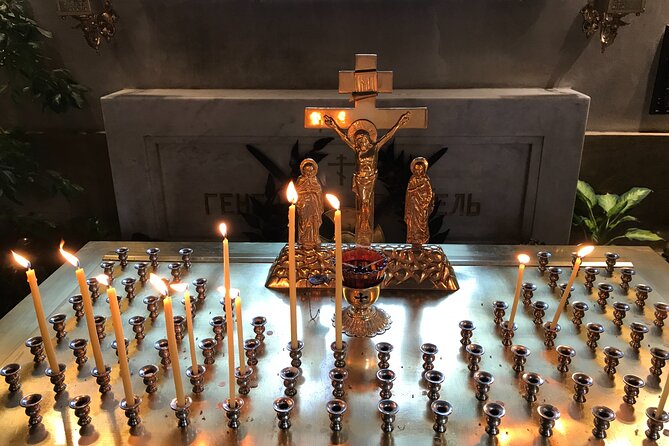
The walk begins at St. Mark Orthodox Church on Bulevar kralja Aleksandra 17, and the first major stop is Holy Trinity Church. You will walk to the Russian church and see the burial place of Baron Wrangel.
Wrangel is one of the central figures in the White Russian story. He commanded the remnants of the anti-Bolshevik forces and became a symbol of military exile after the defeat of the White Army. His grave gives the subject a physical focus. Instead of discussing an abstract mass movement, you are looking at the resting place of a man who represented a defeated political and military cause.
The church stop is scheduled for about 30 minutes. Admission is free, but the value lies in the explanation. This is where the tour can clarify who the White Russians were, why they left, and how their military background shaped their place in Serbia.
For some visitors, this will be the most meaningful part of the walk. For others, the church may feel like a brief stop before the wider city story begins. If you have a strong interest in the Russian Civil War, allow yourself time to ask about Wrangel, the White Army, and the Russian military presence in exile.
Parliament, ministries, and the Russian architectural mark
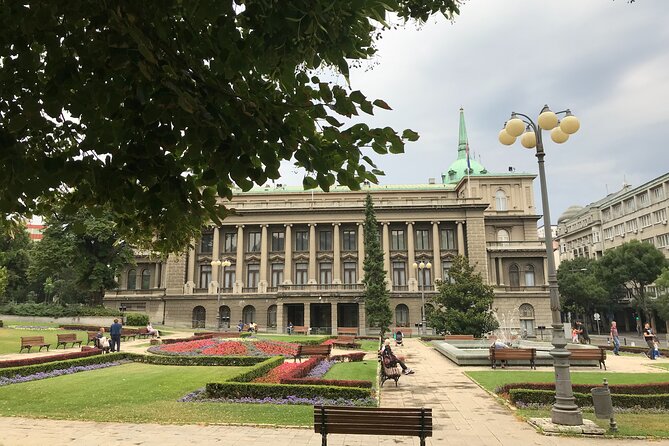
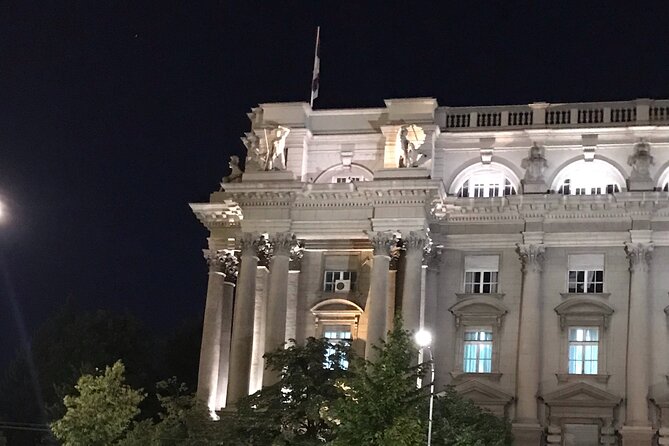
From the church, the route moves through a picturesque former royal park toward the House of the National Assembly of the Republic of Serbia. You will also see the post office, the General Staff, and ministry buildings.
These are not random examples of Belgrade architecture. The guide uses them to explain the contribution of Russian architects to the city’s appearance. That contribution is not always acknowledged in a simple or direct way, which gives the discussion some welcome nuance.
This part of the tour works best if you enjoy looking up. Belgrade’s architecture can pass by as a blur of façades, domes, columns, and institutional buildings when you walk alone. Here, you are encouraged to connect the buildings with the people who designed and shaped them.
The stop lasts about 30 minutes. It is also a useful reminder that emigration does not only leave behind memorials or old communities. It can change the basic look of a capital city.
Royal Palace, Nicholas II, and two dynasties
The route continues past the Royal Palaces and a monument to Nicholas II. This is the place to discuss the special relationship between the Serbian and Russian dynasties.
The political bond between the two royal families helps explain why Serbia was willing to receive so many Russian exiles. The subject is more than family sentiment. Royal ties, Orthodox connections, and wartime alliances all shaped the choices available after the revolution.
You will not tour the Royal Palace on this walk. You pass by the palaces and monument, using them as settings for the story. That is worth knowing if you expect an interior visit. The stop is about 30 minutes, so there should be time for context, questions, and a look at the surrounding area.
I like this section because it connects high politics with the ordinary people who arrived afterward. A royal relationship could open doors, but a government still had to decide how to house, organize, and control thousands of outsiders.
Out of the city, and a slower way to spend the day:
- Day Trip from Belgrade: Gems of Eastern Serbia
★ 5.0 · 424 reviews - Belgrade: Sunset Cruise with Live Guide
★ 4.4 · 418 reviews - Belgrade: Underground Tour with Riverside Sparkling Wine
★ 4.8 · 411 reviews - Western Serbia 1-Day Tour of the Key Sites from Belgrade
★ 4.8 · 333 reviews
Hotel Moskva and old Belgrade social life
The Hotel Moskva stop adds a lighter, more sensory break. You walk along a street that once held craft workshops and is now associated with designers, then enter the luxurious interiors of the hotel.
Here you can have coffee and try the Moskva and Aurora cakes, prepared according to recipes described as about 50 years old. Alcoholic drinks and snacks are not included, so plan to pay separately for anything you order. The listed stop is only about 15 minutes, which means this is a short pause rather than a full café visit.
The hotel also opens a window onto Belgrade’s social world. The guide uses the setting to discuss the city’s beau monde and the places Russian emigrants once visited. That detail matters because exile was not lived only in army camps, government offices, and churches. People also needed cafés, workshops, theaters, friendships, and familiar rituals.
The cakes may seem like a small feature, but they give the tour a human scale. Food and coffee help you picture how a displaced community built a daily life in a new capital. If you want a leisurely dessert stop, the time may feel tight. If you prefer a focused history walk with a quick refreshment, it fits nicely.
The National Theatre and Russian performance culture
At the National Theatre, the story turns toward ballet and stagecraft. Russian ballerinas performed here, while Russian scenic designers, choreographers, and directors worked in Belgrade.
This stop lasts about 15 minutes, yet it broadens the meaning of Russian influence. The émigré contribution was not limited to architecture or military organization. It also shaped performance, visual design, dance, and the public culture of the city.
You will also hear about street songs and learn whom to remember kindly when you hear a Serbian choir. The details are unusual, and that is a strength. They move the tour away from a standard political walk and toward sound, performance, and memory.
The National Theatre section may appeal especially to anyone interested in ballet or music. If your main interest is military history, it still helps explain how Russian emigrants became part of Serbian society rather than remaining a separate foreign body.
University, the Academy, and emigrant scientists
The walk then reaches Belgrade University and the Serbian Academy of Sciences and Arts. The discussion turns to the fate of emigrant scientists.
This is another useful correction to the common image of the Russian exile. It is easy to picture officers and aristocrats, but the Russian population in Serbia also included people whose training could serve universities, research, engineering, and public institutions.
The 30-minute stop gives the guide room to explain what happened to these educated exiles and how their careers changed outside Russia. Since the tour includes no separate museum admission, the buildings themselves serve as the setting for the discussion.
I would pay close attention here if you are interested in how migration affects a host country. Serbia was not only offering shelter. It was also receiving teachers, specialists, and cultural workers who could help shape the country’s future.
Nemanjina, Gavrilo Princip, and the final historical turn
The final section takes you to Nemanjina and Gavrilo Princip Square. Here you discuss the First World War and the assassination connected with Princip, along with the event’s role in world history.
This part widens the frame again. The Russian emigration did not arrive in a quiet period. Serbia had already been pulled through the First World War, and the political shockwaves of that conflict helped define the country’s position when Russian exiles arrived.
The route also visits places that Russian emigrants used a century ago and that remain open today. That promise gives the final section a practical pleasure: you are not only hearing about vanished lives. You are walking through surviving parts of the city.
The stop is planned for about 30 minutes. It may be the most demanding section because it brings together Serbian nationalism, the First World War, the Russian Revolution, and exile. Julja’s ability to answer questions is especially useful here. One of the strongest reasons to choose this tour is the chance to ask how these events connect rather than receiving a string of isolated dates.
Julja’s guiding style and the private format
The guide named in the tour information is Julja, and the strongest praise centers on her. She is described as one of the best guides the writer had encountered, with a strong command of Serbian history and an emotionally engaging way of bringing stories to life.
Another especially useful detail is her ability to handle questions about historical nuances. That matters on a subject filled with competing loyalties and difficult labels. The White Army, the Russian monarchy, Serbian politics, and the Soviet state cannot be reduced to a simple good side and bad side story.
Because the activity is private, your group can shape the pace to some degree through questions. The advertised duration is approximately three hours, with stops ranging from 15 to 30 minutes. You should expect a walking experience rather than a coach tour, though the information provided does not state the total walking distance.
The meeting point is St. Mark Orthodox Church, and the tour ends back there. Use the church as your fixed point when planning the rest of your day. Confirmation is provided at booking, and most people can participate.
Is $173.64 a fair price?
At $173.64 per person, the cost is high for a three-hour walk, especially since admission tickets are free and the guide is the main included feature. Coffee, alcoholic drinks, and snacks are not included either.
Still, price depends on what you are buying. This is not a general orientation tour that covers Belgrade’s highlights in broad strokes. It is a specialized private experience built around a subject that is rarely given this much attention. You are paying for a focused route, a guide who can explain complicated material, and the ability to ask questions in a private setting.
The value improves if several people in your group share the interest. Group discounts are available, though the exact savings are not provided. Since the activity is private, ask for the current group price before booking and compare it with the per-person rate.
I would choose it for a history-focused visit, a Russian-speaking or Russian-heritage group, or anyone who has already seen Belgrade’s basic sights and wants a more unusual angle. I would skip it if you want palace interiors, long museum visits, or a low-cost introduction to the city.
Practical details before you go
The experience lasts about three hours and begins at St. Mark Orthodox Church, Bulevar kralja Aleksandra 17, Belgrade. It ends at the same meeting point, which makes it easier to arrange lunch or another central activity afterward.
The tour is private, and mobile tickets are accepted. The supplied information says most participants can take part, but it does not give detailed accessibility information or a precise walking distance. If mobility is a concern, ask the provider before booking.
Each scheduled attraction lists free admission. Your likely extra costs are the coffee and cakes at Hotel Moskva, plus any other drinks or snacks you choose to buy. Free cancellation is available if you cancel at least 24 hours before the local start time. Changes or cancellations inside that period are not accepted for a refund.
Who should book this Belgrade walk?
You should book it if you enjoy history told through streets and buildings rather than only through museums. It suits people interested in the Russian Revolution, the White Army, Serbian royal history, Orthodox connections, architecture, ballet, or the legal problems faced by stateless people.
It is also a good choice for families or private groups who want to ask plenty of questions. The subject is serious, but the church, cakes, theater, songs, and old meeting places keep it from becoming a march through military dates.
You may want another tour if this is your first hour in Belgrade and you need basic orientation. The route assumes that the Russian emigration story is the reason you came. Its reward is depth, not a checklist of every famous sight.
Should you book the White Emigration tour?
Book this tour if you want to see Belgrade through a specific historical lens and value a guide who can handle complex questions. Julja’s praised storytelling and the private format are the main reasons the high price may make sense.
Skip it if you are looking for a cheap walk, extensive interior access, or a relaxed café afternoon. For the right audience, though, this is an unusually thoughtful way to connect Serbia, Russia, the First World War, and the daily life of exile in one compact route.
FAQ
Where does the tour begin?
It begins at St. Mark Orthodox Church, Bulevar kralja Aleksandra 17, Belgrade, Serbia.
Where does the tour end?
The tour ends back at the meeting point.
How long does the experience last?
The walking tour lasts approximately three hours.
Is the tour private?
Yes. Only your group participates in the activity.
Are admission tickets included?
The listed stops have free admission. The included item is a guide. Alcoholic drinks and snacks are not included.
Can I cancel for a full refund?
Yes, if you cancel at least 24 hours before the experience begins. Cancellations or changes made less than 24 hours before the local start time are not accepted for a refund.
Just added in Belgrade
- Your Own Belgrade: Street Art and Hidden Gems Walking Tour★ 5.0 · 2 reviews
- Private Half Day Serbia Tour Novi Sad and Petrovaradin Fortress★ 5.0 · 3 reviews
- 3-Hour Belgrade Zemun Neighborhood Tour★ 5.0 · 8 reviews
- Private Wine Tasting by Party in Belgrade★ 5.0 · 3 reviews
- Private Belgrade Street Art and Adventures Walking Tour★ 5.0 · 4 reviews
- From Belgrade:Uvac Nature Reserve Tour★ 5.0 · 4 reviews
- Urban & Alternative Belgrade tour★ 5.0 · 4 reviews
- VIP Reservation Service in Belgrade★ 5.0 · 2 reviews
Belgrade Tours, compared.
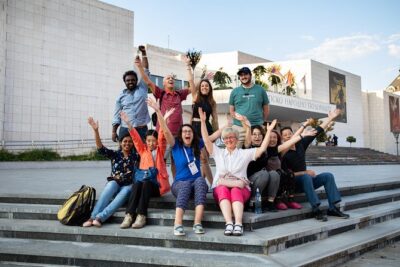
Northern Serbia: Sremski Karlovci and Novi Sad Full-Day Tour from Belgrade
Read our review →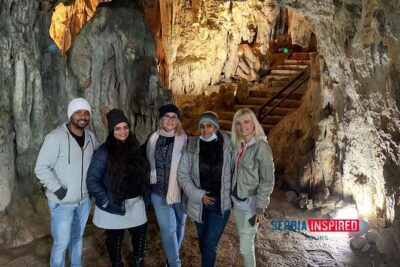
Day Trip from Belgrade: Gems of Eastern Serbia
Read our review →
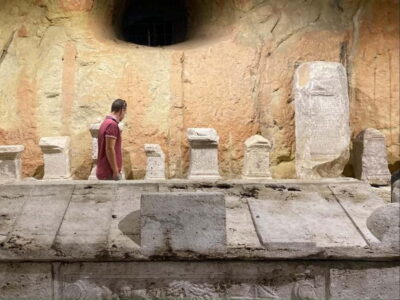
Western Serbia 1-Day Tour of the Key Sites from Belgrade
Read our review →