
Reviewed · BELGRADE TOURS
Belgrade Sightseeing Half-Day Trip Old and New Belgrade
Belgrade reveals its character quickly. This private three-hour tour gives you two things I especially like: a walk through Kalemegdan and Belgrade Fortress, followed by a comfortable drive through New Belgrade, Dedinje, and the city center. It is a smart introduction for a first visit, especially if your time is limited.
I also like the personal format. Your group travels alone with an English-speaking guide, and guides such as Alexander, Aleksandar, Ivan, Stefan, and Vladimir have been praised for clear explanations, patience, and an ability to adjust the route to personal interests. The main consideration is pace: you see a great deal, but some stops are quick, and one guest found the tour closer to two hours than the advertised three.
In This Review
- Key points to know before booking
- Why this tour works for a first look at Belgrade
- Kalemegdan Park and the fortress: where Belgrade begins
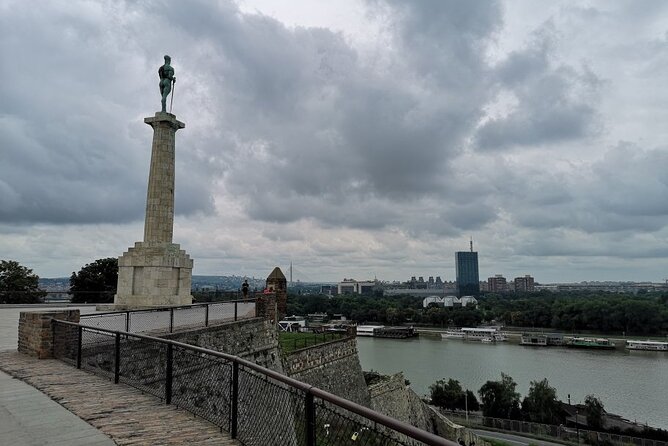
- Pobednik and the Upper Town views
- New Belgrade and the city’s concrete side
- Dedinje, football rivalry, and Tito’s memorial
- St. Sava Temple and the Vračar district
- Central Belgrade: government buildings and royal palaces
- Republic Square: a useful place to finish
- Price, transport, and what the three hours really deliver
- Who should book this Belgrade tour?
- Should you book it?
- FAQ
- How long does the Belgrade sightseeing tour last?
- Is this a private tour?
- What language is the tour offered in?
- Is hotel pickup included?
- Is airport pickup available?
- Is admission to St. Sava Temple included?
- How much walking is involved?
- Can I cancel the tour for a full refund?
Key points to know before booking
- A private city overview: Only your group takes part, with transport in a sedan for one to three people or an air-conditioned minivan for four to seven.
- A real walking section: Kalemegdan Park and Belgrade Fortress receive about an hour on foot, including the Upper Town and views of the Sava and Danube.
- Old Belgrade meets socialist modernism: The route pairs Roman and medieval fortifications with New Belgrade’s concrete architecture, Sava Center, and Genex Tower.
- St. Sava Temple is included: You get time to see one of the world’s largest Orthodox churches, including its impressive interior.
- Useful for a short stay: Hotel, Airbnb, pension, and port pickup are free within five kilometers of Republic Square.
- A fast-moving schedule: This is a city orientation, not a series of long museum visits or extended neighborhood walks.
Why this tour works for a first look at Belgrade
Belgrade is easier to understand when you see its layers together. The fortress recalls Roman and medieval rule. New Belgrade shows the ambitious socialist city built after the Second World War. Dedinje brings royal residences, grand homes, and political power into the picture. St. Sava Temple adds Serbia’s Orthodox tradition.
I like that the route does not focus only on the postcard center. You see the city’s difficult and varied past through its buildings, streets, stadiums, memorials, and public spaces. A guide can connect those pieces far better than a quick walk with a map.
The private format matters here. You can ask about Serbian history, Yugoslavia, football, architecture, or modern Belgrade without waiting for a large group. One guide, Vladimir, was especially praised for his knowledge of both the city and football and basketball, while Alexander was repeatedly described as friendly, clear, and attentive.
The tour is also practical for a layover. Pickup can be arranged from Belgrade Airport for a supplement of 15 EUR, and hotel or accommodation pickup is included in the central area. One person with a long overnight layover used a half-day city tour to see the main sights before an afternoon departure.
Still, keep your expectations sensible. The three-hour schedule includes driving across several parts of the city, so you will not explore every stop at length. The tour gives you a strong first picture, then leaves you to return later to the places that catch your interest.
Other full days out of Belgrade:
- Day Trip from Belgrade: Gems of Eastern Serbia
★ 5.0 · 424 reviews - Western Serbia 1-Day Tour of the Key Sites from Belgrade
★ 4.8 · 333 reviews - Along the Danube: Golubac Fortress & Iron Gate Gorge day trip from Belgrade
★ 4.5 · 185 reviews
Kalemegdan Park and the fortress: where Belgrade begins
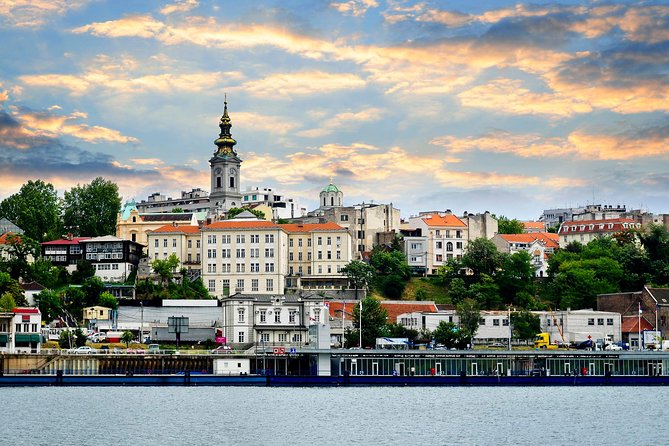
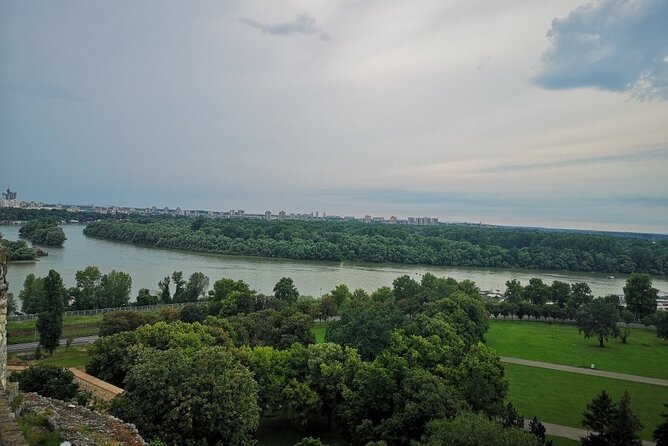
The tour starts with pickup from your accommodation and quickly reaches Kalemegdan, the city’s oldest and largest central park. This is the best place to begin because Belgrade’s defining setting comes into view here: the Sava and Danube meet below the fortress.
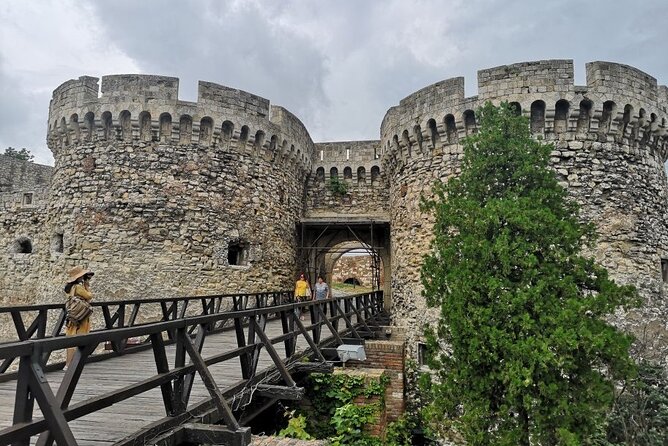
Your walking route begins at Leopold’s Gate. From there, the guide points out the remains of Singidunum, the Roman castrum that formed the early foundation of Belgrade. Medieval walls were later built over and around those older defenses, giving the fortress its layered appearance.
You pass Zindan Gate, Despot’s Gate, and Jakšića Tower, all linked to the fifteenth century. These are not isolated monuments in a neat museum setting. They are part of a working park with paths, lawns, viewpoints, and open spaces, which makes the site feel connected to the modern city.
The route also includes two Orthodox churches inside the fortress: the Chapel of St. Petka and Ružica Church, also called the Church of the Virgin Mary. Their presence adds a religious layer to a place better known for military walls and battles.
Allow for about 30 minutes at this first stop, although the wider fortress walk continues into the next section. You should expect uneven paths and moderate walking. The experience does not require strenuous fitness, but comfortable shoes will make the stone and park paths easier.
Pobednik and the Upper Town views
In the Upper Town, you reach Pobednik, the Victor monument by sculptor Ivan Meštrović. The tall figure has become one of Belgrade’s best-known symbols, and its position gives you a fine view across the river confluence.
The guide continues past the Roman Well, King’s Gate, and the Sava Promenade. You will also see the Damat Ali Pasha Tomb, the Clock Gate, and the Clock Tower. Each stop is brief, so the guide’s explanation is important. Without context, the gates and towers can blur together. With a good guide, they become a quick lesson in the city’s Ottoman, Roman, and medieval chapters.
You pass the Military Museum and leave through Istanbul’s Gate, also called Stambol Gate. Back in Kalemegdan Park, the Monument of Gratitude to France recalls the close relationship between Serbia and France during the First World War. Busts of important Serbian writers and public figures add a cultural note to the park.
This is the most substantial walking part of the tour. You get time to stop for photographs, but it is not designed as a leisurely park visit. If you have limited mobility, tell the guide early. Alexander was praised for adapting the route for a guest’s mother who could not walk long distances, and Vladimir was commended for helping someone with a bad knee.
New Belgrade and the city’s concrete side
Once you return to the vehicle, the tour changes mood. Across the river, New Belgrade presents a very different city. Built mainly after the Second World War during the socialist period, it is marked by broad spaces, large public buildings, and bold concrete forms.
You pass the former Central Committee of the Communist Party and the Federal Executive Council, now known as the Palace of Federation. You also see Genex Tower, or the Western Gate of Belgrade, a major example of the city’s brutalist architecture.
The Sava Center is another important stop from the vehicle. It is one of the largest congress halls in this part of Europe and a major piece of New Belgrade’s modern architecture. The area gained international attention through the Museum of Modern Art in New York exhibition Toward a Concrete Utopia, which placed Yugoslav architecture in a wider design conversation.
I appreciate this part of the route because it corrects the common idea that Belgrade is only an old fortress city. New Belgrade tells you about postwar planning, socialist ambition, and the city’s more recent business growth. You see older concrete blocks beside newer office buildings, showing how the district continues to change.
The drive also passes Belgrade Arena and the Novak restaurant, owned by the family of tennis player Novak Đoković. These details help connect the formal city tour to present-day Belgrade.
There is a tradeoff. You mainly see New Belgrade from the vehicle, with commentary rather than long walks. That is efficient in a half-day tour, but architecture fans may want extra time later to study Genex Tower and the surrounding district.
A couple more Belgrade trips to weigh up
- From Belgrade: Novi Sad & Sremski Karlovci Full-Day Tour
★ 4.7 · 1,068 reviews - From Belgrade: Gems of Eastern Serbia Tour
★ 5.0 · 427 reviews - Northern Serbia: Sremski Karlovci and Novi Sad Full-Day Tour from Belgrade
★ 5.0 · 425 reviews - Belgrade: Sunset Cruise with Live Guide
★ 4.4 · 418 reviews
Dedinje, football rivalry, and Tito’s memorial
After crossing the Gazela Bridge, the route heads toward Dedinje, one of Belgrade’s most expensive residential areas. The district is known for large houses and mansions set among the greenery of Topčider Hill.
Dedinje is useful for understanding the city’s twentieth-century power structure. The guide explains the background of prominent properties and what happened to them during Serbia’s turbulent political periods. You are not simply looking at attractive homes. You are seeing where political and social influence took physical form.
The tour then passes Rajko Mitić Stadium, home of Red Star Belgrade. Across a small hill is the stadium of Partizan Belgrade. Their rivalry has lasted more than 70 years, and the guide can add a lively sports angle to the city’s political and architectural story. Red Star’s 1991 European Cup victory is also part of that sporting identity.
The route includes the Museum of History of Yugoslavia and the House of Flowers, the resting place of Josip Broz Tito, leader of the second Yugoslavia. The tour does not list an interior visit, so treat this as a guided pass-by unless your guide confirms otherwise.
This stretch is particularly valuable if you want more than old churches and royal buildings. It shows how Yugoslavia, its leaders, and its public institutions still shape Belgrade’s identity.
St. Sava Temple and the Vračar district
From Dedinje, the vehicle continues to Vračar and the Church of St. Sava. This is the tour’s most visually powerful religious site, with a dome visible from many parts of Belgrade.
Construction began in the 1930s on the place where Ottoman forces burned the relics of St. Sava, who founded and became the first archbishop of the independent Serbian Orthodox Church. The church is built in a Serbian-Byzantine style and covers about 3,500 square meters at ground level, with another 1,500 square meters in three first-level galleries.
The dome reaches 70 meters, and the central gilded cross adds another 12 meters, bringing the total height to 82 meters. Those figures help explain why the building feels so enormous even before you enter.
The tour includes entrance to the temple, which is an important value point. You are not limited to an outside photograph. The route allows about 30 minutes at the site, including a look at the decorated crypt of St. Sava beneath the church.
Guides have been praised for explaining the church clearly without overloading the group. Stefan, in particular, was appreciated for giving substantial historical detail while keeping the information manageable, even in hot weather. A bottle of water is provided for each person, but you should still dress for the season and bring comfortable shoes.
Central Belgrade: government buildings and royal palaces
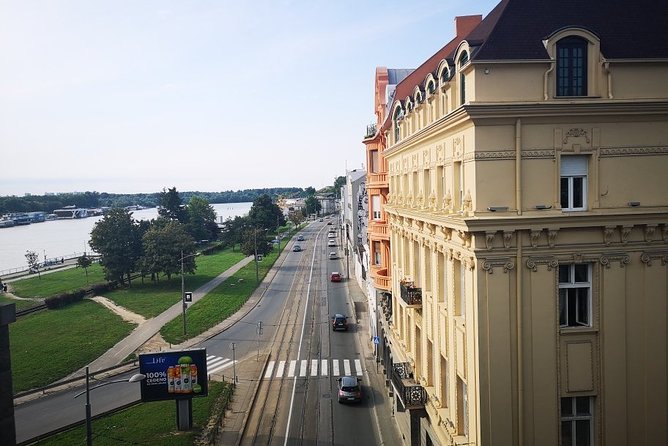
After St. Sava Temple, the vehicle passes through Slavija Square and Nemanjina Street. This street is lined with important government institutions, including the Government Building, Ministry of Foreign Affairs, General Staff of the Serbian Army, Ministry of Railways, Ministry of Finance, and the State Court.
These buildings are useful reminders of Belgrade’s prewar architectural character. You see them from the vehicle, so this part works best as a moving introduction rather than a detailed architecture walk.
The route continues along Kralja Milana Street, one of the city’s main arteries. You pass the Old and New Royal Palaces and hear about the two dynasties that ruled Serbia in the nineteenth and twentieth centuries.
At Nikola Pasić Square, the guide points out the monument to the first prime minister of the Kingdom of Yugoslavia. You then stop briefly at the Serbian Parliament Building for photographs. This is a practical pause after the longer fortress walk, though the scheduled time is only about ten minutes.
The tour continues to Terazije Square, marked by its nineteenth-century white stone fountain and the Moskva Hotel. The hotel is one of Belgrade’s most recognizable buildings and a good visual marker as you move toward the city center.
Republic Square: a useful place to finish
The final stop is Republic Square, often treated as the heart of central Belgrade. The National Museum and National Theatre face the square, making it one of the city’s key cultural spaces.
You hear about Prince Mihailo, an important figure in Serbia’s modern history, and the buildings around the square. The tour ends here after about 15 minutes.
Ending at Republic Square is convenient. You are left in a central area with several cultural sights nearby, rather than being returned immediately to the vehicle. The tour provides an overview, so you may want to use the rest of your day to return to the National Museum, walk the central streets, or revisit Kalemegdan at your own pace.
Price, transport, and what the three hours really deliver
At $150.85 per person, this is not a budget group bus tour. Its value depends heavily on your group size and time in Belgrade. You pay for private transport, hotel pickup and drop-off, fuel, parking, an English-speaking guide, the temple entrance, and the ability to shape the conversation around your interests.
For two or more people, the price becomes easier to justify because the same private vehicle and guide serve your group. A sedan is used for one to three people, while groups of four to seven travel in an air-conditioned minivan. Group discounts are available, though the exact reduction is not specified.
Central pickup is free from a hotel, Airbnb, or pension within five kilometers of Republic Square, as well as from Belgrade port. Pickup between five and ten kilometers costs an additional 10 EUR. Airport pickup costs 15 EUR, and locations farther than ten kilometers should be arranged directly.
The average booking point is 51 days ahead, so popular dates may fill early. Free cancellation is available up to 24 hours before the start time. Child pricing applies only when a child shares the tour with two paying adults.
The main value is efficiency. You cover the fortress, riverside views, New Belgrade, Dedinje, St. Sava Temple, royal buildings, Parliament, Terazije, and Republic Square in one compact route. The main limitation is depth. You will not have time for long interior visits or extended neighborhood exploration.
Who should book this Belgrade tour?
I would choose this tour if you are in Belgrade for one or two days, arriving on a layover, or starting a longer stay and want a clear map of the city. It also suits families and mixed-age groups because private transport reduces the strain of crossing the city on foot.
It is a good fit for anyone interested in Yugoslavia, architecture, religion, royal history, or football. The guide can adjust the discussion, and several guides have been praised for answering questions with ease and for adapting to personal interests.
I would hesitate if your priority is slow travel. If you want to spend hours inside museums, linger over coffee in each district, or explore every fortress gate at leisure, book a longer walking tour or plan independent visits afterward.
The tour is also better for people with moderate physical fitness rather than anyone needing a fully step-free outing. The fortress includes walking on historic paths, although the private format lets you discuss adjustments with the guide.
Should you book it?
Book it if you want a fast, private orientation to Belgrade with strong historical commentary and very little transport hassle. The route gives you a thoughtful mix of Roman and medieval remains, Orthodox Serbia, Yugoslav modernism, royal Belgrade, and today’s city.
Skip it only if you already know Belgrade well or prefer to explore one neighborhood slowly. For a first visit, a layover, or a short stay, the combination of Kalemegdan, New Belgrade, Dedinje, and St. Sava Temple makes this a useful and well-rounded introduction.
FAQ
How long does the Belgrade sightseeing tour last?
The scheduled duration is approximately three hours. Because the route includes driving between several districts and short stops, the amount of time spent at each place is limited.
Is this a private tour?
Yes. Only your group participates. Transport is provided by private sedan for one to three people or an air-conditioned minivan for four to seven people.
What language is the tour offered in?
The tour is offered in English with a professional English-speaking guide.
Is hotel pickup included?
Yes. Pickup and drop-off are free from hotels, Airbnbs, and pensions within five kilometers of Republic Square. Pickup from Belgrade port is also free.
Is airport pickup available?
Yes. You can start the tour at Belgrade Airport for an additional 15 EUR.
Is admission to St. Sava Temple included?
Yes. Entrance to St. Sava Temple is included in the tour price.
How much walking is involved?
The tour includes a walking visit of Kalemegdan Park and Belgrade Fortress, with time in the Upper Town and at the fortress churches. A moderate level of physical fitness is recommended.
Can I cancel the tour for a full refund?
Yes. You can cancel at least 24 hours before the start time for a full refund. Cancellations or changes made less than 24 hours before the start time are not accepted for a refund.
Just added in Belgrade
- Your Own Belgrade: Street Art and Hidden Gems Walking Tour★ 5.0 · 2 reviews
- Private Half Day Serbia Tour Novi Sad and Petrovaradin Fortress★ 5.0 · 3 reviews
- 3-Hour Belgrade Zemun Neighborhood Tour★ 5.0 · 8 reviews
- Private Belgrade Street Art and Adventures Walking Tour★ 5.0 · 4 reviews
- Private Wine Tasting by Party in Belgrade★ 5.0 · 3 reviews
- From Belgrade:Uvac Nature Reserve Tour★ 5.0 · 4 reviews
- Urban & Alternative Belgrade tour★ 5.0 · 4 reviews
- VIP Reservation Service in Belgrade★ 5.0 · 2 reviews
Belgrade Tours, compared.
Northern Serbia: Sremski Karlovci and Novi Sad Full-Day Tour from Belgrade
Read our review →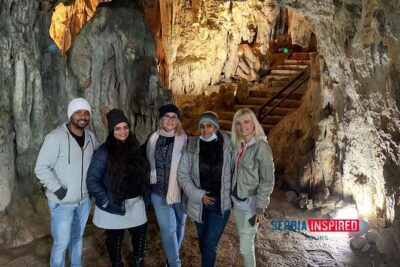
Day Trip from Belgrade: Gems of Eastern Serbia
Read our review →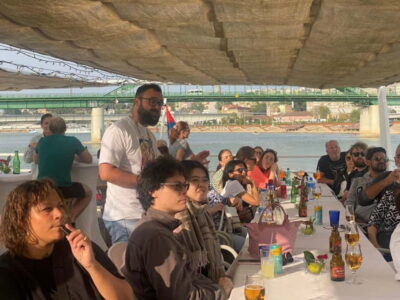
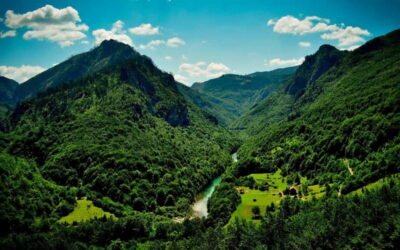
Western Serbia 1-Day Tour of the Key Sites from Belgrade
Read our review →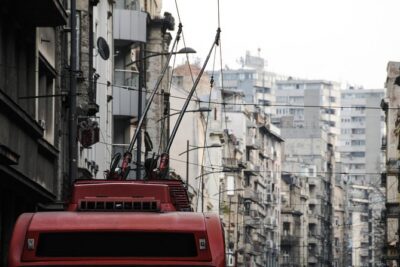
Browse the lists this tour appears in