Reviewed · BELGRADE TOURS
Belgrade: guided tours of the crossroads of East and West
Belgrade rewards a guide who can connect the pieces. This five-hour walking and public-transport tour links royal buildings, Orthodox churches, local markets, old cafés, and the fortress above the Danube and Sava. I like the focus on history with local anecdotes, and I like that the route includes ordinary places such as Kalenic Market and a traditional restaurant, not just grand monuments. The small group, limited to 10 people, should also make it easier to ask questions.
The main consideration is pace. You cover a lot of ground, use a tram and other public transport, and spend much of the day on foot. The entrance fee for St. Sava Church is extra, and the National Museum is an optional visit with its own ticket, so the $88 price does not cover every possible cost.
In This Review
- What makes this Belgrade tour different
- Starting at Stefan Nemanja in Savski Trg
- Riding the tram to St. Sava Church
- Kalenic Market and Vracar street life
- Parliament, royal palaces, and Terazije Street
- Republic Square and the city’s café habit
- Knez Mihailova, St. Michael’s Cathedral, and Question Mark
- Kalemegdan Park and Belgrade Fortress
- The Danube and Sava viewpoint
- Sasha’s guiding style and language options
- Is $88 a fair price?
- Who should book this tour?
- Should you book the Belgrade guided tour?
- FAQ
- How long does the Belgrade tour last?
- Where does the tour begin?
- Where does the tour finish?
- What languages are available?
- Who leads the tour?
- How large is the group?
- Is the entrance to St. Sava Church included?
- Is the National Museum visit included?
- Are food and drinks included?
- Does the tour use public transport?
- Can I cancel the booking?
- Can I reserve now and pay later?
What makes this Belgrade tour different
- A French-language tour led by Sasha: Sasha is a sworn Serbian Ministry of Tourism guide who also speaks Serbian and Italian. The strongest praise centers on his French, hospitality, historical explanations, and willingness to answer questions.
- A full cross-town route: You begin at Savski Trg near the new Belgrade Waterfront and finish near the traditional restaurant Proleće, passing through Vracar, central Belgrade, Knez Mihailova, and Kalemegdan.
- Public transport is part of the experience: A 15-minute tram ride to St. Sava Church and another public-transport ride into the center help you see how Belgrade works beyond its postcard views.
- Local life alongside famous sights: Kalenic Market, a coffee stop, traditional bars and restaurants, and the old Question Mark restaurant give the tour a more everyday feel.
- A strong finish at the rivers: Kalemegdan Park and Belgrade Fortress provide wide views over the meeting point of the Danube and Sava.
- Useful for French-speaking visitors: The tour combines cultural context, practical orientation, and sightseeing without requiring you to follow a Serbian-language group.
Starting at Stefan Nemanja in Savski Trg
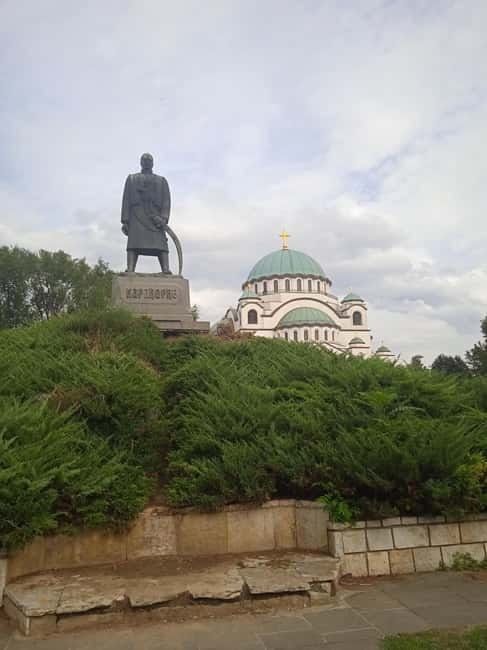
The tour begins beside the monument to Grand Prefect Stefan Nemanja at Savski Trg, near the edge of the new Belgrade Waterfront district. This is a useful starting point because the monument introduces one of the central figures in Serbian medieval history before you move into later periods of the city.
Stefan Nemanja founded the Nemanjic dynasty, which ruled Serbia during the Middle Ages. The guide uses the monument to explain his role as a pioneer in the unification of Serbian territories. That opening matters because Belgrade can otherwise feel like a collection of separate eras: medieval Serbia, Ottoman influence, Habsburg power, royal Yugoslavia, socialist Yugoslavia, and modern Serbia.
I would arrive with comfortable shoes and a little extra time. The meeting point is on Savski Trg beside the monument, and your guide carries a sworn tourist guide badge. That makes the first meeting easier in a busy public square.
A couple more Belgrade trips to weigh up
- From Belgrade: Novi Sad & Sremski Karlovci Full-Day Tour
★ 4.7 · 1,068 reviews - From Belgrade: Gems of Eastern Serbia Tour
★ 5.0 · 427 reviews - Northern Serbia: Sremski Karlovci and Novi Sad Full-Day Tour from Belgrade
★ 5.0 · 425 reviews
Riding the tram to St. Sava Church
The ride to St. Sava Church takes about 15 minutes. Using the tram instead of a private vehicle keeps the tour tied to the city itself, and it gives you a short break before the largest religious building on the route.
St. Sava is the son of Stefan Nemanja and one of the most important figures in Serbian history. The church is monumental in scale, with more than 15,000 square meters of mosaics. You should expect a substantial guided visit of about 45 minutes, enough time to grasp the building’s size, religious importance, and decoration without spending the whole afternoon inside.
The entrance ticket is not included and costs about 4 euros. That is a modest extra, but you should know about it when comparing the tour price with a simple walking tour. If grand interiors interest you, this is one of the places where the additional payment feels worthwhile.
The church also sets up the tour’s larger theme. Belgrade is not neatly divided between East and West. Its churches, public buildings, food traditions, transport, and architecture reflect several political and cultural worlds layered on top of one another.
Kalenic Market and Vracar street life
From St. Sava, you walk through the Vracar district toward Kalenic Market. The walk takes about 15 minutes, followed by roughly 30 minutes at the market.
Kalenic is a traditional market selling fresh local produce. This stop gives you something a grand church cannot: a glimpse of how people shop and eat in Belgrade. You might find the market more revealing than another formal monument because it places the city’s food culture in front of you in a direct, ordinary way.
The market stop is also a good chance to ask Sasha about Serbian ingredients, local habits, and the difference between a traditional market and the more polished parts of central Belgrade. The tour description also allows for unusual places such as traditional bars and restaurants, so the day is not limited to official attractions.
Keep your expectations practical. This is a guided introduction, not a dedicated food tour, and the schedule gives you about half an hour. If you want to buy produce or spend time browsing every stall, you will need to return on your own.
Parliament, royal palaces, and Terazije Street
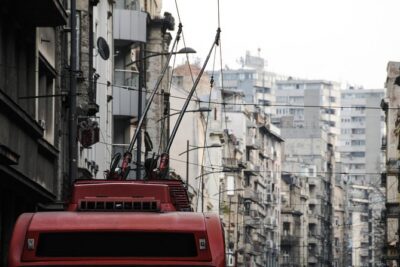
After the market, you take public transport toward central Belgrade. The ride is listed as roughly 10 to 15 minutes. This second transport segment helps break up the walking, though you should still expect a full day on your feet.
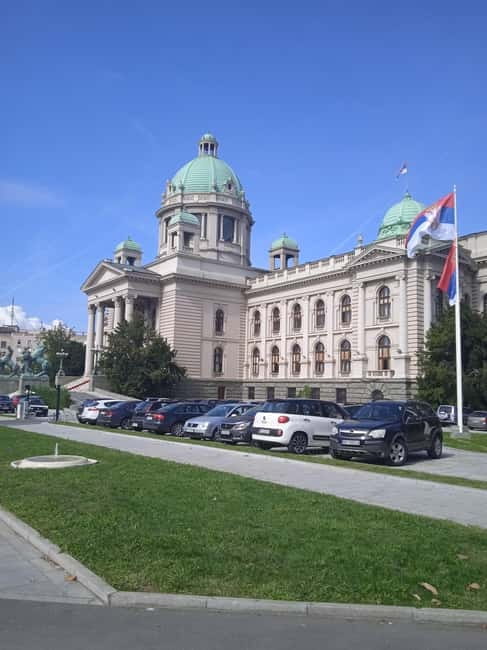
In the center, the route passes the National Assembly of the Republic of Serbia, the Old Palace, and the New Palace. The Old Palace now houses Belgrade City Hall, while the New Palace is used as the Presidency building. The stops are brief, around five minutes each in the detailed route, so you are mainly getting exterior explanations and historical context rather than extended interior visits.
The buildings help explain Serbia’s royal and political past. Their locations also make clear how compact central Belgrade can feel once you move beyond the newer waterfront area. Sasha’s role is especially useful here because the meaning of a government building often depends on knowing who used it, when it was built, and how the city’s political life changed.
You then walk toward Terazije Street, one of central Belgrade’s main thoroughfares. Hotel Moskva and the Terazije Fountain are the key sights. Hotel Moskva gives the street a strong old-city reference point, while the fountain helps you read the square and surrounding roads as part of Belgrade’s civic center.
Out of the city, and a slower way to spend the day:
- Day Trip from Belgrade: Gems of Eastern Serbia
★ 5.0 · 424 reviews - Belgrade: Sunset Cruise with Live Guide
★ 4.4 · 418 reviews - Belgrade: Underground Tour with Riverside Sparkling Wine
★ 4.8 · 411 reviews - Western Serbia 1-Day Tour of the Key Sites from Belgrade
★ 4.8 · 333 reviews
Republic Square and the city’s café habit
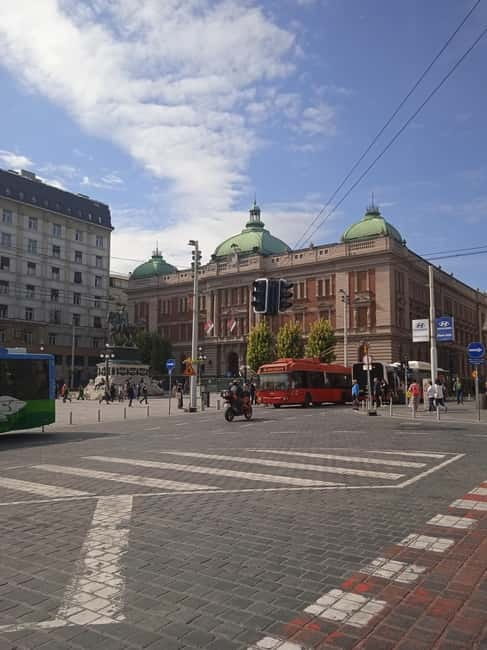
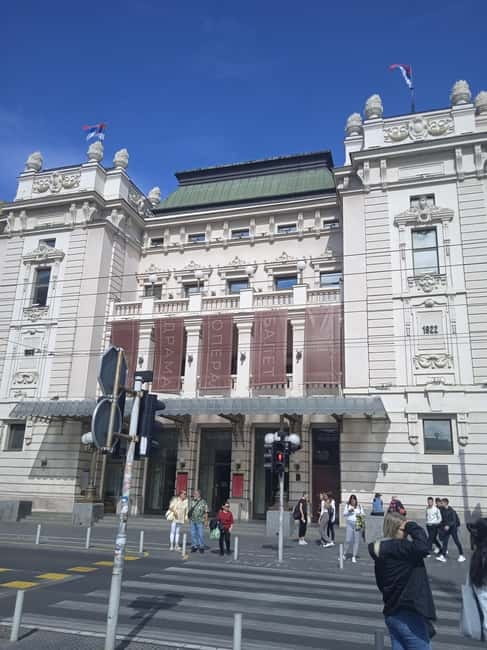
The route continues to Republic Square, one of the most recognizable gathering points in central Belgrade. The National Theatre, the monument to Prince Mihailo Obrenovic, and the National Museum surround the square.
There is a coffee break at one of the square’s bar-restaurants. Drinks and food are not included, but the pause is useful. Five hours of sightseeing can become a blur if every stop is another explanation, and this break lets you sit, ask questions, and absorb the setting.
The National Museum is listed as an optional visit, with an entrance fee of about 3 euros. Treat it as an add-on rather than a guaranteed part of the guided route. The detailed timing gives the museum up to an hour, but the visit is optional, so the actual time you spend there depends on your choice and the group’s plan.
If you want museum time, ask Sasha early in the tour how it will fit with the rest of the route. The tour already includes many stops, and a longer museum visit may affect how much time you have elsewhere.
Knez Mihailova, St. Michael’s Cathedral, and Question Mark
From Republic Square, you walk along Knez Mihailova, Belgrade’s pedestrian shopping street. This is one of the easiest parts of the tour for getting your bearings. You can focus on the buildings and street life without dealing with regular traffic.
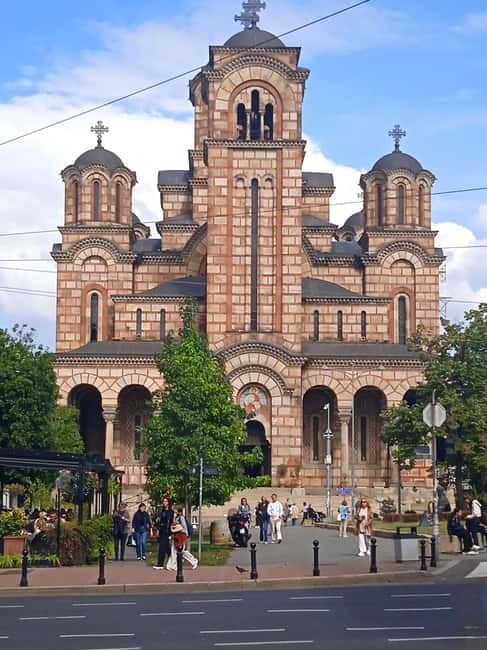
The route then reaches St. Michael’s Cathedral, also called the Church of the Holy Archangel Michael. The guided visit is brief, about 10 minutes in the detailed schedule. Even with limited time, the stop adds another religious and historical layer after St. Sava’s much larger Orthodox setting.
Nearby is Belgrade’s oldest restaurant, known simply as Question Mark, or ?. The name itself is a small piece of local character. It is the sort of detail that gives a city tour personality because you remember the odd name long after you forget a date.
The guide may also point out the French Embassy, one of Belgrade’s most attractive art-deco buildings. The stop is about 15 minutes, and it fits neatly with the tour’s East-West theme. French influence is not treated as a distant idea here. It appears in the city’s diplomatic architecture, public spaces, and connections with wider Europe.
Kalemegdan Park and Belgrade Fortress
The final major section takes you through Kalemegdan Park and Belgrade Fortress. Together, they form the most visually powerful part of the route.
Kalemegdan is more than a green break in the city. It contains the Army Museum, outdoor displays of military equipment, Belgrade Zoo, the Victor’s Monument, and Ruzica Church. The route gives about 30 minutes for the park and 20 minutes for the fortress in the detailed schedule, with guided walking throughout.
The fortress is a clear symbol of Belgrade’s difficult past. Its position at the meeting of the Danube and Sava made it valuable, but also exposed it to repeated conflict. You will see why control of this high ground mattered when you look across the rivers and out toward the surrounding city.
The Victor’s Monument honors the fighters who broke through the Salonika Front during the First World War. Ruzica Church offers a very different mood nearby. The Army Museum and its outdoor weapons displays add another angle, showing how military history remains part of the park rather than hidden away in a distant building.
This section requires good footwear. Paths in a large historic park can be uneven, and the route includes walking through open areas. The tour is not presented as suitable for children under 12, and the length and subject matter make it a better fit for older children and adults.
The Danube and Sava viewpoint
A photo stop on the heights of the park and fortress lasts about 10 minutes. This is the view that ties the entire tour together: the Danube and the Sava meeting below Belgrade.
You get a clear sense of the city’s position between river routes and larger regions. It also makes the phrase crossroads of East and West feel concrete rather than merely promotional. From the fortress, geography explains much of Belgrade’s story.
The tour ends at the Monument to France in Kalemegdan Park, followed by a finish near Proleće, a traditional Belgrade restaurant. Ending with a French connection is a neat final touch for a French-language tour, and the restaurant provides a practical point for continuing your evening if you want food afterward.
Sasha’s guiding style and language options
The guide is Sasha, also referred to as Sacha in the tour information. His strongest qualities are his command of French, warmth, and detailed answers. Several people specifically praised his passion for Serbian history and his useful suggestions for enjoying Belgrade beyond the tour.
That matters because a route this broad needs a guide who can select the important details. You are not just looking at a church, palace, or monument. You are being shown how the pieces relate to Serbia’s medieval rulers, royal period, modern state, religious life, and international ties.
The advertised live languages are French, Serbian, and Italian. If you book in French, confirm that your preferred language is arranged for your date. A small group of no more than 10 people is a real advantage here. You get more room for questions than on a large coach tour, and the public-transport sections are easier to manage.
Is $88 a fair price?
At $88 per person, this is not the cheapest way to see Belgrade. You still pay separately for St. Sava Church, the optional National Museum, and your own drinks or food. The value comes from the five-hour length, the sworn guide, the French-language service, the small group, and the range of places covered.
A self-guided walk could cover Knez Mihailova, Republic Square, and Kalemegdan for very little money. It would be harder to connect those places with St. Sava, Vracar, Kalenic Market, royal buildings, and the city’s wider history. You also would not get the same ease of asking Sasha questions in French or Italian.
I think the price is strongest for someone visiting Belgrade for the first time, especially if you want context rather than a list of photo stops. It is less convincing for a repeat visitor who already knows the center, speaks Serbian, or prefers to explore at a slow pace.
The booking terms add flexibility. You can cancel up to 24 hours ahead for a full refund, and you can reserve now and pay later. The activity lasts five hours, with starting times based on availability.
Who should book this tour?
I would choose this tour if you want:
- A French-language introduction to Belgrade
- A guide who can explain Serbia’s political and religious past
- A mix of famous sights and everyday places
- A small group rather than a large organized outing
- Public transport included as part of the city experience
- A strong final view over the Danube and Sava
You should think twice if you dislike walking, prefer unstructured sightseeing, or want a dedicated museum, food, or architecture tour. The schedule is full, and the coffee break is not a long free period.
The activity is not suitable for children under 12 according to the provided age restrictions, and it is not intended for babies or very young children. The upper age restriction lists people over 95 as unsuitable. No separate accessibility details are provided, so anyone with mobility concerns should ask before booking.
Should you book the Belgrade guided tour?
Book it if you want Belgrade explained in French by an enthusiastic local guide, with the city’s major symbols tied to markets, cafés, churches, government buildings, and fortress views. Sasha’s strong French, historical passion, and friendly answers are the clearest reasons to choose it.
The best practical plan is to wear sturdy shoes, carry a little extra money for the two optional or separate costs, and decide in advance if the National Museum matters to you. If you can manage the pace, this tour gives you a useful first map of Belgrade and a much clearer sense of why the city feels pulled between several worlds.
FAQ
How long does the Belgrade tour last?
The tour lasts five hours.
Where does the tour begin?
It begins at Savski Trg, next to the monument to Stefan Nemanja, near the new Belgrade Waterfront district.
Where does the tour finish?
The tour finishes near Proleće, a traditional restaurant.
What languages are available?
The live tour guide languages are French, Serbian, and Italian.
Who leads the tour?
The tour is led by Sasha, a sworn tourist guide from the Serbian Ministry of Tourism.
How large is the group?
The tour is limited to 10 participants.
Is the entrance to St. Sava Church included?
No. The entrance ticket costs about 4 euros and is paid separately.
Is the National Museum visit included?
The National Museum visit is optional, and its entrance ticket costs about 3 euros.
Are food and drinks included?
No. Drinks and food during the breaks are not included.
Does the tour use public transport?
Yes. The route includes a tram ride of about 15 minutes to St. Sava Church and another public-transport ride toward the city center.
Can I cancel the booking?
Yes. You can cancel up to 24 hours in advance for a full refund.
Can I reserve now and pay later?
Yes. The tour allows you to reserve your place and pay later.
Just added in Belgrade
- Your Own Belgrade: Street Art and Hidden Gems Walking Tour★ 5.0 · 2 reviews
- Private Half Day Serbia Tour Novi Sad and Petrovaradin Fortress★ 5.0 · 3 reviews
- 3-Hour Belgrade Zemun Neighborhood Tour★ 5.0 · 8 reviews
- Private Belgrade Street Art and Adventures Walking Tour★ 5.0 · 4 reviews
- Private Wine Tasting by Party in Belgrade★ 5.0 · 3 reviews
- From Belgrade:Uvac Nature Reserve Tour★ 5.0 · 4 reviews
- Urban & Alternative Belgrade tour★ 5.0 · 4 reviews
- VIP Reservation Service in Belgrade★ 5.0 · 2 reviews
Belgrade Tours, compared.
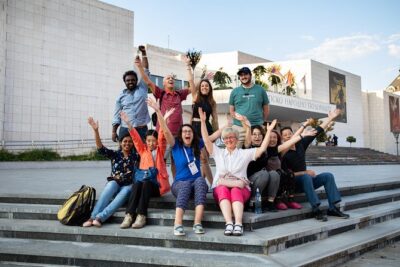
Northern Serbia: Sremski Karlovci and Novi Sad Full-Day Tour from Belgrade
Read our review →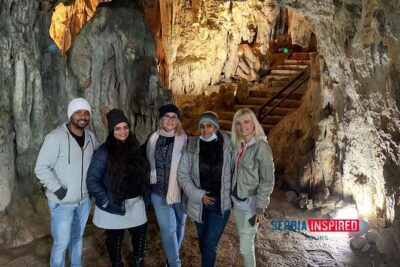
Day Trip from Belgrade: Gems of Eastern Serbia
Read our review →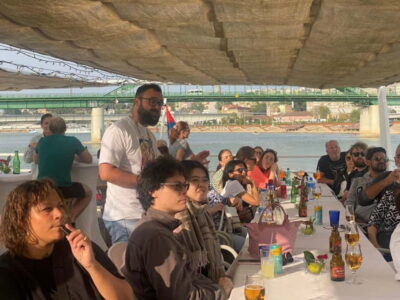
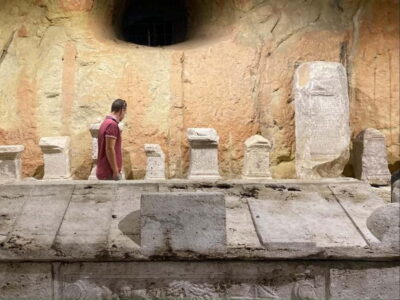
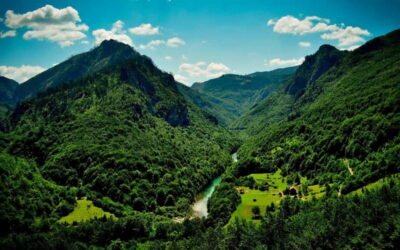
Western Serbia 1-Day Tour of the Key Sites from Belgrade
Read our review →