Reviewed · BELGRADE TOURS
Belgrade Big Tour: Top Attractions and Belgrade Neighborhoods
Belgrade reveals itself in layers. This full-day tour links the fortress, riverside Zemun, socialist New Belgrade, royal neighborhoods, and Saint Sava Temple, giving you a fast but useful introduction to Serbia’s capital. I especially like the wide range of neighborhoods and the chance to see both old and modern Belgrade without arranging several separate rides. The included Temple of Saint Sava admission is another practical plus. The main drawback is the pace: you will walk on hills, cobblestones, and steps, and some stops are brief.
The tour costs $72.59 per person and lasts about seven to eight hours. That is fair value if you have only a weekend or want help understanding the city before exploring alone. Guides such as Aleksandar, Milan, Isidora, Dragana, and Milica have been praised for clear English and strong knowledge of Serbian history, though one poor experience reported late pickups, weak group control, and difficulty hearing the guide.
In This Review
- Five useful things to know before you book
- Why this is a strong first day in Belgrade
- Kalemegdan and the Belgrade Fortress: Serbia’s best opening scene
- Pobednik and the Upper Town views
- New Belgrade: concrete, scale, and Yugoslav ambition
- Zemun: cobbled lanes and the Danube promenade
- Gardos Hill and the Millennium Tower
- Dedinje and Belgrade’s royal side
- Saint Sava Temple: the day’s grand interior
- Central Belgrade by vehicle
- Parliament, royal palaces, and the final photo stop
- How the timing and group size affect the experience
- What the $72.59 price really buys
- Who should book this Belgrade tour?
- Final verdict: a smart overview with a busy schedule
- FAQ
- How long does the Belgrade Big Tour last?
- What time does the tour begin?
- Is hotel pickup included?
- Is hotel drop-off included?
- What transportation is used?
- Is Saint Sava Temple admission included?
- Is the Millennium Tower entrance included?
- Is lunch included?
- How large can the shared group be?
- Can I cancel for a full refund?
Five useful things to know before you book
- Belgrade’s two rivers frame the day: You see the Sava and Danube from the fortress, then follow the Danube through old Zemun.
- The tour crosses several very different districts: Kalemegdan, New Belgrade, Zemun, Dedinje, Vračar, and central Belgrade each show a different side of the city.
- Saint Sava Temple admission is included: You get time inside one of the world’s largest Orthodox churches, not just a photo stop outside.
- Transport saves serious time: An air-conditioned van or minibus connects far-flung sights that would take much longer by public transport.
- The group can reach 16 people: Shared tours may feel intimate with only a few people, but a full vehicle can make walking commentary harder to hear.
- You finish downtown, not at your hotel: The final stop is by the National Assembly, close to central sights and useful for planning your afternoon.
Why this is a strong first day in Belgrade
Belgrade is not a city that presents itself in one neat historic center. Its story is spread across a fortress above two rivers, an Austro-Hungarian-flavored town across the water, broad socialist avenues, royal compounds, Orthodox monuments, and busy central squares.
That makes this tour useful. You are not just ticking off monuments. You are seeing how Belgrade changed from Roman frontier town to medieval stronghold, Ottoman and Habsburg border zone, Yugoslav capital, and present-day Serbian capital.
The route also solves a common problem. Zemun, New Belgrade, Dedinje, and Saint Sava Temple are too spread out to combine comfortably on foot in one day. The vehicle handles the long connections while your guide supplies the background.
The tour begins around 9:30 a.m. with pickup from a hotel, Airbnb, or pension within five kilometers of Republic Square. Shared-tour pickup may come 15 to 30 minutes before departure. You receive the precise details by email the evening before, after 6 p.m.
A couple more Belgrade trips to weigh up
- From Belgrade: Novi Sad & Sremski Karlovci Full-Day Tour
★ 4.7 · 1,068 reviews - From Belgrade: Gems of Eastern Serbia Tour
★ 5.0 · 427 reviews - Northern Serbia: Sremski Karlovci and Novi Sad Full-Day Tour from Belgrade
★ 5.0 · 425 reviews
Kalemegdan and the Belgrade Fortress: Serbia’s best opening scene
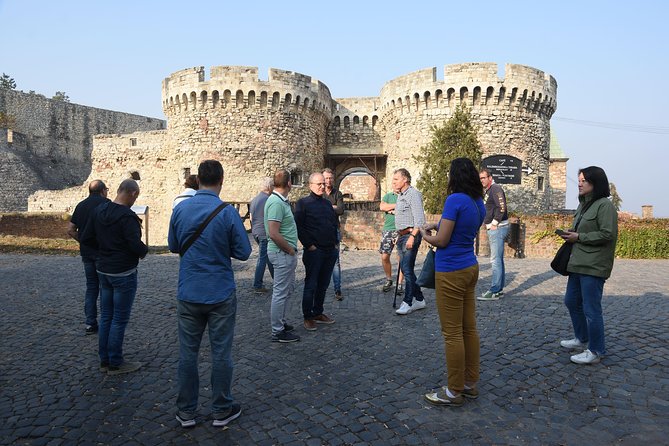
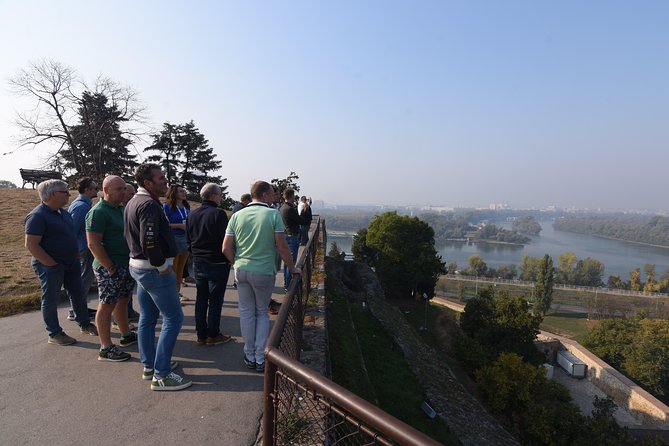
Your first proper stop is Kalemegdan Park and Belgrade Fortress. This is the right place to begin because the city’s location makes sense from here: the Sava and Danube meet below the Upper Town, while the fortress marks the strategic point that drew Roman, medieval, Ottoman, and Habsburg rulers.
The walk begins at Leopold’s Gate. You pass the remains of Singidunum, the Roman castrum that gave Belgrade its earliest urban shape, then move through medieval defenses including Zindan Gate, Despot’s Gate, and Jakšića Tower.
The route includes two small Orthodox churches. The Chapel of Saint Petka is linked to a spring regarded as sacred, while Ružica Church, also called the Church of the Virgin Mary, occupies a former military site within the fortress. These are quieter stops than the main viewpoint and help give the fortress a human scale.
Allow for uneven ground and steps here. The first section is listed at 45 minutes, but the actual experience depends on group size, traffic, and how much the guide explains. Comfortable shoes matter more than stylish ones.
Pobednik and the Upper Town views
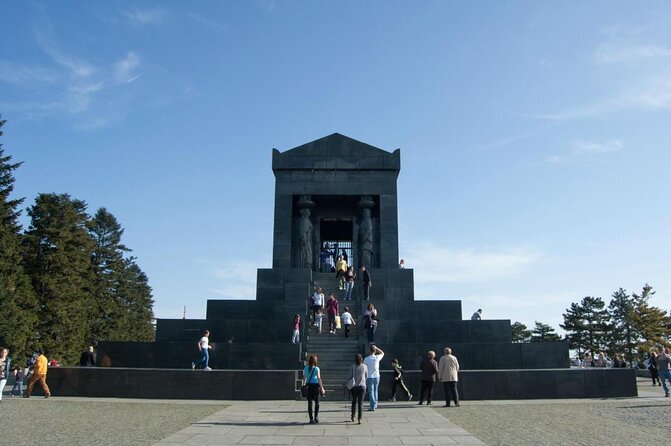
The Upper Town continues the fortress walk with Belgrade’s famous Victor monument, known locally as Pobednik. Sculptor Ivan Meštrović created the tall bronze figure, which looks toward the river and has become one of the city’s most familiar symbols.
You also see the Roman Well, King’s Gate, the Sava Promenade, the tomb of Damat Ali Pasha, the Clock Gate, and the Clock Tower. The Military Museum and Istanbul Gate help explain how the fortress changed hands and functions over the centuries.
The view near Pobednik is one of the day’s best photo opportunities. You can look across the Sava and Danube, toward Zemun and the broad plains beyond. The Monument of Gratitude to France, also by Meštrović, is another notable work in Kalemegdan Park.
This section is scheduled for about 30 minutes. That is enough for an overview and photographs, but not enough for a slow museum visit or private exploration. If you like military architecture, allow time to return on another day.
New Belgrade: concrete, scale, and Yugoslav ambition
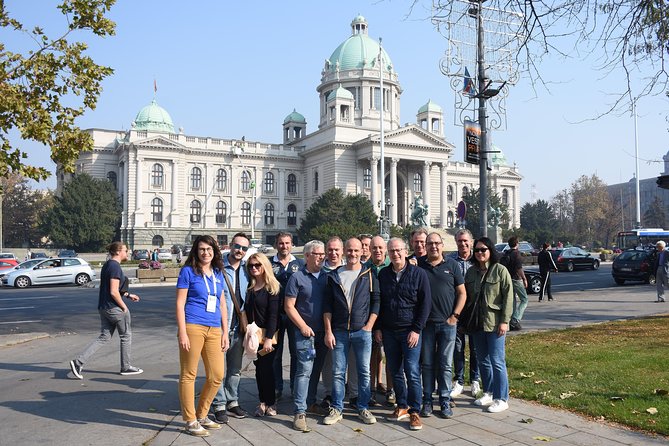
Back in the vehicle, the route changes character completely. New Belgrade grew mainly after World War II under socialist Yugoslavia. Its broad spaces and large concrete buildings can feel stark beside the fortress, but they tell an important part of the city’s modern story.
You pass the former Central Committee of the Communist Party, the Palace of the Federation, the Genex Tower, Sava Center, and Belgrade Arena. The Genex Tower, also called the Western Gate of Belgrade, is especially memorable for its two tall concrete forms connected high above the ground.
New Belgrade’s architecture gained international attention through the Museum of Modern Art in New York exhibition Toward a Concrete Utopia. That detail helps frame what you are seeing. These are not simply gray apartment blocks. They reflect a period when Yugoslavia tried to build a distinct political and architectural identity outside both Soviet control and Western capitalism.
The tour also passes Restaurant Novak, associated with tennis player Novak Đoković’s family, and the Belgrade Arena. This is mainly a drive-through segment, so you should not expect long walks or interior visits. Its value comes from comparison: you see the city’s modern scale before reaching the older streets of Zemun.
Out of the city, and a slower way to spend the day:
- Day Trip from Belgrade: Gems of Eastern Serbia
★ 5.0 · 424 reviews - Belgrade: Sunset Cruise with Live Guide
★ 4.4 · 418 reviews - Belgrade: Underground Tour with Riverside Sparkling Wine
★ 4.8 · 411 reviews - Western Serbia 1-Day Tour of the Key Sites from Belgrade
★ 4.8 · 333 reviews
Zemun: cobbled lanes and the Danube promenade
Zemun feels like another town. Once part of the Habsburg world, it has Central European styling, low houses, curved streets, old shopfronts, and riverside restaurants. The contrast with New Belgrade is one of the tour’s most pleasing transitions.
The vehicle passes Avijatičarski Trg, where old Zemun begins. The square includes a large World War II monument, Zemun’s oldest elementary school building, and the former Air Force Ministry, an impressive example of pre-war modernist design.
Along Gospodska Street, look for the Post Office, Hotel Central, the Town Museum, and the House with a Sundial. The guided drive lasts about 15 minutes, followed by a walking section along the Danube.
At the promenade, old fish restaurants sit beneath mature plane trees. The route then passes Saint Nicholas Church, an Orthodox church dating from the 17th century, before climbing Gardos Hill.
This part is not flat. The cobblestones can be awkward, and the climb may be tiring in warm weather. Still, the hill is central to Zemun’s character. The mix of Mediterranean touches and Central European buildings gives the district a mood unlike the rest of Belgrade.
Gardos Hill and the Millennium Tower
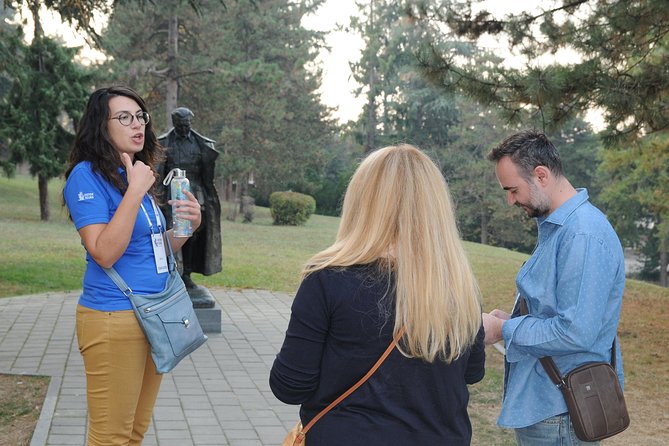
At the top of Gardos Hill, you reach the remains of the old Zemun citadel and the Millennium Tower, also called the Millenary Monument. Built in the late 19th century, the tower marked the southernmost point of the Austro-Hungarian Empire.
The tower’s historical meaning is interesting, but the view is the real reward. From here, you look down over the old roofs of Zemun, toward the confluence of the Sava and Danube, and back across the water to Belgrade Fortress.
Admission to the tower is not included, so check the arrangements with your guide before assuming you will go inside. The scheduled visit is about 15 minutes, which may mean a quick look and photographs rather than a long stop.
The descent brings you to Main City Square and Zemun’s daily market. You get about an hour and 15 minutes for lunch, coffee, or independent wandering. This is the most flexible part of the day, and I would use it for a riverside meal if the group schedule allows.
Food choices listed for the area include Danube fish, burek, and ćevapčići. Burek is a flaky filled pastry, while ćevapčići are small seasoned ground-meat rolls. Your guide can suggest a place, but food and drinks are extra.
Dedinje and Belgrade’s royal side
After lunch, the vehicle crosses Gazela Bridge toward Dedinje, one of Belgrade’s most exclusive residential areas. Green hills and large houses replace Zemun’s compact streets.
The guide explains the history of several properties and what happened to them during Serbia’s difficult 20th century. Since many buildings are viewed from the road, this part works best as a narrated ride rather than a sightseeing walk.
You also pass Rajko Mitić Stadium, home of Red Star Belgrade, and Partizan Belgrade’s stadium nearby. Their rivalry has lasted more than 70 years. Red Star’s 1991 European Cup victory gives the football discussion extra weight, especially for sports fans.
Dedinje is a good reminder that Belgrade’s history is not only found in churches and fortifications. Wealth, politics, military power, and sport all occupy visible space here.
Saint Sava Temple: the day’s grand interior
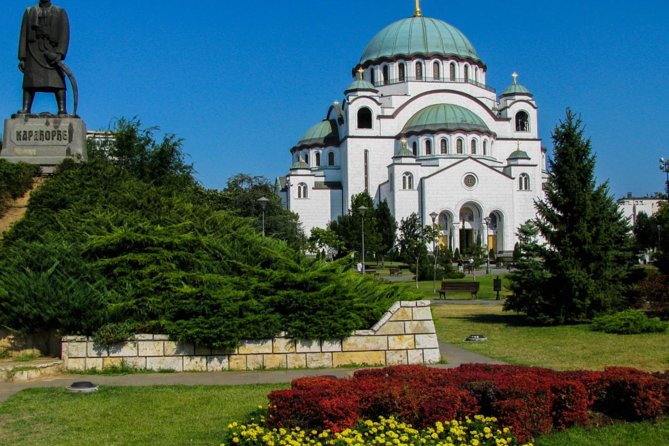
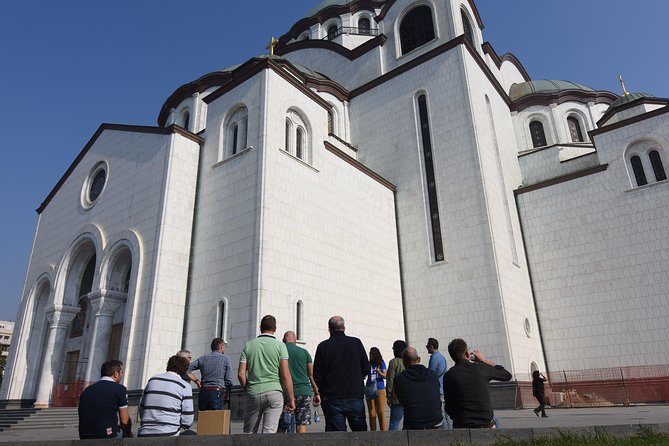
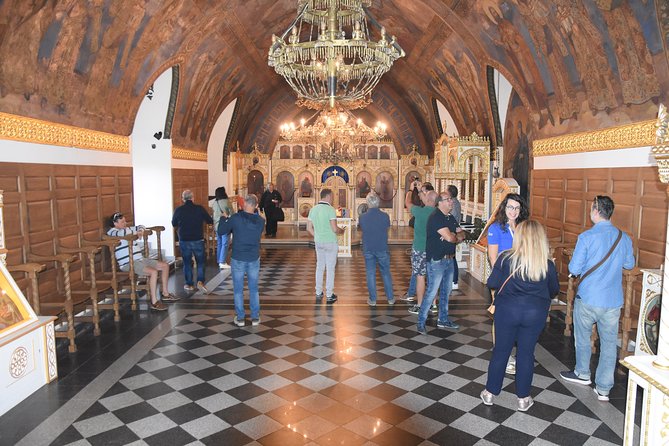
The visit to Saint Sava Temple is the tour’s main indoor stop. The church is one of the largest Orthodox churches in the world, with a dome rising 70 meters and a gilded cross adding another 12 meters.
Its location carries deep meaning in Serbian history. Construction began in the 1930s on the site associated with the Ottoman burning of the relics of Saint Sava, the founder and first archbishop of the independent Serbian Orthodox Church.
The building uses a Serbian-Byzantine design. Its scale is impressive from the outside, but the interior is what makes the stop worthwhile. The extensive decoration and mosaics create a very different experience from the open fortress and modernist buildings earlier in the day.
You get about 45 minutes here, and admission is included. One practical note: a past participant reported being asked for an extra payment at the temple, while the tour information says the entrance fee is included. I would clarify any request with your guide before paying again.
The Temple is in the Vračar district, and the dome can be seen from many parts of Belgrade. If you enjoy religious art or architecture, this may be the highlight of the route.
Central Belgrade by vehicle
The last city drive threads through some of central Belgrade’s most important streets and squares. At Slavija Square, you enter Nemanjina Street, lined with government buildings including the Ministry of Foreign Affairs, the Serbian Army General Staff, the Ministry of Railways, Ministry of Finance, Government Building, and State Court.
This is mainly a moving introduction. The value comes from seeing how political power is arranged in the city, along with examples of pre-war architecture.
At Republic Square, you hear about the National Museum, National Theatre, and the equestrian monument to Prince Mihailo. The square is a useful downtown reference point, and you can return later to explore its cultural institutions at your own pace.
Terazije Square brings another architectural change, with its white stone fountain and the Moskva Hotel. The route then passes Nikola Pašić Square before ending near the Parliament Building.
Parliament, royal palaces, and the final photo stop
The final stop is in front of the House of the National Assembly of the Republic of Serbia. You have about 15 minutes for photographs and a short explanation of the Old and New Royal Palaces.
This ending works well because it brings together Serbia’s royal and parliamentary past. It also leaves you in the city center, where you can continue to Republic Square, Terazije, the National Museum, or nearby restaurants without needing another transfer.
There is no hotel drop-off. That is a small inconvenience after a long day, but it can also be useful. You finish in a central area rather than losing time driving back through traffic.
How the timing and group size affect the experience
The full route takes about seven to eight hours, with a mix of walking and driving. The walking is moderate overall, but Gardos Hill, fortress paths, and steps into or out of the van deserve attention.
The maximum group size is 16. A small group can be excellent. Several people have had tours with three to five participants, creating a relaxed pace and more chances to ask questions. A full minibus is a different experience, particularly at the rear of the vehicle or during outdoor commentary.
Pickup can also take time because the vehicle may collect several people. One poor account described a late start, unclear timing, no audio system, and a guide who moved ahead of the group. Those problems do not define the whole experience, but they are useful reasons to stay alert, confirm meeting details, and keep the guide’s phone number handy.
The vehicles are air-conditioned vans or minibuses, depending on the number of people. One positive account specifically described a comfortable minibus, while another noted that small or cloudy windows made it difficult to see roadside sights. Your seat can affect the drive-through portions, so ask about seating if possible.
What the $72.59 price really buys
At $72.59, you are paying for transport across a large city, hotel pickup within the stated area, an English-speaking certified guide, and Saint Sava Temple admission. Food, drinks, tips, and the Millennium Tower entrance are not included.
If you tried to connect Kalemegdan, Zemun, Dedinje, and Vračar alone, you would spend time working out buses, taxis, and walking routes. The tour’s value is strongest for first-time visitors, people with only a few days, and anyone who wants the historical links explained rather than simply photographed.
The price is less attractive if you prefer slow museum visits, long meals, or complete control over each stop. This is an overview day, not a deep visit to every monument.
Who should book this Belgrade tour?
Book it if you want a useful first look at Belgrade, especially if your stay is short. It suits couples, families with older children, and people who appreciate history, architecture, religion, politics, and football in equal measure.
It is also a good choice if you dislike navigating unfamiliar public transport. The air-conditioned vehicle takes care of the long jumps across town.
Think twice if you have trouble climbing into a high van, walking on cobblestones, or managing steps. One participant specifically warned that there was no step to help with getting in and out. You should also avoid expecting a leisurely day. The route covers a great deal of ground, and the group must keep moving.
Guides vary in style. Many are described as friendly, clear, and deeply informed, with Aleksandar, Milan, Isidora, Dragana, Jelena, Kristina, and Milica receiving particular praise. The best guides bring Serbia’s past to life and offer useful lunch suggestions. Still, group communication and time control can be uneven, so ask clearly how long you have at each stop.
Final verdict: a smart overview with a busy schedule
I would book this tour early for a first visit to Belgrade. Its strongest feature is the route itself: fortress views, riverfront Zemun, socialist architecture, royal Dedinje, Saint Sava Temple, and central government buildings give you a broad picture in one day.
You should book with realistic expectations. Some stops are brief, the tour may reach 16 people, and the walking is more demanding than the air-conditioned vehicle might suggest. For a relaxed holiday, use this as your orientation day, then return to your favorite districts independently.
The tour is a particularly good buy when you have only a weekend. You leave with a working map of Belgrade, several strong photo stops, a taste of local food options, and enough historical context to make the rest of your stay more rewarding.
FAQ
How long does the Belgrade Big Tour last?
The tour lasts approximately seven to eight hours.
What time does the tour begin?
The standard departure time is 9:30 a.m. Shared-tour pickup may take place 15 to 30 minutes before departure.
Is hotel pickup included?
Yes. Pickup is available from hotels, Airbnbs, and pensions within five kilometers of Republic Square.
Is hotel drop-off included?
No. The tour ends in front of the National Assembly in central Belgrade.
What transportation is used?
Transport is provided in an air-conditioned van or minibus, depending on the number of people booked.
Is Saint Sava Temple admission included?
Yes. The entrance fee for Saint Sava Temple is included in the tour price.
Is the Millennium Tower entrance included?
No. Admission to the Millennium Tower is not included.
Is lunch included?
No. Food and drinks are extra. You have free time in Zemun for lunch, coffee, or independent exploration.
How large can the shared group be?
The maximum group size is 16 people. A shared tour requires at least three participants to operate.
Can I cancel for a full refund?
Yes, if you cancel at least 24 hours before the experience begins. Cancellations made less than 24 hours before the start time are not refunded.
Just added in Belgrade
- Your Own Belgrade: Street Art and Hidden Gems Walking Tour★ 5.0 · 2 reviews
- Private Half Day Serbia Tour Novi Sad and Petrovaradin Fortress★ 5.0 · 3 reviews
- 3-Hour Belgrade Zemun Neighborhood Tour★ 5.0 · 8 reviews
- Private Belgrade Street Art and Adventures Walking Tour★ 5.0 · 4 reviews
- Private Wine Tasting by Party in Belgrade★ 5.0 · 3 reviews
- From Belgrade:Uvac Nature Reserve Tour★ 5.0 · 4 reviews
- Urban & Alternative Belgrade tour★ 5.0 · 4 reviews
- VIP Reservation Service in Belgrade★ 5.0 · 2 reviews
Belgrade Tours, compared.
Northern Serbia: Sremski Karlovci and Novi Sad Full-Day Tour from Belgrade
Read our review →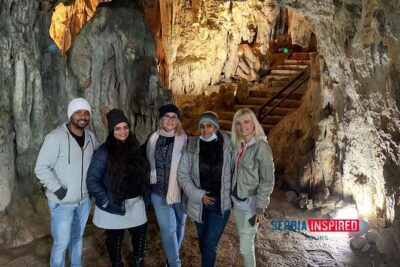
Day Trip from Belgrade: Gems of Eastern Serbia
Read our review →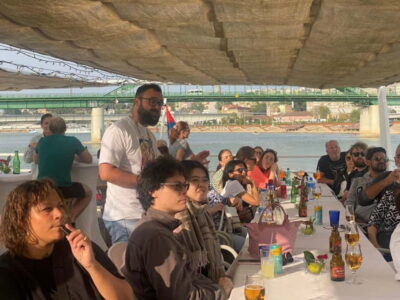
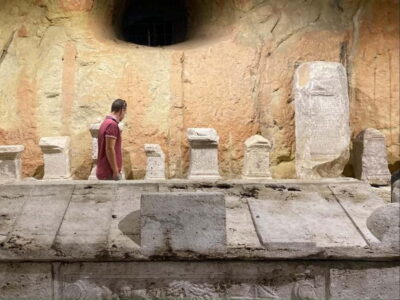
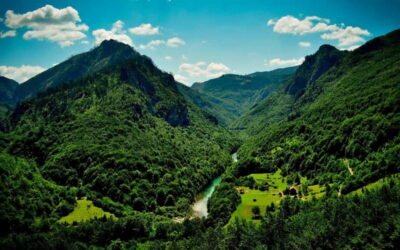
Western Serbia 1-Day Tour of the Key Sites from Belgrade
Read our review →