
Reviewed · WALKING TOURS
Belgrade: Alternative Walking Tour
Belgrade reveals itself after dark. This private walk shows you the city’s creative side, from former industrial zones to old quarters, design shops, cafés, galleries, and nightlife streets. It is less about checking off monuments and more about understanding how Belgrade changed from a war-time capital into a youthful city shaped by students, expatriates, artists, and young business owners.
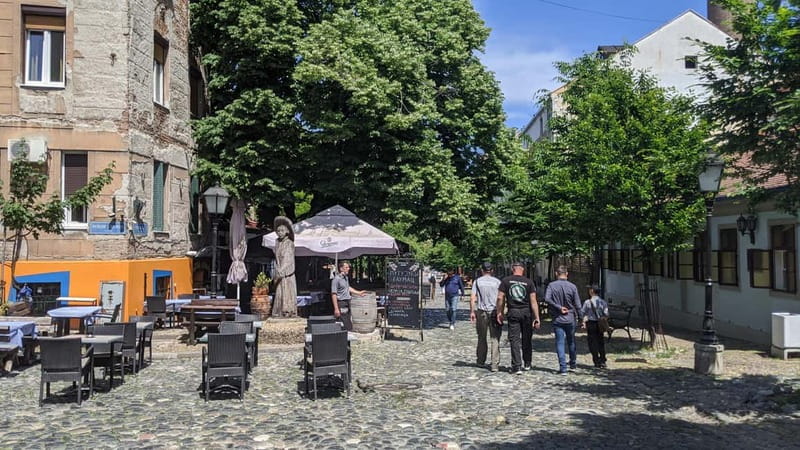
I like the strong neighborhood focus and the chance to see places such as Savamala, Dorćol, and Kosančić Circle with a local guide rather than simply passing them on a bus. I also like the unusual stops, including a former communist-era outdoor shopping center turned design district and an abandoned brewery now filled with bars and clubs.
The main consideration is the price: at $47 per person, this is not the cheapest walking tour in Belgrade. You are paying for a private guide, drinks, museum entrance fees, and a more specialized route. If you mainly want the fortress and central monuments, another tour may offer better value.
In This Review
- What makes this Belgrade walk different
- Who should book this alternative Belgrade tour?
- Starting at Belgrade Cooperative
- Belgrade Design District and the former communist shopping center
- Belgrade Youth Center and the city’s younger voice
- Dorćol, one of Belgrade’s oldest urban quarters
- Student Park and the central streets
- Savamala, from industrial edge to arts and nightlife district
- Kosančić Circle and the feeling of time standing still
- Finishing in Cetinjska and the old brewery
- The guide can make or break the experience
- Is $47 a fair price?
- Timing, walking conditions, and practical advice
- Should you book the Belgrade Alternative Walking Tour?
- FAQ
- Where does the Belgrade Alternative Walking Tour begin?
- Where does the tour finish?
- How long does the tour last?
- What language is the tour conducted in?
- Is the tour private?
- Is the route wheelchair accessible?
- Is the walking route difficult?
- Are drinks included?
- Can I cancel for a full refund?
What makes this Belgrade walk different
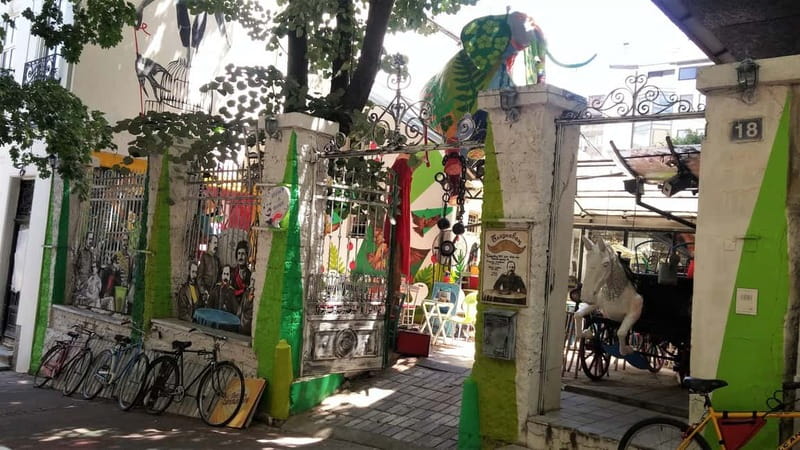
- Former industrial spaces become creative districts: You see how abandoned parts of the city now hold galleries, design shops, bars, and clubs.
- Savamala gives the tour its modern edge: This riverside area is known for art, cafés, nightlife, and the rough-around-the-edges energy that attracts young locals.
- Dorćol and Kosančić Circle add older Belgrade: The route moves beyond the new creative scene into two of the city’s oldest urban neighborhoods.
- A private English-speaking guide shapes the experience: You can ask questions and spend more time on subjects that interest you.
- The finish at Cetinjska makes sense: The former brewery area now has more than 20 bars and clubs, giving the walk a lively final stop.
- The route is mostly flat: There is only a small amount of uphill walking, and the activity is wheelchair accessible.
Who should book this alternative Belgrade tour?
This tour suits you if you have already seen Belgrade’s major landmarks or if you prefer neighborhoods to formal monuments. It is also a good choice for anyone interested in urban change, street culture, art spaces, nightlife, and the way younger residents are reshaping an old city.
You will get more from it if you enjoy asking questions. The route is built around explanation and local context, not just quick photo stops. A private guide can connect the dots between a former shopping center, an old quarter, a riverside arts area, and a nightlife district in a way that is hard to manage on your own.
I would be less quick to recommend it for families with very young children, though the route is accessible and mostly flat. The subject is urban culture, nightlife, and alternative venues. That may be fascinating for adults and older teenagers, but it is not a classic family sightseeing walk.
It is also not the best fit if you want a long look inside major museums or famous historic buildings. The tour includes museum entrance fees, but the route gives equal weight to streets, districts, public spaces, and converted buildings.
More guided walks around Belgrade:
- Belgrade: 3-Hour Small Group Walking Tour
★ 5.0 · 180 reviews - Belgrade: Shared Group or Private Guided Walking Tour
★ 4.8 · 162 reviews - Walking Tour in Belgrade
★ 4.8 · 122 reviews
Starting at Belgrade Cooperative
The walk begins in front of Geozavod, also called Belgrade Cooperative. Look for the large old corner building. This is a practical meeting point because the building is distinctive and the tour then moves directly into the city’s changing urban fabric.
Starting here helps frame the rest of the walk. Belgrade is not presented as a city frozen in one period. Instead, you begin with an established building and then move toward areas where old commercial and industrial spaces have been given new uses.
Your guide speaks English, and the tour lasts about three and a half hours. That is long enough to cover a broad route without turning the day into a marathon. Wear comfortable shoes, since the walk includes several neighborhoods and about a dozen short sightseeing stops.
Belgrade Design District and the former communist shopping center
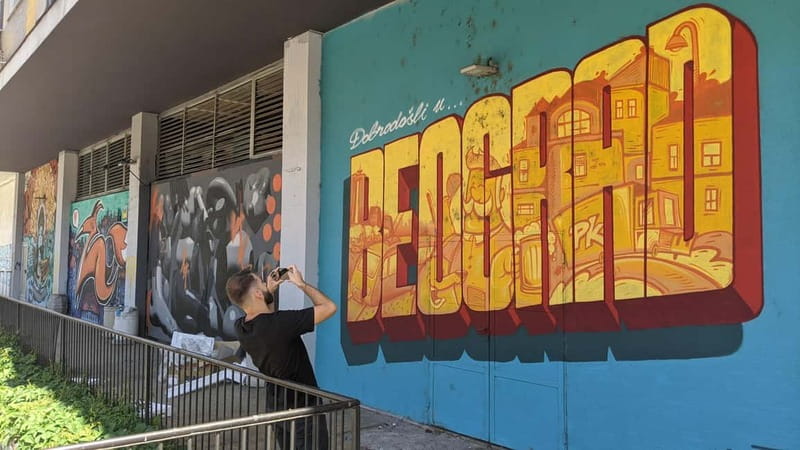
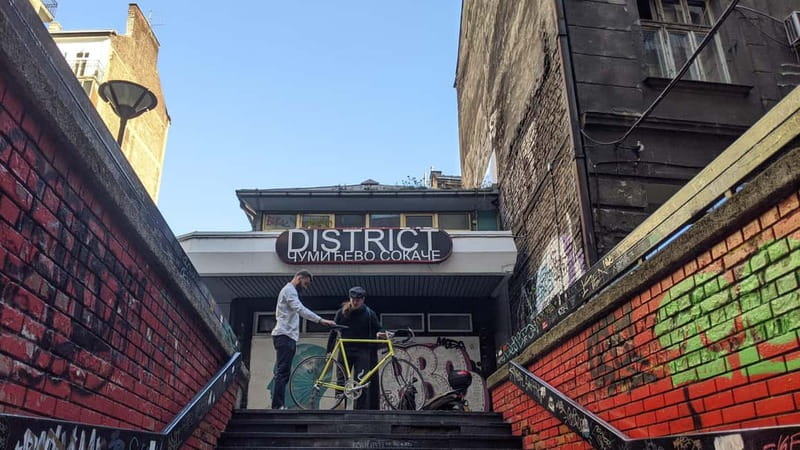
One of the most distinctive parts of the tour is the Belgrade Design District. This area began as the first outdoor shopping mall in communist Yugoslavia. It has since become a design district, giving you a clear example of how old commercial spaces can take on a new purpose.
The visit is scheduled for about 15 minutes, so expect an introduction rather than a long shopping session. The value here is the story of the transformation. Instead of treating the district as just another place to browse, the guide can explain what changed and why it matters to modern Belgrade.
This is a useful stop if you care about design, local business, or city renewal. You might also find it less satisfying if you expect a large market or a long series of shops. The point is the district’s character and development, not an extended retail visit.
Belgrade Youth Center and the city’s younger voice
The brief stop at Belgrade Youth Center lasts around five minutes. That may sound short, but it fits the tour’s purpose. This is a quick look at a place connected with Belgrade’s younger cultural life before the route heads into older neighborhoods.
The walk repeatedly sets old and new beside each other. A youth center, a design district, old streets, and repurposed industrial buildings all become parts of one story. You see how student and expatriate populations have helped make Belgrade a meeting point for different ideas and cultures.
Because this stop is brief, do not expect a full tour of the building. It works as a marker on the route, showing that the city’s alternative culture is not limited to nightlife. It also has an institutional and community side.
A couple more Belgrade trips to weigh up
- From Belgrade: Novi Sad & Sremski Karlovci Full-Day Tour
★ 4.7 · 1,068 reviews - From Belgrade: Gems of Eastern Serbia Tour
★ 5.0 · 427 reviews - Northern Serbia: Sremski Karlovci and Novi Sad Full-Day Tour from Belgrade
★ 5.0 · 425 reviews - Day Trip from Belgrade: Gems of Eastern Serbia
★ 5.0 · 424 reviews
Dorćol, one of Belgrade’s oldest urban quarters
Dorćol receives a longer visit, with about 20 minutes of guided walking. It is described as one of Belgrade’s oldest urban neighborhoods and is often called the Manhattan of Belgrade. That nickname is a little grand for a district with such varied streets, but it points to Dorćol’s central position and strong local identity.
The important thing here is the contrast. Dorćol is not presented only as an old quarter or only as a fashionable area. You get a mix of history, everyday city life, and the newer cafés, creative spaces, and businesses that make the neighborhood attractive to younger residents.
The route also includes the Hotel Indigo Belgrade area, with around 10 minutes for a visit and guided sightseeing. The information provided does not specify exactly what you will see inside or around the hotel, so treat this as a contextual stop rather than a guaranteed hotel tour. Your guide will explain its place along the route, but the emphasis remains on the district as a whole.
Student Park and the central streets
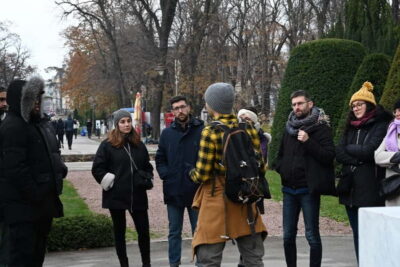
Student Park receives about 10 minutes of guided sightseeing and walking. Its inclusion supports one of the central ideas of this experience: Belgrade’s student population has helped shape the city’s social and cultural life.
You are not simply being taken from one attraction to another. The park helps connect the city’s younger population with the surrounding central neighborhoods. It is also a chance to slow the pace briefly before continuing through Obilićev venac and Topličin venac.
Obilićev venac gets about 15 minutes. Topličin venac gets roughly five. These shorter stops are useful for seeing how the central city changes from one street and district to the next. They also keep the route moving, since a walk of this length would become tiring if every stop required a long visit.
Savamala, from industrial edge to arts and nightlife district
Savamala is one of the main reasons to choose this tour. The area is known for its galleries, cafés, cultural activity, and nightlife. It also represents the city’s shift from neglected industrial spaces toward places where artists, entrepreneurs, and young residents spend time.
You will spend about 15 minutes on guided sightseeing here, but the wider route gives Savamala more meaning than a single stop could. The guide can help you understand how abandoned industrial districts were converted into places for art and entertainment.
That change is not always polished. Savamala’s appeal comes partly from the tension between old structures and new uses. You may see a district that feels creative and energetic, but also unfinished or uneven. That is part of the point. This is not a carefully packaged historic quarter. It is a working example of urban change.
If you want to understand why Belgrade attracts young entrepreneurs and hipsters, Savamala is the clearest part of the walk. If you prefer restored buildings, tidy streets, and formal attractions, the area may feel rougher than expected.
Kosančić Circle and the feeling of time standing still
Kosančić Circle, or Kosančićev Venac, is one of the tour’s strongest contrasts. It is often compared with Montmartre in Paris, a comparison that suggests old streets, artistic associations, and scenic views rather than a direct visual copy.
The stop lasts about 20 minutes and includes walking, sightseeing, and views along the way. Here, the pace shifts from the newer creative districts to an older part of Belgrade where time can feel slower.
The phrase time stands still is useful here, but do not expect the whole area to be untouched. The value is in the atmosphere and the sense of layers. You move through a neighborhood that helps show what Belgrade was before its recent creative revival, while still remaining part of the modern city.
Kosančić Circle is also a good place to think about the tour’s broader theme. Belgrade is not replacing its past with something new. The old neighborhoods, industrial sites, student areas, and nightlife districts all sit within the same city.
Finishing in Cetinjska and the old brewery
The walk ends at Cetinjska, an especially fitting finish for a tour focused on alternative Belgrade. An abandoned brewery has been converted into an area with more than 20 bars and clubs.
You may not visit every venue, and the schedule does not promise a separate club entry. Still, ending here gives you a practical look at the city’s evening culture. You can see how an old industrial site became a meeting place for nightlife and social life.
This is one of the tour’s most useful features because your guide can show you where the area is before you decide what to do later. If you are looking for evening plans, Cetinjska may give you ideas. If you are taking the tour early in the day, it also provides a preview of where Belgrade’s night scene gathers.
The area may not appeal to you if you want a quiet ending. For everyone else, it gives the route a clear finish and reinforces the main idea: old buildings in Belgrade often find second lives.
The guide can make or break the experience
The tour includes a private guide, and that matters more here than it would on a simple route between famous sights. Much of the value comes from explaining why a district changed, how young people use it now, and what the city’s alternative scene says about Belgrade.
Milena received especially warm praise for being kind, cultured, and able to connect the walk with what one person described as the poetry of Belgrade’s streets. The description of her style suggests an alternative yet sophisticated approach. If Milena is assigned to your tour, you can expect a guide who may focus on mood, culture, and ideas as much as basic facts.
Another strong point in the feedback was the guide’s attentiveness, detail, and friendliness. Only two ratings are available, and both gave the experience five out of five, so you should not treat that as a large statistical record. Still, the praise is consistent: the guide is the part people value most.
Is $47 a fair price?
At $47 per person, the tour costs more than a standard group walk. The key question is whether you want a private experience built around a particular theme.
The price includes a private guide, drinks, and museum entrance fees. Food is not included. Since the route lasts three and a half hours, the cost works best if you value personal attention and local interpretation rather than simply counting the number of sights.
I see the price as reasonable for a private, specialized walk, especially if two or more people are sharing the experience. It is less compelling if you are traveling alone on a tight budget or if you only want a quick orientation to central Belgrade.
You should also remember that many stops are short. The tour covers a wide area, but you are not spending an hour inside each place. The value is in the connections among the neighborhoods, not in long visits at individual attractions.
Timing, walking conditions, and practical advice
The tour takes three and a half hours, with starting times available according to the selected date. Check the schedule before booking and allow enough time to reach the meeting point at Belgrade Cooperative.
The route is mainly flat, with only a small amount of uphill walking. It is wheelchair accessible, which makes it more manageable than many historic-city walks. Even so, the distance and length mean you should choose comfortable footwear and be prepared to remain on your feet for much of the experience.
Drinks are included, while food is not. Eat beforehand if you prefer starting a long walk with something substantial, or plan a meal afterward in the city. The final stop at Cetinjska may also help you decide where to continue your evening, though food and club admission are not listed as part of the tour.
You can cancel up to 24 hours in advance for a full refund, and the reserve-now, pay-later option keeps your plans flexible. Those terms are useful in Belgrade, where you may want to adjust plans around weather, arrival times, or other city visits.
Should you book the Belgrade Alternative Walking Tour?
Book it if you want to understand modern Belgrade through its neighborhoods, creative spaces, old quarters, and nightlife districts. The combination of Savamala, Dorćol, Kosančić Circle, the design district, and Cetinjska gives you a side of the city that a standard monument tour may miss.
I would choose this experience early in a Belgrade visit if you want ideas for later cafés, galleries, bars, and evening areas. It can also work well after a classic sightseeing day, when you are ready to see a less formal side of the capital.
Skip it if your priorities are the Belgrade Fortress, major museums, or a cheap group walk. At $47, the tour asks you to pay for a private guide and a focused subject. For the right audience, that focus is the reason to book.
FAQ
Where does the Belgrade Alternative Walking Tour begin?
It begins in front of Geozavod, also called Belgrade Cooperative. Look for the large old corner building.
Where does the tour finish?
The walk finishes at Cetinjska, an area developed from an abandoned brewery and now home to more than 20 bars and clubs.
How long does the tour last?
The tour lasts three and a half hours.
What language is the tour conducted in?
The live guide speaks English.
Is the tour private?
Yes. A private guide is included.
Is the route wheelchair accessible?
Yes, the activity is listed as wheelchair accessible.
Is the walking route difficult?
The route is mainly flat, with only a small amount of uphill walking.
Are drinks included?
Yes, drinks are included. Food is not included.
Can I cancel for a full refund?
Yes. You can cancel up to 24 hours in advance for a full refund.
Just added in Belgrade
- Your Own Belgrade: Street Art and Hidden Gems Walking Tour★ 5.0 · 2 reviews
- Private Half Day Serbia Tour Novi Sad and Petrovaradin Fortress★ 5.0 · 3 reviews
- 3-Hour Belgrade Zemun Neighborhood Tour★ 5.0 · 8 reviews
- Private Belgrade Street Art and Adventures Walking Tour★ 5.0 · 4 reviews
- Private Wine Tasting by Party in Belgrade★ 5.0 · 3 reviews
- From Belgrade:Uvac Nature Reserve Tour★ 5.0 · 4 reviews
- Urban & Alternative Belgrade tour★ 5.0 · 4 reviews
- VIP Reservation Service in Belgrade★ 5.0 · 2 reviews
Walking Tours, compared.
Walking Tour city center and Petrovaradin Fortress
Read our review →
Browse the lists this tour appears in