
Reviewed · SERBIA
Kosovo War Tour
History here is painfully close. This three-hour Kosovo War Tour connects Pristina’s recent past with the 1998 to 1999 conflict, using memorials, museums, and sites of resistance to explain how Kosovo’s struggle developed. I especially like the small group of up to four, and I like the way the tour links wartime events to the secret Albanian-language schools of the 1990s.
The main drawback is time. The advertised route includes several stops around Pristina, Prekaz, and Gazimestan, with optional Mitrovica farther north. You will need to confirm the exact plan and starting time, because three hours is a short window for all of those places.
In This Review
- Key points to know before booking
- Why this tour matters in Pristina
- Meeting at Newborn and beginning with Pristina’s memory
- National Museum of Kosovo and the recent past
- Hertica House and the secret school system
- The road to Prekaz and the Jashari family complex
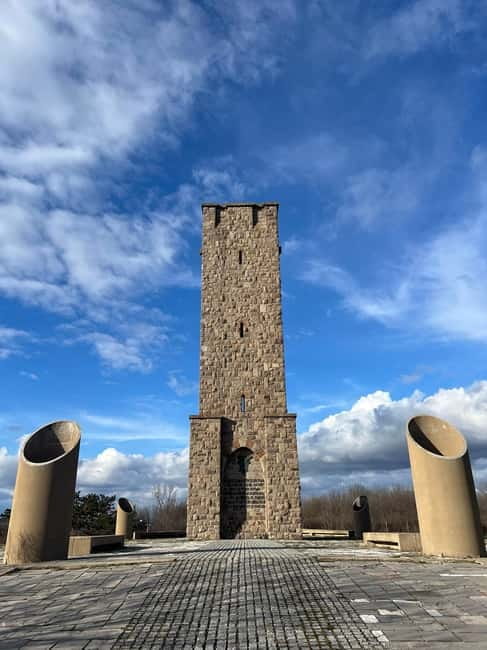
- Gazimestan, the 28-meter tower, and Ottoman history
- Optional Mitrovica and the divided bridge
- What the $235 group price means
- How to prepare for a serious history tour
- Who will get the most from this experience
- Should you book the Kosovo War Tour?
- FAQ
- Where does the Kosovo War Tour start?
- How long does the tour last?
- What language is the tour conducted in?
- How many people can join the group?
- Is transportation included?
- Is food included?
- Is the Mitrovica visit included?
Key points to know before booking
- Prekaz gives the tour its strongest emotional focus: the Jashari family complex is the central war memorial on the route.
- Hertica House shows resistance through education: this former home-school explains how lessons continued after the normal school system was shut down.
- Gazimestan adds older Serbian and Ottoman history: the 1389 battle site, Murad Mausoleum, and Ottoman museum place the modern conflict in a much longer story.
- Astrid is praised for clear, compassionate explanations: one verified booking specifically highlights the guide’s command of recent history and its wider context.
- Mitrovica is optional and costs an extra 50 euros: the divided town adds an important political dimension, but it requires more time.
- Transport and an English-speaking guide are included: food and lunch are not, and the experience is limited to four participants.
Why this tour matters in Pristina
Pristina can feel young and forward-looking, especially around the Newborn monument. Yet the city’s recent past is never far away. This tour helps you read the capital through the events that shaped modern Kosovo, rather than treating the war as a footnote.
The focus begins with the unrest of the 1990s, after Kosovo’s autonomy was revoked in 1989. Schools were closed, many workers lost their jobs, and political and national rights were restricted. Albanian families created secret home schools, while protests and demonstrations called for freedom, democracy, and equality.
The story then moves toward armed resistance and the 1998 to 1999 war. The guide’s job here is not simply to point at monuments. You need someone who can explain how political pressure, daily repression, peaceful resistance, and armed conflict fit together. Astrid received particular praise for handling this recent history with compassion and clear context, which is exactly what this subject requires.
This is not a cheerful sightseeing circuit. You will visit places connected with missing people, political repression, sacrifice, and war. That seriousness is also the point. If you want only monuments and photo stops, this may feel heavy. If you want to understand Kosovo through its own recent story, the tour offers a useful start.
Other Serbia trips that fill up on the same weekends:
- From Belgrade: Novi Sad & Sremski Karlovci Full-Day Tour
★ 4.7 · 1,068 reviews - From Belgrade: Gems of Eastern Serbia Tour
★ 5.0 · 427 reviews - Northern Serbia: Sremski Karlovci and Novi Sad Full-Day Tour from Belgrade
★ 5.0 · 425 reviews
Meeting at Newborn and beginning with Pristina’s memory
The meeting point is the Newborn monument, one of Pristina’s best-known public symbols. From there, the tour makes a short introduction before stopping at memorials connected with missing people from the last war and Dr. Ibrahim Rugova, Kosovo’s historic president.
These opening stops help you get your bearings quickly. They introduce two important themes: the personal cost of the conflict and the political leadership that shaped Kosovo’s path. A visit to a memorial for missing people is also a reminder that war does not end neatly when fighting stops. Families continue to search, remember, and ask questions.
The stop is brief, so do not expect a long museum visit at this point. Its value comes from the guide’s explanation and from setting the tone for the rest of the morning or afternoon. I would listen closely here, because later sites make more sense once you understand the basic political background.
National Museum of Kosovo and the recent past
The next major stop is the National Museum of Kosovo. The tour focuses on the second floor, which is dedicated to Kosovo’s recent history. You are scheduled to spend about half an hour here.
That time is enough for an introduction, but not for a slow museum study. If you are the sort of person who reads every label, you may want to ask how much time will be available before the tour begins. The museum is valuable because it gives the conflict a formal historical setting, while the later stops make the story more personal and physical.
The museum also helps balance the tour. Memorials can be powerful, but they often present a focused message. A museum can give you a wider sequence of events, from the unrest of the 1990s to the last war. The experience works best when you treat this as a foundation rather than the complete story.
The exact museum presentation may change over time, so the guide’s commentary matters. Ask questions. A small group makes that easier than a large coach tour, where the guide has to keep moving and conversation is limited.
Hertica House and the secret school system
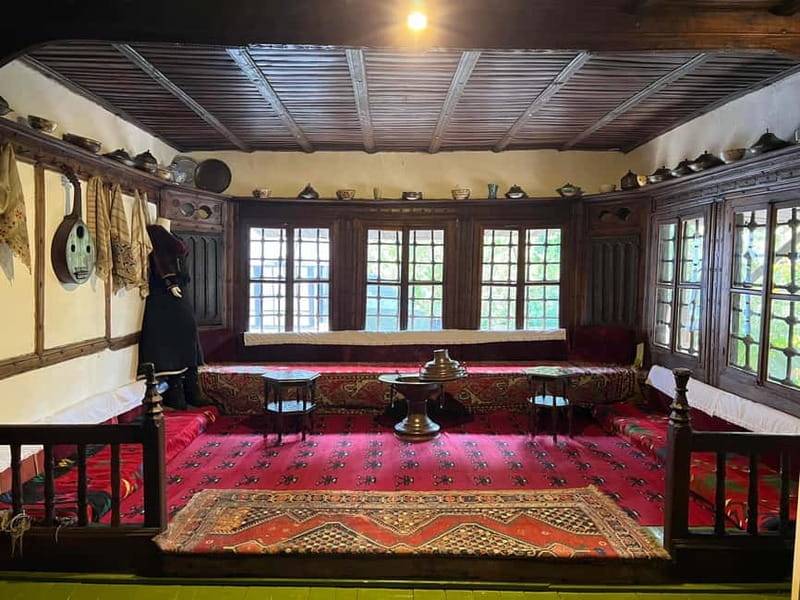
Hertica House is one of the most distinctive stops. During the 1990s, it served as a secret home school after the normal education system was shut down. It is now a museum house and memorial to that period.
This visit usually takes about half an hour. The setting matters because it brings political history into an ordinary domestic space. Instead of hearing only about laws, officials, and armed groups, you see how education continued inside homes when public schooling was no longer available to many Albanian children.
I find this kind of stop especially useful because it explains resistance in a broader way. Not every act of resistance involved weapons. Keeping lessons going, protecting language, and maintaining a sense of normal life were also political acts.
Hertica House is likely to interest visitors who want the social history of the conflict, not just military events. It may feel more personal than a large museum. At the same time, the visit is short, so you will get an introduction rather than a long examination of the school system.
Out of the city, and a slower way to spend the day:
- Day Trip from Belgrade: Gems of Eastern Serbia
★ 5.0 · 424 reviews - Belgrade: Sunset Cruise with Live Guide
★ 4.4 · 418 reviews - Belgrade: Underground Tour with Riverside Sparkling Wine
★ 4.8 · 411 reviews - Western Serbia 1-Day Tour of the Key Sites from Belgrade
★ 4.8 · 333 reviews
The road to Prekaz and the Jashari family complex
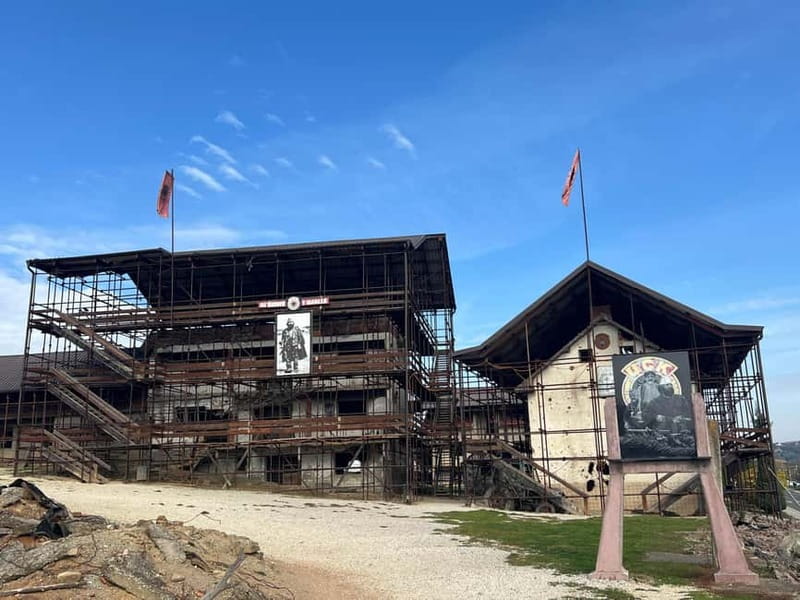
After Pristina, the route continues toward Prekaz. This is the emotional center of the tour, with a visit to the legendary complex associated with the Jashari family.
The complex is described as a unique war memorial and as a place tied to the events that sealed Kosovo’s freedom. Its meaning is central to Kosovo’s national story. The site represents sacrifice, armed resistance, and the human cost of the final war.
You should expect this stop to carry strong political and emotional weight. The Jashari family is not a minor chapter in Kosovo’s modern history. Their story is used to explain why the conflict became a defining part of the country’s identity.
Because the tour is guided in English, ask for help with names, dates, and sequence if the story becomes difficult to follow. Recent Balkan history contains competing national narratives, and a good explanation needs care. The praise for Astrid’s compassionate approach is important here. A guide who can explain the subject without turning it into a rushed political speech will make a real difference.
The tour description calls the complex legendary, but you should not expect a theme-park attraction. This is a memorial site connected with real deaths and national trauma. Dress and behave with the same respect you would bring to any war memorial.
Gazimestan, the 28-meter tower, and Ottoman history
On the way to Prekaz, the tour stops at Gazimestan. The site is connected with the 1389 Battle of Kosovo and includes a 28-meter tower that you may be able to climb.
This stop shifts the time frame dramatically. The tour is mainly about the 1990s and the 1998 to 1999 war, but Gazimestan shows how older conflicts continue to shape political memory in Kosovo and Serbia. It is a useful reminder that today’s arguments often draw on events from centuries ago.
If the tower is open for access during your visit, climbing it adds a physical element to the stop. You should ask the guide about current access rather than assume you can go up. The tower is tall, and the visit may not suit everyone, especially if stairs are difficult.
The route also includes the Mausoleum of Sultan Murad, who was killed in the Battle of Kosovo. Nearby, a small Ottoman museum presents aspects of Ottoman rule and life in the area. Together, these stops give you a compact lesson in the older history behind the modern political setting.
The drawback is that this part may feel like a separate history tour if you came only for the Kosovo War. I see it as a useful addition, provided the guide clearly explains why the 1389 battle still matters. Without that link, you may feel as if the tour has suddenly changed subjects.
Optional Mitrovica and the divided bridge
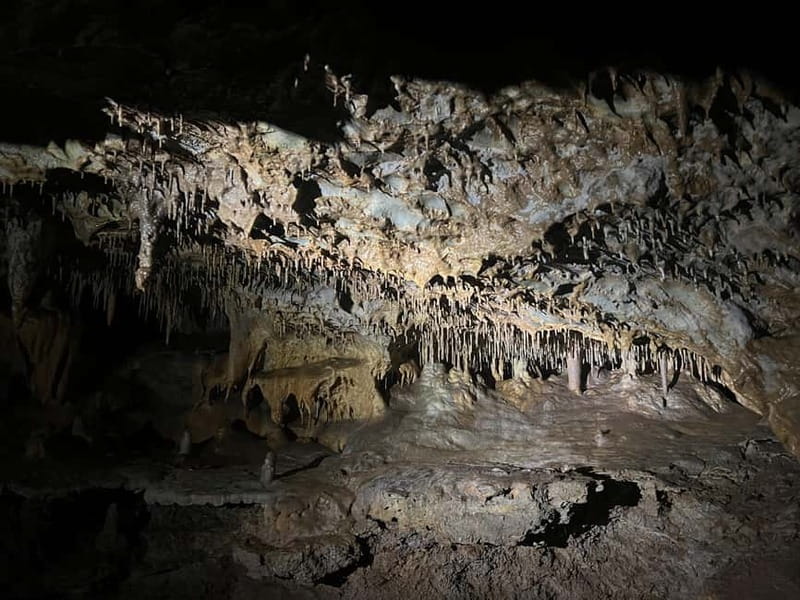
The optional extension to Mitrovica costs an additional 50 euros. It adds the divided town, the bridge separating its southern and northern sections, the town center, a crystal museum, and lunch before returning to Pristina.
Mitrovica brings the story into the post-war period. The divided town has major political and economic importance in Kosovo, and the bridge is the clearest physical symbol of that division. If your main interest is how the war continues to affect everyday politics, Mitrovica may be the most revealing extra stop.
But this option changes the shape of the day. The core tour is listed as three hours, while Mitrovica is farther from Pristina and includes several additional visits. Confirm the added duration, meeting arrangements, and exact cost before committing. The extra 50 euros is not the only consideration. You are also giving the extension more of your day.
Lunch in Mitrovica is mentioned, but food is not included in the tour price. Plan to pay separately for anything you eat. The same rule applies to the main experience, where food and lunch are excluded.
I would choose Mitrovica if you have enough time in Kosovo and want more than a memorial-focused visit. If you have only a short stay in Pristina, the core route may give you a clearer and less hurried introduction.
What the $235 group price means
The price is $235 for a group of up to four people. That is expensive for one person, but it becomes more reasonable when shared by a small private party. At the full four-person capacity, the cost works out to about $59 per person, before any food or the optional Mitrovica supplement.
The value comes from the transport, an English-speaking live guide, and access to several sites spread around the Pristina District. You are not simply paying for a museum ticket. You are paying for a vehicle, route planning, and someone who can connect places that would be difficult to understand as isolated stops.
For a solo visitor, the price is harder to justify unless this subject is a main reason for visiting Kosovo. For two people, it is still a substantial expense. For four people who want a focused day with transport included, the price makes more sense.
The group limit is one of the tour’s best features. You can ask about the 1990s, the Jashari family, Gazimestan, or Mitrovica without waiting for a large group to settle down. Small groups also make it easier to adjust the conversation to your interests, although the fixed time may limit how far the guide can adapt the route.
How to prepare for a serious history tour
I would read a short timeline of Kosovo before you go. You do not need a long academic book. Knowing the sequence of the 1989 autonomy decision, the 1990s repression, secret home schooling, the rise of armed resistance, and the 1998 to 1999 war will help you follow the guide’s explanations.
Wear practical shoes. The route includes memorial grounds, museum visits, and the possible climb up the 28-meter tower at Gazimestan. Since the tour includes transport, you will not be walking the entire route, but this is still not a city-center stroll.
Allow room for emotion. The memorials to missing people and war victims are not decorative stops. You may find the subject difficult, especially at Prekaz. Listen first, ask respectful questions, and avoid treating memorial sites as casual photo backdrops.
English is the tour language, and the experience is wheelchair accessible according to the provided details. Still, ask about the precise access conditions at individual locations, especially the tower and older memorial sites. General accessibility does not mean every surface or staircase will be easy.
The tour offers free cancellation up to 24 hours before departure and allows you to reserve now and pay later. Those policies are useful if your Kosovo schedule is still changing. Starting times vary, so check availability before planning another fixed activity on the same day.
Who will get the most from this experience
I would recommend the tour to first-time visitors who want an introduction to Kosovo’s recent political history. It is also a strong choice for anyone who prefers local memorials and personal stories over a standard city sightseeing route.
You will get the most from it if you are willing to listen and ask questions. The tour is not designed as light entertainment, and the subject requires attention. Families with older teenagers may find it meaningful, though parents should judge whether the war material is suitable for them.
History students, journalists, and visitors interested in post-conflict societies may want the Mitrovica extension. The divided town adds a current political dimension that the Pristina and Prekaz stops cannot provide on their own.
I would be less likely to recommend it to someone with only three hours and a strong preference for relaxed sightseeing. The number of stops can make the day feel compressed, especially if you add Mitrovica. I would also avoid booking it without checking the route if you have limited mobility, even though the activity is marked wheelchair accessible.
Should you book the Kosovo War Tour?
Book it if you want a serious, guided explanation of Kosovo’s recent past and can share the $235 cost with a small group. The strongest parts are the secret school at Hertica House, the Jashari family complex at Prekaz, and the careful historical links between the 1990s war and older events at Gazimestan.
Ask about the exact three-hour schedule before you pay. Confirm which stops fit into the core route, and treat Mitrovica as a separate time commitment with its extra 50 euro charge. With that clarification, this is a valuable choice for a visitor who wants context, not just photographs.
FAQ
Where does the Kosovo War Tour start?
The tour starts at the Newborn monument in Pristina.
How long does the tour last?
The listed duration is three hours, though the optional Mitrovica visit adds more time.
What language is the tour conducted in?
The live tour guide speaks English.
How many people can join the group?
The tour is limited to four participants.
Is transportation included?
Yes. Transport, a guide, and a companion are included.
Is food included?
No. Food and lunch are not included in the tour price.
Is the Mitrovica visit included?
No. Mitrovica is optional and costs an extra 50 euros.
Just added in Serbia
- Zlatibor tour – Gold gondola, Stopic cave, Sirogojno & falls★ 5.0 · 3 reviews
- Treasures of Eastern Serbia shared tour★ 5.0 · 3 reviews
- Your Own Belgrade: Street Art and Hidden Gems Walking Tour★ 5.0 · 2 reviews
- Stara Plana Day Tour★ 5.0 · 4 reviews
- Private Guided Truffle Hunting Tour in Serbia with Lunch★ 5.0 · 3 reviews
- Private Half Day Serbia Tour Novi Sad and Petrovaradin Fortress★ 5.0 · 3 reviews
- 3-Hour Belgrade Zemun Neighborhood Tour★ 5.0 · 8 reviews
- Private Belgrade Street Art and Adventures Walking Tour★ 5.0 · 4 reviews